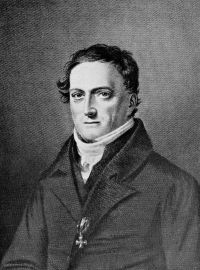
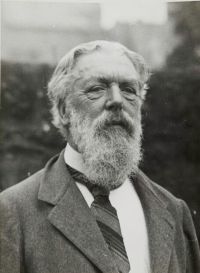
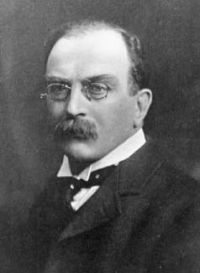
“ In physics we are to study the objects, forces, and changes about us, to understand them and their relations to one another. Accordingly, physics, dealing with the material world about us, is often defined as the science of matter and energy, matter being anything that occupies space and energy the capacity for doing work. ”
Physics
Definition and stakes
Physics, the scientific study of matter, motion, energy, and force, aims to uncover the fundamental principles that govern the universe. From Aristotle’s elemental theories to Newton’s laws and Einstein’s relativity, it has developed over centuries of inquiry. Authors like Thomas D. Cope stress its role in explaining everyday phenomena through matter and energy, while Bertrand Russell emphasizes the importance of action in modern physics.
Arthur Eddington highlights its dependence on quantifiable measures, illustrating its empirical rigor. Combining these viewpoints, physics continues to serve as both a foundational discipline and a vibrant field, connecting the tangible with the theoretical to decipher nature’s deepest mysteries.
Quotes about “physics”
Bertrand Russell,
The A B C of atoms
(1923)
“ After mass and energy there is one physical quantity which plays a very fundamental part in modern physics, known as Action. Action here is a very technical term, and is not to be confused [Pg 153] with Newton’s ‘Action and Reaction.’ In the relativity theory in particular this seems in many respects to be the most fundamental thing of all. ”
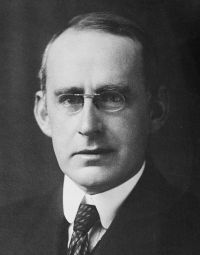
Sir Arthur Stanley Eddington,
The nature of the physical world
(1928)
“ I should like to make it clear that the limitation of the scope of physics to pointer readings and the like is not a philosophical craze of my own but is essentially the current scientific doctrine. It is the outcome of a tendency discernible far back in the last century but only formulated comprehensively with the advent of the relativity theory. The vocabulary of the physicist comprises a number of words such as length, angle, velocity, force, potential, current, etc., which we call “physical quantities”. ”
“ Each of these classes is surprised to learn that physics is mainly an explanation of common things. It is a study that systematizes our knowledge of the forces and changes about us; such as the pull of the earth, the formation of dew, rain and frost, water pressure and pumps, echoes and music, thermometers and engines, and many other things about us with which people are more or less familiar. Physics is like other school subjects, such as mathematics and language, in having its own peculiar vocabulary and methods of study ”
Various, The Catholic World, Vol. 19, April 1874‐September 1874
“ Büchner. Physics, as I stated to you on another occasion, “makes us acquainted with eight different forces—gravitation, mechanical force, heat, light, electricity, magnetism, affinity, cohesion, which, inseparably united to matter, form and give shape to the world. These [pg 643] forces are, with few exceptions, mutually convertible, so that nothing is lost in the process of conversion” (p. 18) . ”
William Whewell,
History of scientific ideas
(1858)
“ These are the principal examples of mechanical science; although some other portions of Physics, as Magnetism and Electrodynamics, introduce mechanical doctrines very largely into their speculations.Now in all these sciences we have to consider Forces. In all mechanical reasonings forces enter, either as producing motion, or as prevented from doing so by other forces. Thus force, in its most general sense, is the cause of motion, or of tendency to motion ”
William Whewell,
Novum organon renovatum
(1858)
“ Modern Astronomy, explains these motions on the principles of Mechanics.The term Physics, when confined to a peculiar class of Sciences, is usually understood to exclude the Mechanical Sciences on the one side, and Chemistry on the other; and thus embraces the Secondary Mechanical and Analytico-Mechanical Sciences. But the adjective Physical applied to any science and opposed to Formal, as in Astronomy and Optics, implies those speculations in which we consider not only the Laws of Phenomena but their Causes ”
Edward Salisbury Dana,
A century of science in America
(1918)
“ The Future of Physics.—At times during the history of physics it has seemed as if the fundamental laws of 380this science had been so completely formulated that nothing remained to future generations beyond the routine of deducing to the full the consequences of these laws, and increasing the precision of the methods used to measure the constants appearing in them. ”
Frank Wigglesworth Clarke,
Popular Science Monthly
(1874)
“ Until that time arrives chemistry cannot claim the honor of being an exact science. In physics a result is to be accomplished which will be complementary to this. Given the quantitative relations of the forces, we ought to be able, from the properties of any body as regards one force, to compute its properties with regard to all others. ”
Ellwood Patterson Cubberley, The History of Education
“ Physics has experienced an equally important development. It, too, at the beginning of the nineteenth century was in the preliminary state of collecting, coördinating, and trying to interpret data. In a century physics has, by experimentation and the application of mathematics to its problems, been organized into a number of exceedingly important sciences. In dynamics, heat, light, and particularly in electricity, discoveries and extension of previous knowledge of the most far-reaching significance have been made. ”
Bertrand Russell,
Our Knowledge of the External World…
(1914)
“ It consists, broadly speaking, in showing that, although the particles, points, and instants with which physics operates are not themselves given in experience, and are very likely not actually existing things, yet, out of the materials provided in sensation, it is possible to make logical constructions having the mathematical properties which physics assigns to particles, points, and instants. ”
Henri Poincaré,
The Foundations of Science
(1913)
“ It must indeed be said, it is not alone experimental physics that has given birth to them; mathematical physics has well contributed. It is the experimenters who have seen radium throw out energy, but it is the theorists who have put in evidence all the difficulties raised by the propagation of light across a medium in motion ”
Popular Science Monthly (1878)
“ Having aided the student in choosing his apparatus or constructing it, and given him some insight into the secrets of physical manipulation, the author, in the second part of the book, gives directions for making experiments illustrative of the principal laws of physics, as the equilibrium of forces, motion, acoustics, light, magnetism, heat, etc. The work appears to be very well adapted to meet the wants of the reader for whom it is intended. ”
Johann Friedrich Herbart,
Outlines of Educational Doctrine
“ Elementary statics and mechanics will serve as an early introduction to physics, which combines with the easiest portions of chemistry. Long before physics is formally presented, it must be foreshadowed by many things stimulating the attention. Notice is directed to clocks, mills, the most familiar phenomena of atmospheric pressure, to electrical and magnetic toys, etc. In burgher schools, at least, so much must be said about buildings and machines as is necessary to incite to further study in the future. ”
Henri Poincaré,
The Foundations of Science: Science and Hypothesis…
“ To sum up, the aim of mathematical physics is not only to facilitate for the physicist the numerical calculation of certain constants or the integration of certain differential equations. It is besides, it is above all, to reveal to him the hidden harmony of things in making him see them in a new way. ”
Lucien Poincaré, The New Physics and Its Evolution
“ Modern physics leads us on the other hand, as we have seen, to consider that there exists throughout the whole of the universe another and more subtle medium which penetrates everywhere, is endowed with elasticity in vacuo, and retains its elasticity when it penetrates into a great number of bodies, such as the air. ”
Arthur Eddington,
Space Time and Gravitation: An outline of the general relativity theory…
(1920)
“ Physics is an exact science because the chief essentials of a problem are limited to a few conditions; and it draws near to the truth with ever-increasing approximation as it widens its purview. The approximations of physics form a convergent series. ”
Ernst Mach,
Popular scientific lectures
“ This ideal has often played an effective part in popular lectures, but in the workshop of the serious inquirer it has discharged scarcely the least function. What has really been achieved in mechanical physics is either the elucidation of physical processes by more [Pg 160] familiar mechanical analogies, (for example, the theories of light and of electricity,) or the exact quantitative ascertainment of the connexion of mechanical processes with other physical processes, for example, the results of thermodynamics. ”
comte de Georges Louis Leclerc Buffon, Buffon's Natural History, Volume 01…
“ Nothing is better proved in physics than the actual existence of this power in every material substance. Observation has confirmed the effects of this power, and geometrical calculations have determined the quantity and relations of it. ”
A. Frederick Collins,
Inventing for Boys
“ Elementary Physics: Elroy M. Avery. Elements of Physics: Edwin J. Houston. Elements of Physics: George H. Hoadley. College Physics: A. L. Kimball. The first-named books go deeply enough into the subject of physics for all ordinary purposes while the last named is very thorough and has a lot of math in it; and all of them treat of liquids, air, electricity and magnetism, sound, heat and light. In whatever field you are working a general knowledge of physics will give you the key to a new and a mighty interesting world. [70] Fig. ”
D'Arcy Wentworth Thompson,
On Growth and Form
“ One and the same system of lines of force may appear in a field of magnetic or of electrical energy, of the osmotic energy of diffusion, of the gravitational energy of a flowing stream. In short, we may expect to learn something of the pure or abstract dynamics, long before we can deal with the special physics of the cell. ”
Joseph Larmor,
1911 Encyclopædia Britannica
(1911)
“ We may adopt the provisional view which is the basis of abstract physics, that all these other forms of energy are in their essence mechanical, that is, arise from the motion or strain of material or ethereal media ”
Bertrand Russell,
Philosophy
(1927)
“ Physics is mathematical, not because we know so much about the physical world, but because we know so little: it is only its mathematical properties that we can discover. ”
Bertrand Russell,
Mysticism and Logic and Other Essays
(1917)
“ In the third place, it has become more and more evident with the progress of physics that large generalisations, such as the conservation of energy or mass, are far from certain and are very likely only approximate. ”
Bertrand Russell,
Philosophy
(1927)
“ Modern physics, therefore, reduces matter to a set of events which proceed outward from a centre. If there is something further in the centre itself, we cannot know about it, and it is irrelevant to physics. ”
Ebenezer Cunningham, The Principle of Relativity in Electrodynamics and an Extension Thereof (1910)
“ If, therefore, we confine our attention to a portion of matter contained within a volume which is small, but large enough to allow of the process of averaging commonly employed in molecular physics, we shall obtain results similar to those of the last section. ”
Satellite Communications Physics
“ To emphasize the importance of a solid grounding in basic physical principles, we have tried to have our problems touch on most of the general 40 areas of physics: mechanics, heat, sound, light, electricity and magnetism, electronics, the properties of matter, atomic physics, physics of the solid state. ”
Various, Popular Science Monthly (1894)
“ After a brief discussion of kinematics and dynamics, mass physics is further divided into work and energy, attraction and potential, properties of matter, energy of mass vibration, sound. Then physics of the ether has energy of ether vibration, radiant energy, energy of ether stress, electrostatics, energy of ether vortices, magnetism, energy of ether flow, electro-kinetics, electro-magnetic character of radiation. ”
William Whewell,
History of scientific ideas
(1858)
“ He has taught the method of expressing and calculating such forces, and he and other mathematicians of his school have applied this method to many of the most important questions of physics; as capillary action, the elasticity of solids, the conduction and radiation of heat. The explanation of many apparently unconnected and curious observed facts by these mathematical theories gives a strong assurance that its essential principles are true. But it must be observed that the actual constitution of bodies as composed of distinct and separate particles is by no means proved by these coincidences. ”
Frank Wigglesworth Clarke,
Popular Science Monthly
(1874)
“ We have learned that force is one, indestructible and uncreatable, and that all its manifestations are mutually convertible one into another. Either of the great modes of force may be active in affecting chemical composition; may cause chemical union or chemical separation; may be the motive of either analysis or synthesis. Now, in the direction here suggested, the main work of physics is being done. The chief object of the physicist to-day is to determine quantitatively the relations connecting all the different varieties of energy. Under what circumstances, and how, are forces transformed? ”
Edmund Callis Berkeley, Giant brains; or, Machines that think (1949)
“ In physics, chemistry, mechanics, and other sciences there are many problems in which the behavior of distance, of time, of speed, heat, volume, electrical current, weight, acceleration, pressure, and many other physical quantities are related to each other. ”
Richard Feynman,
The Character of Physical Law
(1965)
“ All physics is rooted in the notion of law, the belief that we live in an ordered universe that can be understood by the application of rational reasoning. ”
Georg Wilhelm Friedrich Hegel,
Science of Logic
(1816)
“ 'The Philosophy of Nature takes up the material, prepared for it by physics out of experience, at the point to which physics has brought it, and again transforms it, without basing it ultimately on the authority of experience. Physics therefore must work into the hands of philosophy, so that the latter may translate into a true comprehension (Begriff) the abstract universal transmitted to it, showing how it issues from that comprehension as an intrinsically necessary whole. ”
Richard Feynman,
The Character of Physical Law
(1965)
“ Now we have a problem. We can deduce often from one part of physics, like the Law of Gravitation, a principle which turns out to be much more valid than the derivation. This does not happen in mathematics; theorems do not come out in places where they are not supposed to be. ”
Richard Feynman,
The Character of Physical Law
(1965)
“ Physical Law It is odd, but on the infrequent occasions when I have been called upon in a formal place to play the bongo drums, the introducer never seems to find it necessary to mention that I also do theoretical physics. ”
Ralph Waldo Emerson,
Representative Men: Seven Lectures
“ Gravitation, as explained by Newton, is good, but grandeur, when we find chemistry only an extension of the law of masses into particles, and that the atomic theory shows the action of chemistry to be mechanical also. Metaphysics shows us a sort of gravitation, operative also in the mental phenomena; and the terrible tabulation of the French statists brings every piece of whim and humor to be reducible also to exact numerical rations. ”
Richard Feynman,
The Character of Physical Law
(1965)
“ We have these wide principles which sweep across the different laws, and if we take the derivation too seriously, and feel that one is only valid because another is valid, then we cannot understand the interconnections of the different branches of physics. Some day, when physics is complete and we know all the laws, we may be able to start with some axioms, and no doubt somebody will figure out a particular way of doing it so that everything else can be deduced. But while we do not know all the laws, we can use some to make guesses at theorems which extend beyond the proof. ”
William Whewell,
Astronomy and General Physics Considered with Reference to Natural Theology
“ In human works, if, for instance, we have a fluid to raise, or a weight to move, some calculation is requisite, in order to determine the power which we must use, relatively to the work which is to be done: we have a mechanical problem to solve, in order that we may adjust the one to the other. And the same adjustment, the same result of a comparison of quantities, manifests itself in the relation which the forces of the organic world bear to the force of gravity. ”
Marie Curie,
Pierre Curie
(1923)
“ But on the whole, though I was taught that the way of progress is neither swift nor easy, this first trial confirmed in me the taste for experimental research in the fields of physics and chemistry. ”
“ Law of Gravitation.—Every particle of matter in the universe attracts every other particle with a force that is directly proportional to the product of their masses and inversely proportional to the square of the distance between them. ”
Richard Feynman,
The Character of Physical Law
(1965)
“ Therefore psychologically we must keep all the theories in our heads, and every theoretical physicist who is any good knows six or seven different theoretical representations for exactly the same physics. ”
Henri Poincaré,
The Foundations of Science: Science and Hypothesis…
“ What is mass? According to Newton, it is the product of the volume by the density. According to Thomson and Tait, it would be better to say that density is the quotient of the mass by the volume. What is force? It is, replies Lagrange, that which moves or tends to move a body. It is, Kirchhoff will say, the product of the mass by the acceleration. But then, why not say the mass is the quotient of the force by the acceleration?These difficulties are inextricable.When we say force is the cause of motion, we talk metaphysics, and this definition, if one were content with it, would be absolutely sterile. ”