Gravitation

Definition and stakes

George Ticknor Curtis Creation or Evolution? A Philosophical Inquiry

I am taught, by the physics on which astronomers are now agreed, that gravitation is a force by which the particles of matter act on each other; that every particle of matter in the universe attracts every other particle with a force varying directly as their masses, and inversely as the square of the distance which separates them.
Source: Gutenberg

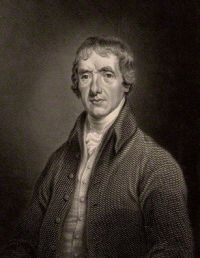
Portrait of Michael Faraday Michael Faraday The Forces of Matter — The Force of Gravitation

You will not mind my using this word, for when I say that this penny-piece gravitates, I mean nothing more nor less than that it falls toward the earth, and, if not intercepted, it would go on falling, falling, until it arrived at what we call the centre of gravity of the earth, which I will explain to you by-and-by.
I want you to understand that this property of gravitation is never lost; that every substance possesses it; that there is never any change in the quantity of it; and, first of all, I will take as illustration a piece of marble.
Source: Wikisource

Robert Hunt The Poetry of Science; or, Studies of the Physical Phenomena of Nature

In the vast area of its action, which opens before the eye of the mind, we see a power spanning all space, and linking together every one of those myriads of worlds which spangle the robe of the Infinite, and we are compelled to pause. Is this principle of gravitation a property of matter, or is it a power higher than the more tangible forces, is the question which presses on the mind. If we regard it as a subtile principle pervading all space, we compel ourselves to look beyond it for another power yet more refined
Source: Gutenberg

Get perspective with Kwize: daily news enlightened by great literature