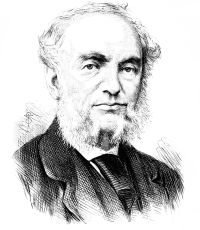
Balfour Stewart

Biographical details

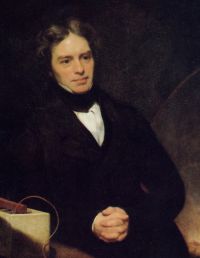
Portrait of Balfour Stewart Balfour Stewart The conservation of energy (1875)

Perpetual Motion.
193. Now, amid the crowd of workers smarting from the curse of labour, there rises up every now and then an enthusiast, who seeks to escape by means of an artifice from this insupportable tyranny of work. Why not construct a machine that will go on giving you work without limit without the necessity of being fed in any way. Nature must have some weak point in her armour; there must surely be some way of getting round her; she is only tyrannous on the surface, and in order to stimulate our ingenuity, but will yield with pleasure to the persistence of genius.
Source: Gutenberg

Portrait of Balfour Stewart Balfour Stewart The conservation of energy (1875)

We see that the world of mechanism is not a manufactory, in which energy is created, but rather a mart, into which we may bring energy of one kind and change or barter it for an equivalent of another kind, that suits us better—but if we come with nothing in our hand, with nothing we shall most assuredly return. A machine, in truth, does not create, but only transmutes, and this principle will enable us to tell, without further knowledge of mechanics, what are the conditions of equilibrium of any arrangement.
Source: Gutenberg

Portrait of Balfour Stewart Balfour Stewart Popular Science Monthly (1875)

If governments would understand the ultimate material advantages of every step forward in science, however inapplicable each may appear for the moment to the wants or pleasures of ordinary life, they would find reasons patent to the meanest capacities for bringing the wealth of mind, now lost on the drudgery of common labors, to bear on the search for those wondrous laws which govern every movement, not only of the mighty masses of our system, but of every atom distributed throughout space.—Nature.
Source: Wikisource

Get perspective with Kwize: daily news enlightened by great literature