“ But this beauty of Nature which is seen and felt as beauty, is the least part. The shows of day, the dewy morning, the rainbow, mountains, orchards in blossom, stars, moonlight, shadows in still water, and the like, if too eagerly hunted, become shows merely, and mock us with their unreality. ”
Nature
Definition and stakes
Nature denotes the physical world, encompassing its elements, phenomena, and intrinsic processes, often contrasted with human-made creations. Authors have long examined its duality: Ralph Waldo Emerson reflects on its transcendent beauty, while Titus Lucretius Carus extols its limitless, self-sustaining richness.
Olive Schreiner contemplates nature as an unchanging reality beyond human perception, and Sir Francis Younghusband seeks its fundamental essence. These viewpoints reveal nature as both a dynamic, living force and a passive setting for human existence, shaped by philosophical, scientific, and cultural perspectives. The interaction between humanity and nature’s enduring rhythms remains a central theme in literature and thought.
Quotes about “nature”
Joseph Haven, Mental Philosophy: Including the Intellect…
“ Nature, in all her moods and phases—in her wonderful variety of elements—the grand and the lowly, the sublime and the beautiful, the terrible and the pleasing—nature in her mildest and most fearful displays of power, and also in her softest and sweetest attractions, is open to every man's observation, and he must be a close observer and a diligent student of her who would cultivate in himself the ideal element. ”
 Olive Schreiner,
The Story of an African Farm
“ Was it possible for us in an instant to see Nature as she is—the flowing vestment of an unchanging reality? When the soul breaks free from the arms of a superstition, bits of the claws and talons break themselves off in him. ”
Edmund Selous, The romance of insect life (1914)
“ Along what path, indeed, can the beauty and wisdom of Nature—those endless steps from endless seeming halting-places that become, when reached, but so many points of fresh departure—be run to earth, so to speak? ”
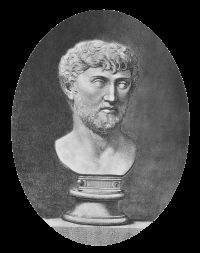 Titus Lucretius Carus,
On the Nature of Things
“ But all the flocks and herds and all wild beasts Come forth and grow, nor need the little rattles, Nor must be treated to the humouring nurse's Dear, broken chatter; nor seek they divers clothes To suit the changing skies; nor need, in fine, Nor arms, nor lofty ramparts, wherewithal Their own to guard—because the earth herself And nature, artificer of the world, bring forth Aboundingly all things for all. ”
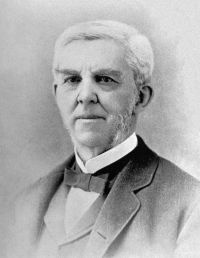 Oliver Wendell Holmes Sr.,
The Professor at the Breakfast-Table
(1860)
“ I love Nature, and human nature, its thoughts, affections, dreams, aspirations, delusions,—Art in all its forms,—virtu in all its eccentricities,—old stories from black-letter volumes and yellow manuscripts, and new projects out of hot brains not yet imbedded in the snows of age. ”
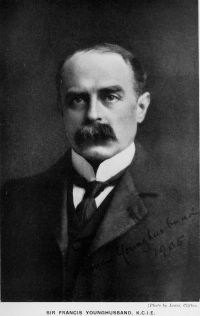 Sir Francis Edward Younghusband,
The Heart of Nature; or, The Quest for Natural Beauty
“ We see, indeed, what Nature really is. We see the reality behind the appearance—the content within the outward form. We are not for the moment concerned with the cause but with the character of Nature. ”
 George Santayana,
Reason in Common Sense
(1920, 1905)
“ He will sing the power of nature over the soul, the joys of the soul in the bosom of nature, the beauty visible in things, and the steady march of natural processes, so rich in momentous incidents and collocations. ”
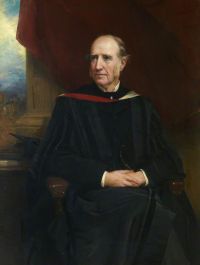 John Campbell Shairp,
On poetic interpretation of nature
(1900)
“ But probably the intensest feeling for Nature is that which is engendered out of the heart of the latest, perhaps over-refined, civilization. Ages that have been over-civilized turn away from their too highly-strung interests, their too feverish excitements, to find a peculiar relish in the calm, the coolness, the equability of Nature. ”
 Charles Kingsley,
The Water of Life, and Other Sermons
“ For this innumerable multitude of things, of which we now-a-days talk as if it were one thing, and had an organic unity of its own, or even as if it were one person, and had a will of its own, and call it Nature—a word which will one day be forgotten by philosophers, with the ‘four elements,’ and the ‘animal spirits;’—this multitude of things, I say, which we miscall Nature, has its dark and ugly, as well as its bright and fair side. ”
 Ernest Naville,
The Heavenly Father: Lectures on Modern Atheism
“ Nature is verily and indeed a marvel placed before the observation of our minds. The growth of a blade of grass, the habits of an ant, contain for an attentive observer prodigies of wisdom. A drop of dew reflecting the beams of morning, the play of light among the leaves of a tree, reveal to the poet and the artist treasures of poetry. ”
 Sarah Margaret Fuller,
Papers on Literature and Art
(1846)
“ Those who observe in this spirit will often experience, from some humble offering to the Muses, the delight felt by the naturalist in the grasses and lichens of some otherwise barren spot. These are the earliest and humblest efforts of nature, but to a discerning eye they indicate the entire range of her energies. ”
William James, The Varieties of Religious Experience…
“ Our dealings with Nature are just like this. She is a vast plenum in which our attention draws capricious lines in innumerable directions. We count and name whatever lies upon the special lines we trace, whilst the other things and the untraced lines are neither named nor counted. ”
Duchess of Margaret Cavendish Newcastle, Philosophical Letters: or, modest Reflections upon some Opinions in Natural Philosophy
“ But pardon, Madam, for I think it a Crime to compare the Creating, Generating and producing Corporeal Life and Wisdom of Nature unto any particular Creature, although every particular Creature hath their share, being a part of Nature. ”
 Josiah Royce,
The World and the Individual, Second Series
(1901)
“ Whatever the deeper reality behind Nature may turn out to be, — our Nature, the realm of matter and of laws with which our science and our popular opinions have to do, is a realm which we conceive as known or as knowable to various men, in precisely the same general sense in which we regard it as known or as knowable to our private selves. Take away the social factor in our present view of Nature, and you would alter the most essential of the characters possessed, for us, by that physical realm in which we all believe. ”
Thomas Brown, Lectures on the Philosophy of the Human Mind…
“ The splendour of nature, as it exists in itself, is, if I may speak figuratively, like sunshine on a boundless plain, on the flowers and herbage of which, though there be innumerable varieties of colour, there is brilliancy in all. ”
Robert Chambers, Vestiges of the Natural History of Creation
“ Nature presents to us much that is sublime and beautiful: behold faculties which delight in contemplating these properties of hers, and in rising upon them, as upon wings, to the presence of the Eternal. ”
“ In a word, nature was not explored then as now, for the purpose of ascertaining and recording cold and scientific realities,—but to be admired, and embellished, and animated;—and to be peopled, everywhere, with exquisitely beautiful, though imaginary and supernatural, life and action. ”
 Lafcadio Hearn,
Two years in the French West Indies
“ In the great centres of civilization we admire and study only the results of mind,—the products of human endeavor: here one views only the work of Nature,—but Nature in all her primeval power, as in the legendary frostless morning of creation. ”
William James, The Varieties of Religious Experience…
“ Such ideas, and others equally abstract, form the background for all our facts, the fountain-head of all the possibilities we conceive of. They give its “nature,” as we call it, to every special thing. ”
 F. Max Müller,
The Silesian Horseherd - Questions of the Hour
“ That is [pg 059] the thought, the idea, the logos of dog. Can there be a thought without a thinker? Did the ideas in nature, the millions of objects which make up our knowledge, fall from the clouds? Did they make themselves or did nature make them? Who, then, is nature? Is it a masculine, feminine, or neuter? If nature can choose, then it can also think and produce. But can it? No, nature is a word, very useful for certain purposes; but empty, intangible, and incomprehensible. Nature is an abstraction, as much as dog or tree, but far more inclusive. ”
 Edward Young,
Young's Night Thoughts
“ Say’st thou, “The course of nature governs all?”The course of Nature is the art of God. 1269The miracles thou call’st for, this attest;For say, could Nature Nature’s course control?But, miracles apart, who sees Him not,Nature’s controller, author, guide, and end? ”
 Ralph Waldo Emerson,
Nature
(1836)
“ Philosophically considered, the universe is composed of Nature and the Soul. Strictly speaking, therefore, all that is separate from us, all which Philosophy distinguishes as the not me, that is, both nature and art, all other men and my own body, must be ranked under this name, Nature. ”
 Friedrich Wilhelm Nietzsche,
The Joyful Wisdom ("La Gaya Scienza"…
“ Avarice of Nature.—Why has nature been so niggardly towards humanity that she has not let human beings shine, this man more and that man less, according to their inner abundance of light? Why have not great men such a fine visibility in their rising and setting as the sun? ”
 W. H. Hudson,
Afoot in England
“ In the distant days of my boyhood and early youth my chief delight was in nature, and when I opened a book it was to find something about nature in it, especially some expression of the feeling produced in us by nature, which was, in my case, inseparable from seeing and hearing, and was, to me, the most important thing in life. ”
Sir Francis Edward Younghusband,
The Heart of Nature; or, The Quest for Natural Beauty
“ And now that we have seen what is the nature of Nature, what is the end she has before her, and how she works to accomplish her end, we feel that we have gone a long way towards knowing and understanding her. ”
Various, Popular Science Monthly (1888)
“ THE vast and varied procession of events which we call Nature affords a sublime spectacle and an inexhaustible wealth of attractive problems to the speculative observer. If we confine our attention to that aspect which engages the attention of the intellect, Nature appears a beautiful and harmonious whole, the incarnation of a faultless logical process, from certain premises in the past to an inevitable conclusion in the future. ”
 Matthew Arnold,
The poetical works of Matthew Arnold
(1897)
“ IN HARMONY WITH NATURE. TO A PREACHER. "In harmony with Nature?" Restless fool, Who with such heat dost preach what were to thee, When true, the last impossibility,— To be like Nature strong, like Nature cool! ”
Various, The Germ: Thoughts towards Nature in Poetry…
“ Letting observation sleep, what can you know of nature? and you are a judge of landscape indeed. So it is that the world is taught to think of nature, as seen through other men's eyes, without any reference to its own original powers of perception, and much natural beauty is lost. ”
 Scott Nearing,
Civilization and Beyond: Learning from History
(1975)
“ Central to their discussions is the nature of life. Is it continuous, as it appears in vegetation and the animal kingdom, or is it discontinuous like the rocks on the mountainside or the grains of sand on the seashore? ”
Sir Francis Edward Younghusband,
The Heart of Nature; or, The Quest for Natural Beauty
“ By observing Nature in so many different aspects, and by comparing our impressions with one another, we ought to understand Nature better than any other race. And by entering more readily into communion with her we, better than others, should realise the Beauty she possesses. ”
Sir Francis Edward Younghusband,
The Heart of Nature; or, The Quest for Natural Beauty
“ We have, therefore, ample evidence that Nature is actuated by an intention to enrich perfection and is continually working towards it. So we have confidence that Nature, hard and exacting though she be, is only exacting in order that the Highest may be attained. We know that Nature is aiming at the Highest and nothing short of the Highest. And all the spirit of daring and adventure in us leaps to the call she makes. ”
 William Cowper,
The Task, and Other Poems
“ Nature is but a name for an effect Whose cause is God. ”
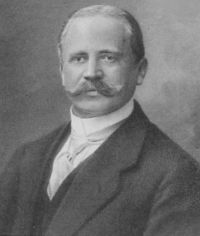 Alfred Biese,
The Development of the Feeling for Nature in the Middle Ages and Modern Times
“ In the pitching and tossing of his 'ships of thought' he never lost the consciousness of Nature's beauty, and would pray the clouds to carry his sighs with them in their tranquil course through heaven. ”
Ralph Waldo Emerson,
Nature
(1836)
“ All things are moral; and in their boundless changes have an unceasing reference to spiritual nature. Therefore is nature glorious with form, color, and motion, that every globe in the remotest heaven; every chemical change from the rudest crystal up to the laws of life; every change of vegetation from the first principle of growth in the eye of a leaf, to the tropical forest and antediluvian coal-mine; every animal function from the sponge up to Hercules, shall hint or thunder to man the laws of right and wrong, and echo the Ten Commandments. ”
Ralph Waldo Emerson,
Nature, Addresses and Lectures
(1894)
“ A life in harmony with nature, the love of truth and of virtue, will purge the eyes to understand her text. By degrees we may come to know the primitive sense of the permanent objects of nature, so that the world shall be to us an open book, and every form significant of its hidden life and final cause. ”
Sir Francis Edward Younghusband,
The Heart of Nature; or, The Quest for Natural Beauty
“ Which of these two views of Nature, so far as Nature can be judged from what we see of her on this planet, is correct, he has now to determine. The profound mystery which everywhere prevails in the forest and which exerts such a compelling spell upon us he will want to probe to the bottom. ”
“ XENOPHANES By fate, not option, frugal Nature gave One scent to hyson and to wall-flower, One sound to pine-groves and to waterfalls, One aspect to the desert and the lake. It was her stern necessity: all things Are of one pattern made; bird, beast and flower, Song, picture, form, space, thought and character Deceive us, seeming to be many things, And are but one. ”
Ralph Waldo Emerson,
Nature
(1836)
“ Every particular in nature, a leaf, a drop, a crystal, a moment of time is related to the whole, and partakes of the perfection of the whole. ”
 F. H. Bradley,
Appearance and Reality — Chapter XXVI
(1893)
“ Whether Nature is beautiful and adorable will depend entirely on the sense in which Nature is taken. If the genuine reality of Nature is bare primary qualities, then I cannot think that such a question needs serious discussion. In a word Nature will be dead. ”
Leon H. Vincent, American literary masters (1906)
“ Nature is the source of language, words being the signs of natural facts. But ‘every natural fact is a symbol of some spiritual fact.’ In brief, ‘the world is emblematic.’ Nature is a discipline of the understanding, devoting herself to forming the common-sense. ”
Emory Adams Allen, The Golden Gems of Life; Or, Gathered Jewels for the Home Circle
“ With still greater force might it be said that he who attentively studies nature and fails to see in her ways the workings of Providence must, indeed, be blind. Who the guide of nature, but only the God of nature? In him we live, move, and have our being. Those things which nature is said to do are by divine art performed, using nature as an instrument. ”
 Ralph Barton Perry,
The Harvard Classics Vol. 51
(1914)
“ Observe nature in order that you may use nature, thus converting it into the habitation, instrument, and treasure of man. Here is the supreme maxim of our modern world, and the chief ground of its peculiar confidence and hopefulness. ”
 Helen Keller,
The Story of My Life
“ Even as the roots, shut in the darksome earth, Share in the tree-top's joyance, and conceive Of sunshine and wide air and wingéd things, By sympathy of nature, so do I have evidence of things unseen. ”
Robert Huntington Fletcher, A History of English Literature
“ What is the author's attitude toward Nature— (1) does he view Nature in a purely objective way, as a mass of material things, a series of material phenomena or a mere embodiment of sensuous beauty; or (2) is there symbolism or mysticism in his attitude, that is—does he view Nature with awe as a spiritual power; or (3) is he thoroughly subjective, reading his own moods into Nature or using Nature chiefly for the expression of his moods? Or again, does the author describe with merely expository purpose, to make the background of his work clear? ”
“ Here, too, at an earlier period, he had studied the wonders of the human frame, and attempted to fathom the very process by which Nature assimilates all her precious influences from earth and air, and from the spiritual world, to create and foster man, her masterpiece. ”
John Campbell Shairp,
On poetic interpretation of nature
(1900)
“ When, therefore, in the light of these thoughts we study Nature in this, her highest poetic aspect, we may well feel that we are engaged in no trivial employment, but in one befitting an immortal being. ”
 Ameen Rihani,
Path of Vision; pocket essays of East and West
(1921)
“ To copy Nature? A boy with a camera can do that. To get the spirit of Nature? A woodman or a shepherd can follow the trail of the whistling wind to hoarded sunshine in distant wolds. But to interpret Nature and inform it with a human personality that rises above it, invokes the divine in it, is the work of genius. ”
Related terms
Authors who wrote about “nature”
Ralph Waldo EmersonAlfred BieseSir Francis Edward YounghusbandThomas Henry Huxley and Johann Wolfgang von GoetheJohn Campbell ShairpDuchess of Margaret Cavendish NewcastleOliver Wendell Holmes Sr.Donald G. FrenchLouise Manly Henry David ThoreauWilliam HazlittVariousMatthew Arnold
 William WordsworthEdward YoungGeorge SantayanaWilliam James
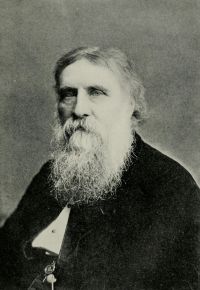 George MacDonald
 Robert Green Ingersoll
 Theodore Parker
Related articles
Wildness and Measurement, The Two Natures of Walden Pond
Thoreau’s Walden Pond retreat was not just a spiritual quest; it was a complex experiment in simultaneously revering nature’s wildness and rigorously measuring its depths. The struggle between communion and control defines our eternal relationship with the natural world.
Henry David Thoreau, Archibald McKellar MacMechan, Various
The Untamed Classroom, How Wilderness Shaped American Youth
From colonial survival to spiritual sanctuary, the untamed American landscape radically reshaped ideals of youth, education, and character, becoming a powerful metaphor for the human spirit itself.
Henry David Thoreau, Enos A. Mills, John Muir
The Invisible Kingdom, How Fungi and Microbes Reshape Our World
For centuries, humanity viewed nature through a narrow lens, missing the vital forces at play. Discover how an unseen kingdom of fungi and microbes not only cycles all life and death but also challenges our deepest assumptions about the planet and our place within its intricate, interdependent web.
Charles Darwin, Thomas Henry Huxley, Alfred North Whitehead
Raphael and the Cultivation of Genius
The enduring myth of Raphael's divine genius obscures the diligent work behind his mastery. Far from a spontaneous burst of talent, his success was meticulously built on humility, observation, synthesis, and an unparalleled ability to lead, profoundly shaping the Italian Renaissance.
William Hazlitt, Frank Jewett Mather, Walter Pater
The Stoic Caricature, From Universal Reason to Masculine Ideal
The popular image of the Stoic as a cold, emotionless individualist is a profound distortion. Ancient Stoicism championed a universal reason, social duty, and an inner peace attainable by all, challenging the very masculine ideal it now often embodies.
Clifford Herschel Moore, Adam Smith, William De Witt Hyde
The Wilderness Ideal, From Romantic Escape to Historical Reality
The romantic allure of 'off-grid' living promises escape and authenticity, but this modern fantasy conveniently overlooks a past where primitive habitation was not a choice, but a brutal, isolated struggle against relentless hardship and existential threats.
Robert Marshall, Isabella L. Bird, H. G. Wells
Swift's Enduring Jest, The Calculated Crafting of a Posthumous Self
Jonathan Swift didn't just write masterpieces; he engineered his own immortality. From calculated satire to his precise burial plans, he sought to control the verdict of history. Yet, his formidable intellect eventually succumbed, leaving a legacy perpetually reinterpreted and fiercely debated.
Jonathan Swift, Hippolyte Taine, William Hazlitt
The Permeable Prison, Nature's Enduring Sovereignty
Humanity’s relentless drive to build prisons and "coyote-proof" fences reflects a desire for absolute control. Yet, from the untamed mind within a cell to the adaptable coyote breaching barriers, nature’s ingenious sovereignty always finds a way to permeate, regenerate, and resist.
Charles Dickens, Adrien Le Corbeau, George P. Marsh
When professional duty challenges the law of the land: Conscience as a competing sovereign
The clash between external state authority and internal moral imperative defines governance. Historical crises, from medical ethical dilemmas regarding life preservation to armed standoffs based on divine law, illustrate the high stakes when professional and religious duties assert sovereignty over civil law.
Thomas Hobbes, Horatio Robinson Storer, G. A. Johnston
