AI-generated from sources
Swift's Enduring Jest, The Calculated Crafting of a Posthumous Self
In Brief
- Jonathan Swift meticulously crafted his public and posthumous persona, utilizing satire and even precise instructions for his internment to manage his legacy.
- Swift theorized satire as a moral corrective aimed at universal vice, but the incisiveness of his intellect ensured a controversial public reputation, often casting him as a malicious figure.
- His deep philosophical skepticism about human nature led him to perceive the world as a farce, requiring a simple, naked literary style to dissect and reveal uncomfortable truths.
- Despite carefully planning his remembrance, Swift acknowledged the ultimate futility of such efforts, a sentiment tragically reinforced by his own cognitive decline into an 'insensate example'.
Main authors


Jonathan Swift approached his own legacy not as an accident of history but as a project to be meticulously managed. His instruments were not confined to the literary works that secured his fame; they included his public persona, his theoretical justifications for satire, and even the precise instructions for his own internment. This long-standing preoccupation with the politics of remembrance was more than simple vanity; it represented a profound and sustained engagement with the challenge of shaping one's posthumous image. He sought to control the narrative, leaving behind a deliberate, often ironic, intellectual monument built from the raw materials of his life and wit [28].
The primary tool in this endeavor was a unique brand of satire, a calculated wit he both deployed and theorized about with intellectual rigor [2, 3]. Swift publicly framed his work as a moral corrective, a weapon aimed at universal human vice rather than at specific individuals, thereby casting himself as a detached critic of mankind's follies [1]. However, the very incisiveness of his intellect ensured his attacks felt deeply personal, generating a powerful and fiercely contested public reputation [9]. His life's work thus became a conscious performance of self, a calculated effort to ensure that the image he left to posterity was one of his own, complex and contradictory, design.
The Architecture of a Satirical Persona
At the core of his public identity, Jonathan Swift articulated a distinct philosophy of satire. He drew a sharp line between wit—which he considered the “noblest and most useful gift of human nature”—and the base humor of personal gibes . In his view, true humor had to be combined with wit to achieve a refined and agreeable effect, capable of employing irony not only for critique but also for a form of sophisticated, backhanded praise he admired in continental writers like Voiture . By repeatedly stating that his aim was to lash the vice but spare the name, Swift constructed a public defense for his work, positioning himself as an impersonal moralist engaged in the correction of universal human defects .
This theoretical framework found its practical expression in carefully staged public performances. The elaborate hoax targeting the astrologer John Partridge, for instance, was a masterclass in controlled irony [4]. After the appointed time for the man's demise, Swift published a sober, detailed account of his final moments. When the very much alive Partridge issued an indignant denial, Swift responded with a calm, temperate rebuttal, logically proving the man was dead and gently admonishing him for his unseemly and violent language . This act was not merely a prank but a public demonstration of his satirical principles, transforming a personal attack into what he termed a “point merely speculative” and using his target's outrage as further evidence of his folly .
Underlying this satirical methodology was a deep and abiding skepticism about human nature and its creations. As observers like Hippolyte Taine have noted, Swift’s fictions were designed to strip away the veils of habit and custom to reveal humanity in its essential, often ugly, truth [7]. He perceived the world as a farce and human beings as little more than consecrated blocks of wood or puppets moved by unseen directors, their lives becoming sad monuments to folly [5]. This worldview, which a later writer like Robert Graves would attribute to an intense desire for an unattainable perfection, demanded a literary style to match [8]. The simple, naked, and flexible prose lauded by critics such as Havelock Ellis was not an aesthetic choice but a necessary tool for logical dissection, shorn of the dead conventions and exuberances that might obscure the uncomfortable truths he sought to reveal [6].
A Legacy Forged in Controversy
The very power of Swift's carefully constructed persona guaranteed a legacy defined by controversy. During his most active years in London, his mastery of the political pamphlet made him, as William J. Long described him, a “veritable dictator” in the world of letters [11]. The Whig party feared the sting of his satire, while the Tories depended on his support, cementing his status as a figure of immense influence . From his own perspective, this was the work of a man of “conscious integrity,” a patriot defending his country's rights with the combined flame of a poet and the knowledge of a statesman [16]. Yet, as William Hazlitt observed, Swift’s refusal to engage in comforting platitudes about human dignity and his mission to tear the “mask of imposture from the world” made him a natural target for criticism [12].
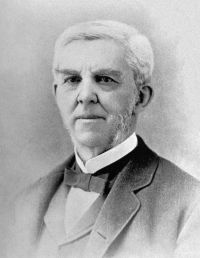
Much of the backlash centered on accusations of impiety and vulgarity. His early work, A Tale of a Tub, was widely interpreted not merely as a critique of religious schisms and pedantry but as a veiled attack on Christianity itself [13]. This perception, according to some contemporaries, fostered a view of Swift as possessing a “dangerously Satanic” character, an image that sullied his reputation and hindered his advancement within the Church [14]. Critics lamented his perceived malice and coarseness, while later figures like Oliver Wendell Holmes Sr. argued that reading Swift could permanently stain the mind with odious images and evil words [10, 17]. The German poet Friedrich Schiller went further, classifying Swift among those dangerous thinkers who, by exaggerating human follies, inflict “deadly wounds on human nature” itself [18].
This divided reception was mirrored in the dramatic shifts in public opinion during his lifetime. Upon his appointment as Dean of St. Patrick’s, he was initially met with open hostility from the Dublin populace, who reportedly pelted him with stones and mud [19]. Yet this same man, driven by a desire for wealth and power, would eventually become what Theophilus Cibber called the “most absolute monarch” over the very people who had once detested him [20]. This remarkable reversal illustrates the central tension of his public life, a conflict that left observers to debate whether he was a man of integrity misunderstood for his singularities or, as some suspected, a hypocrite more concerned with appearances than with his own conscience [15].
The Unreliable Monuments of Fame
In his later life, Swift's focus on his legacy became increasingly literal, turning from the creation of literary works to the contemplation of physical and mental decay. He acknowledged the fundamental human reluctance to be forgotten, viewing the desire for a gravestone inscription not as a foppery but as a natural incitement to virtuous action [26]. This belief informed the meticulous planning for his own death; he gave careful instructions for a private burial in St. Patrick’s Cathedral, beside his beloved Stella [21]. His stated intention was to create a lasting monument through his writings, hoping they would serve as the truest image of his mind and prove to a “silly world” that men of wit could indeed be moral exemplars .
Despite these preparations, a deep pessimism pervaded his thoughts on fame. He keenly felt the inadequacy of any memorial, questioning how a “careless and ignorant posterity” could ever truly know the person behind a name on a title page [27]. This anxiety over the erosion of identity is powerfully reflected in his own poetic depictions of old age, where he portrays himself as a man whose wit has grown stale, whose memory has failed, and whose creative spark is extinguished [23]. This internal struggle, which Samuel Johnson characterized as a life consumed by “neglected pride and the languishment of unsatisfied desire,” suggests Swift was acutely aware that even the most carefully constructed legacy could ultimately crumble into meaninglessness [24].
The ultimate paradox of Swift's quest for a controlled legacy is the conflict between the endurance of the physical monument and the fragility of the memory it is meant to enshrine. As imagined in a later allegory, onlookers at a crumbling memorial may know nothing of the person it was built to honor, reducing the stone to a silent, empty signifier [25]. This sentiment was echoed by thinkers like Emerson, who noted that pyramids fail to tell their tale and that only a “living fact commemorates itself” [30]. Swift’s own final years of cognitive decline, in which he became an insensate example used to “mortify human pride,” provided a tragic, living demonstration of this very principle [29]. The formidable intellect that had labored to secure its own remembrance was itself lost, leaving behind only the cold fact of his vanity, the enduring puzzle of his texts, and the unreliable custody of history [22].
Jonathan Swift’s career can be understood as a lifelong, calculated effort in self-authorship, an attempt to use the potent tools of wit and irony to shape a durable posthumous identity. He built a careful public defense for his satire, claiming to attack universal vice impersonally, but the very nature of his work ensured a divisive and deeply personal public reaction . This fundamental tension between his stated moral purpose and the perceived malice of his methods forged a legacy of intense controversy, casting him in roles as varied as political dictator, courageous truth-teller, blasphemous agitator, and calculating hypocrite . The arc of his public reception, from being physically attacked by the Dublin rabble to being revered by them, stands as a stark reminder of the volatile and unpredictable nature of public esteem .
His fixation on controlling this narrative followed him to the end of his life, manifesting in his precise plans for his burial and his philosophical musings on the nature of fame . And yet, he remained acutely aware of the futility of such efforts, recognizing that posterity is careless and that stone monuments often outlive the memories they are built to preserve . The slow, tragic erasure of his own mind became the final, ironic commentary on his life's project, a quiet testament to the impossibility of fully commanding one's own remembrance . Swift's legacy, therefore, is not the static, self-defined monument he may have wished for, but rather a perpetual and unresolved dialogue between his own masterful performance and the endless reinterpretations of history.