Summary

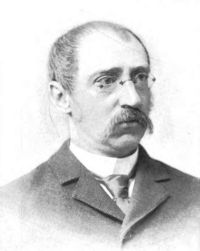
Portrait of Henry A. Beers Henry A. Beers From Chaucer to Tennyson

Shakspere is the most universal of writers. He touches more men at more points than Homer, or Dante, or Goethe. The deepest wisdom, the sweetest poetry, the widest range of character, are combined in his plays. He made the English language an organ of expression unexcelled in the history of literature. Yet he is not an English poet simply, but a world-poet. Germany has made him her own, and the Latin races, though at first hindered in a true appreciation of him by the canons of classical taste, have at length learned to know him.
Source: Gutenberg

Portrait of Henry A. Beers Henry A. Beers From Chaucer to Tennyson

Milton's blank verse in itself is enough to bear up the most prosaic theme, and so is his epic English, a style more massive and splendid than Shakspere's, and comparable, like Tertullian's Latin, to a river of molten gold. Of the countless single beauties that sow his page
Thick as autumnal leaves that strew the brooks
In Valombrosa,
there is no room to speak, nor of the astonishing fullness of substance and multitude of thoughts which have caused the Paradise Lost to be called the book of universal knowledge.
Source: Gutenberg

Portrait of Henry A. Beers Henry A. Beers From Chaucer to Tennyson

It is not easy to imagine the Thames bargees chanting passages from the Faerie Queene. Those English poets who have taken strongest hold upon their public have done so by their profound interpretation of our common life. But Spenser escaped altogether from reality into a region of pure imagination. His aerial creations resemble the blossoms of the epiphytic orchids, which have no root in the soil, but draw their nourishment from the moisture of the air.
Their birth was of the womb of morning dew,
And their conception of the glorious prime.
Source: Gutenberg

Get perspective with Kwize: daily news enlightened by great literature