Francis Bacon

Definition and stakes

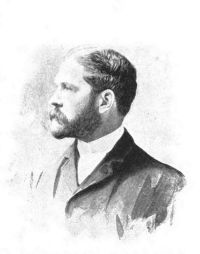
Portrait of William T. Smedley William T. Smedley The Mystery of Francis Bacon

He has been picturing himself as he was when a young man. He turns to his glass and sees himself beated and chopt with tanned antiquity; forty summers have passed over his brow. [48]
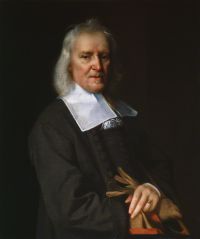
Francis Bacon at forty years of age, or thereabouts, unmarried, childless, sits down to his table, Hilliard's portrait before him, with pen in hand, full of self-love, full of admiration for that beautiful youth on whose counterfeit presentment he is gazing. His intellectual triumphs pass in review before him, most of them known only to himself and that youth—his companion through life.
Source: Gutenberg

Portrait of William T. Smedley William T. Smedley The Mystery of Francis Bacon

The most sanguine Baconian, in his most enthusiastic moments, must fail adequately to appreciate the achievements of Francis Bacon and the obligations under which he has placed posterity. But Bacon knew—and he alone knew—their full value. It was fitting that the greatest poet which the world had produced should in matchless verse do honour to the world's greatest intellect. It was a pretty conceit. Only a master mind would dare to make the attempt.
Source: Gutenberg

Portrait of William T. Smedley William T. Smedley The Mystery of Francis Bacon

Bacon's new organ has never been constructed, and all wits and understandings have not yet been placed on a level.
We come back to the mystery of Francis Bacon, the possessor of the most exquisite intellect that was ever bestowed on any of the children of men. As an historian, he gives us a taste of his quality in "Henry VII." In the Essays and the "Novum Organum," sayings which have the effect of axioms are at once striking and self-evident. But he is always desultory.
Source: Gutenberg

Get perspective with Kwize: daily news enlightened by great literature