Organum

Definition and stakes

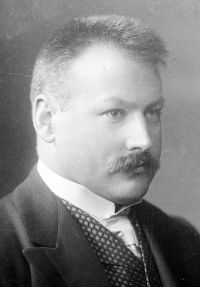
Portrait of Rudolf Otto Rudolf Otto Naturalism and Religion

It is thought of as a very minute corpuscle of living matter. Thus there are determinants of hairs and scales, pieces of skin, pits, marks, &c. But every determined organ, or part, or “independent region,” is itself in its turn an “organism,” is indeed a system of an infinite number of interrelated component parts, and each of these again is another, down to the individual cells. And each cell is an “organism” in itself, and so on into infinity. Is all this represented in the determinants?
Source: Gutenberg

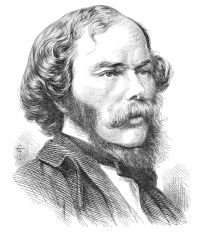
Portrait of Herbert Spencer Herbert Spencer The Principles of Biology — Chapter II.4 (1898)

Now if the compound molecules of the blood, or of an organism considered in the aggregate, have the power of moulding into their own type the matters which they absorb as nutriment; and if they have the power when their type has been changed by disease, of moulding materials afterwards received into the modified type; may we not reasonably suspect that the more or less specialized molecules of each organ have, in like manner, the power of moulding the materials which the blood brings to them into similarly specialized molecules?
Source: Wikisource

Chautauqua Institution The Chautauquan, Vol. 03, April 1883

The word “organ” signifies some part or parts of the body that have a particular use or function: thus, muscles are organs of motion, and nerves of sensation; the eye is the organ of sight, and the heart and blood vessels are the organs for circulating the blood. Now, any structure is said to be organized, or to have organization, that possesses the properties which distinguish a living body from one that never had life. Therefore we speak of the organic world as distinguished from the inorganic; the former includes plants and animals, the latter minerals, etc.
Source: Gutenberg

Get perspective with Kwize: daily news enlightened by great literature