Bile

Definition and stakes

Claudius Galenus,  On the Natural Faculties — Book Two (1916)

“ Would it not be absurd for any one to choose voluntarily those articles which contain more bile, rather than those containing less? What, however, if the bile is not contained in the food, but comes into existence in the animal’s body? Will it not also be useful to know what state of the body is followed by a greater, and what by a smaller occurrence of bile? For obviously it is in our power to alter and transmute morbid states of the body—in fact, to give them a turn for the better. ”
Source: Wikisource

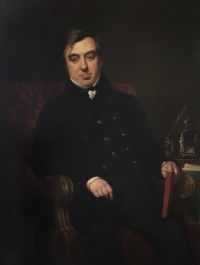
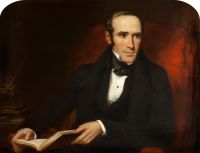
Portrait of Andrew Combe Andrew Combe,  The physiology of digestion considered with relation to the principles of dietetics… (1836)

“ The influence of the bile as a stimulant to the bowels is proved by the fact that costiveness ensues when it is deficient in quantity, and an opposite condition when the secretion is redundant, as during the heat of autumn.
Bile is a bitter, viscid, greenish-yellow fluid, the taste and general appearance of which are familiar to most people, and the office of which in the animal economy must be one of no small moment, if it be justly chargeable with even a tenth part of the catalogue of human ills which are laid to its account.
”
Source: Gutenberg

Portrait of George Harley George Harley,  Jaundice: Its Pathology and Treatment

“ It will be remembered that I began by saying, that while some of the constituents of the bile are generated in the liver itself, there are others that exist, pre-formed in the blood.
If this view of the physiology of the biliary secretion be correct, it is perfectly evident that when the secretion of bile is arrested, those substances which the liver generates will be entirely wanting, while those which it merely excretes from the blood will accumulate there as soon as their excretion is prevented; just as urea accumulates in the circulation when its elimination by the kidneys is stopped.
”
Source: Gutenberg

Get perspective with Kwize: daily news enlightened by great literature