Urea

Definition and stakes

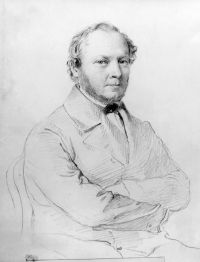
Portrait of Robert James Culverwell Robert James Culverwell,  Porneiopathology

“ Of all these component parts, the most important is an animal product named urea, which exists in about the proportion of one in thirty to the water containing it, while the other materials taken collectively, water excepted, yield only about double the quantity of the urea: hence, when the urine is disordered, its specific gravity [17] is increased or diminished, as the case may be; according to the abundance of the urea, and the various proportions of the saline ingredients of the urine, so is the urine thick, thin, acid, or alkaline, pale, or what is called high colored. ”

Source: Gutenberg

Joseph Turney Wood,  The Puering, Bating & Drenching of Skins

“ Urea is also present in considerable amount, and does not appear to be so easily decomposed as the urea in animal urine.41 As we shall show in the next chapter, urea, and probably also urates, greatly facilitate the permeability of gelatine, and to this fact may be ascribed the more gradual action of bird-dung bates. If we attempt to bate hides with dog-dung, the grain of the hide is found to be attacked and destroyed before the bate has penetrated to the interior of the hide. ”
Source: Gutenberg

Francis M. Walters,  Physiology and Hygiene for Secondary Schools

“ The blood in the renal veins, having given up most of its impurities and still retaining its oxygen, is considered the purest blood in the body.
Urea is the most abundant solid constituent of the urine and is the chief waste product arising from the oxidation of nitrogenous substances in the body. Although secreted by the cells lining the uriniferous tubules, it is not formed in the kidneys. The secreting cells simply separate it from the blood where it already exists. The muscles also have been suggested as a likely source of urea, for here the proteids are broken down in largest quantities
”
Source: Gutenberg

Get perspective with Kwize: daily news enlightened by great literature