Ammonia

Definition and stakes

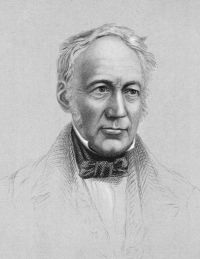
Portrait of James Clerk Maxwell James Clerk Maxwell,  Popular Science Monthly (1874)

“ Ammonia is a gas which you can recognize by its smell. Its molecules have a velocity of six hundred metres per second, so that, if their course had not been interrupted by striking against the molecules of air in the hall, every one in the most distant gallery would have smelt ammonia before I was able to pronounce the name of the gas. But, instead of this, each molecule of ammonia is so jostled about by the molecules of air, that it is sometimes going one way and sometimes another. It is like a hare which is always doubling, and, though it goes a great pace, it makes very little progress. ”
Source: Wikisource

Various,  Scientific American Supplement No…

“ Ammonia of itself is a colorless gas, but little more than one half as heavy as air. In its composition ammonia consists of two gases, nitrogen and hydrogen, in the proportion by weight of one part nitrogen and three parts hydrogen. The gas hydrogen is one of the constituents of water and is highly inflammable in the presence of air or oxygen, while the other component of ammonia, nitrogen, forms the bulk or about four-fifths of the atmosphere. Nitrogen by itself is an inert gas, colorless and uninflammable. ”
Source: Gutenberg

Arabella B. Buckley,  The Fairy-Land of Science

“ Ammonia, you will remember, is a strong-smelling gas, made of hydrogen and nitrogen, and which is often almost stifling near a manure-heap. When you manure a plant you help it to get this ammonia, but at any time it gets some from the soil and also from the rain-drops which bring it down in the air. Out of this ammonia the plant takes the nitrogen and works it up with the three elements, carbon, oxygen, and hydrogen, to make the substances called albuminoids, which form a large part of the food of the plant, and it is these albuminoids which go to make protoplasm. ”
Source: Gutenberg

Get perspective with Kwize: daily news enlightened by great literature