Carbonate

Definition and stakes

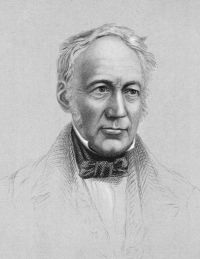
Portrait of Andrew Ure Andrew Ure,  A Dictionary of Arts, Manufactures and Mines

“ When pure carbonate is wanted, that dry mass must be mixed with its own bulk of ground coal, sawdust, or charcoal, and thrown into a reverberatory furnace, like fig. 1038., but with the sole all upon one level. Here it must be exposed to a heat not exceeding 650° or 700° F.; that is, a little above the melting heat of lead; the only object being to volatilize the sulphur present in the mass, and carbonate the alkali. Now, it has been found, that if the heat be raised to distinct redness, the sulphur will not go off, but will continue in intimate union with the soda. ”
Source: Gutenberg

1911 Encyclopædia Britannica (1910)

“ Like aluminium carbide it is slowly decomposed by water with the production of methane. Several basic carbonates are known, being formed by the addition of beryllium salts to solutions of the alkaline carbonates; the normal carbonate is prepared by passing a current of carbon dioxide through water containing the basic carbonate in suspension, the solution being filtered and concentrated over sulphuric acid in an atmosphere of carbon dioxide. The crystals so obtained are very unstable and decompose rapidly with evolution of carbon dioxide. ”
Source: Wikisource

C. Beringer,  A Text-book of Assaying: For the Use of Those Connected with Mines

“ Carbon dioxide, which is formed by the complete oxidation of carbon, is a gas with a sweetish odour and taste, having a strong affinity for alkalies, and forming a series of compounds termed carbonates. The gas itself occurs in nature, and is sometimes met with in quantity in mining. The carbonates occur largely in nature, forming mountain masses of limestone, &c. Carbonates of many of the metals, such as carbonate of lead (cerussite) , carbonate of iron (chalybite) , carbonates of copper (malachite and chessylite) , and carbonate of magnesia (magnesite) , are common. ”
Source: Gutenberg

Get perspective with Kwize: daily news enlightened by great literature