Acetate

Definition and stakes

Arnold James Cooley,  Cooley's Cyclopædia of Practical Receipts and Collateral Information in the Arts…

“ Pure acetate of lead forms colourless, transparent, prismatic crystals, slightly efflorescent in dry air; it is soluble in 8 parts of alcohol and in 11⁄4 part of cold water; the aqueous solution has a sweet astringent taste, and feebly reddens litmus, but turns turmeric and the juice of violets green; when gently heated, it melts in its water of crystallisation; by continuing the heat, the whole of the water is expelled, and the dry acetate obtained; at a higher temperature the salt suffers decomposition, and acetic acid, acetone, &c., is given off. ”
Source: Gutenberg

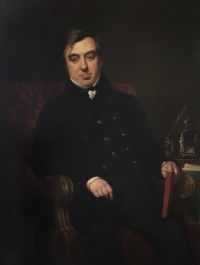
Portrait of John Ayrton Paris John Ayrton Paris,  Pharmacologia

“ Neither the strong acids nor alcohol, when considerably diluted, occasion any disturbance in it; but sulphuric æther and its compound spirit, the tincture of muriated iron, and sub-acetate of lead, produce very dense precipitates: the acetate of lead only occasions decomposition, when an alkaline salt is present in the formula; the volatile alkali curdles the mucilage, and hard calcareous waters render the mixture difficult and often impracticable. ”
Source: Gutenberg

George Terry,  Pigments, Paint and Painting: A practical book for practical men

“ After cooling thoroughly, the cold basic acetate, which may now have crystallised or separated out more or less, according to the strength of the solution, is treated with carbonic acid gas, whereby the basic acetate, in the presence of the ammonia set free, is converted into basic carbonate of lead of exceptionally white colour, and with high basicity and covering power, proper care being taken as specially indicated later on. ”
Source: Gutenberg

Get perspective with Kwize: daily news enlightened by great literature