Mucilage

Definition and stakes

Sylvester Marsh,  Section-Cutting

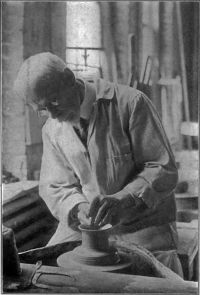
“ Mucilage, by keeping, is very apt to become sour and mouldy—this may be prevented by adding to each ounce of the water with which it is prepared about half a grain of salicylic acid. We now pour some of this mucilage into a small vessel—an egg cup will answer very well—and into it transfer the piece of ileum from the water. Here we must allow it to remain for a time sufficient to permit of its becoming thoroughly saturated with the gum, for which purpose some hours will be necessary. When this soaking has been accomplished we will prepare the microtome, which we will assume to be Rutherford’s. ”
Source: Gutenberg

Frederick Leroy Sargent,  Through a Microscope

“ Glue or mucilage containing glycerine (in the proportion of one or two teaspoonfuls to an ordinary bottle of mucilage) is the best thing to use for sticking on the backs. While the slides are drying they should be either under a weight or in a clamp screwed up tightly, so as to prevent their twisting out of shape. The mucilage may be prevented from being squeezed in round the edges of the hole, by taking care when putting it on not to have it come too near the hole. ”
Source: Gutenberg

Alan Summerly Cole,  1911 Encyclopædia Britannica (1911)

“ A tragacanth mucilage may be made either by allowing it to stand a day or two in contact with cold water or by soaking it for twenty four hours in warm water and then boiling it up until it is perfectly smooth and homogeneous. If boiled under pressure it gives a very fine smooth mucilage (not a solution proper) , much thinner than if made in the cold.
Albumen.—Albumen is both a thickening and a fixing agent for insoluble pigments such as chrome yellow, the ochres, vermilion and ultramarine.
”
Source: Wikisource

Get perspective with Kwize: daily news enlightened by great literature