Urine

Definition and stakes

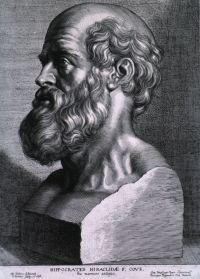
Portrait of Hippocrates Hippocrates,  The Genuine Works of Hippocrates… (1886)

“ When the urine is yellow and thin, it indicates that the disease is unconcocted; and if it (the disease) should be protracted, there may be danger lest the patient should not hold out until the urine be concocted. [490] But the most deadly of all kinds of urine are the fetid, watery, black, and thick; in adult men and women the black is of all kinds of urine the worst, but in children, the watery. [491] In those who pass thin and crude urine for a length of time, if they have otherwise symptoms of convalescence, an abscess may be expected to form in the parts below the diaphragm. ”
Source: Gutenberg

J. K. Walter,  Transactions of the Provincial Medical and Surgical Association (1833)

“ The urine of children is but seldom attended to, either by mother, nurse, or medical practitioner. Neither has the art of chemistry lent us any aid in deciding what are the component parts of healthy urine in children. The few experiments that have been made, are unsatisfactory and inconclusive; one chemist tells us one thing, another maintains the contrary. Where the diet of children is unwholesome, and the consequent disorders of their digestive organs neglected, it is common to find a deposition of red sand in the urine. ”
Source: Wikisource

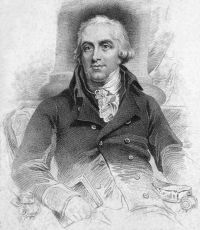
Portrait of Robert James Culverwell Robert James Culverwell,  Porneiopathology

“ To resume; the patient will content himself, that the only fault in his system is the disordered condition of his urine, and he earnestly seeks for something to touch that particular symptom, forgetting that trifling as he may fancy it, it is not merely owing to the office of the kidneys and bladder, but to the blood itself, whence the urine is formed, and to other circumstances in the economy that influence it. ”
Source: Gutenberg

Get perspective with Kwize: daily news enlightened by great literature