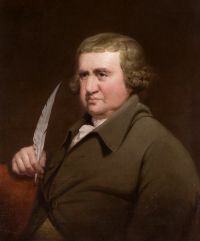
Edmund Owen

Biographical details

Edmund Owen,  1911 Encyclopædia Britannica (1911)

“ Indeed, it not infrequently happens that the most serious forms of secondary or tertiary symptoms succeed a sore which was regarded as of such trivial nature that the individual declined to submit himself to treatment, or quickly withdrew himself from it to enter a fool’s paradise. The advisability of ceasing from treatment should always be determined by the surgeon, never by the patient; mercurial treatment must be continued long after the disappearance of the secondary eruptions. It is the disease which the surgeon has to cure, not the symptoms. ”
Source: Wikisource

Edmund Owen,  1911 Encyclopædia Britannica (1911)

“ It has truly been said that a surgeon is a physician who can operate, and the public have begun to realize the fact that it is useless to try to relieve an acute abdominal lesion by diet or drugs. Not many years ago cases of acute, obscure or chronic affections of the abdomen which were admitted into hospital were sent as a matter of course into the medical wards, and after the effect of drugs had been tried with expectancy and failure, the services of a surgeon were called in. ”
Source: Wikisource

Edmund Owen,  1911 Encyclopædia Britannica, Volume 25… (1911)

“ There may be complete paralysis of one side or of both sides of the body. Not only may the pressure of a blood-clot, an abscess, a foreign body (such as a bullet) or a depressed piece of the skull- wall give rise to coma, but so may a syphilitic, a malignant or an innocent tumour, and in cases in which the administration of iodide of potassium fails to afford relief, the operation of trephining may perhaps be resorted to, as giving the only chance of recovery. ”
Source: Wikisource

Get perspective with Kwize: daily news enlightened by great literature