Erasmus Darwin

Biographical details

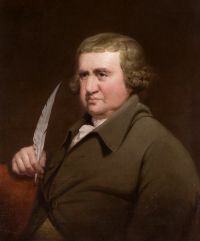
Portrait of Erasmus Darwin Erasmus Darwin Zoonomia; Or, the Laws of Organic Life…

And yet the changes which many of them undergo in their early state to that of their maturity, are as different, as one animal can be from another. As those of the gnat, which passes his early state in water, and then stretching out his new wings, and expanding his new lungs, rises in the air; as of the caterpillar, and bee-nymph, which feed on vegetable leaves or farina, and at length bursting from their self-formed graves, become beautiful winged inhabitants of the skies, journeying from flower to flower, and nourished by the ambrosial food of honey.
Source: Gutenberg

Portrait of Erasmus Darwin Erasmus Darwin Zoonomia, or, the Laws of Organic Life… (1796)

What induces the bee who lives on honey to lay up vegetable powder for its young? What induces the butterfly to lay its eggs on leaves, when itself feeds on honey? What induces the other flies to seek a food for their progeny different from what they consume themselves? If these are not deductions from their own previous experience or observation, all the actions of mankind must be resolved into instinct.
Source: Wikisource

Portrait of Erasmus Darwin Erasmus Darwin Zoonomia; Or, the Laws of Organic Life…

The pleasurable sensations, which occasion laughter, are perpetually passing into the bounds of pain; for pleasure and pain are often produced by different degrees of the same stimulus; as warmth, light, aromatic or volatile odours, become painful by their excess; and the tickling on the soles of the feet in children is a painful sensation at the very time it produces laughter. When the pleasurable ideas, which excite us to laugh, pass into pain, we use some exertion, as a scream, to relieve the pain, but soon stop it again, as we are unwilling to lose the pleasure
Source: Gutenberg

Get perspective with Kwize: daily news enlightened by great literature