Summary

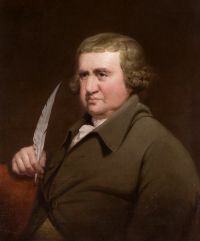
Portrait of Erasmus Darwin Erasmus Darwin Zoonomia, or, the Laws of Organic Life… (1796)

The temporary catenations of ideas, which are caused by the sensations of pleasure or pain, are easily dissevered either by irritations, as when a sudden noise disturbs a day-dream; or by the power of volition, as when we awake from sleep. Hence in our waking hours, whenever an idea occurs, which is incongruous to our former experience, we instantly dissever the train of imagination by the power of volition, and compare the incongruous idea with our previous knowledge of nature, and reject it.
Source: Wikisource

Portrait of Erasmus Darwin Erasmus Darwin Zoonomia, or, the Laws of Organic Life… (1796)

When a young lady begins to learn music, she voluntarily applies herself to the characters of her music-book, and by many repetitions endeavours to catenate them with the proportions of sound, of which they are symbols. The ideas excited by the musical characters are slowly connected with the keys of the harpsichord, and much effort is necessary to produce every note with the proper finger, and in its due place and time
Source: Wikisource

Portrait of Erasmus Darwin Erasmus Darwin Zoonomia, or, the Laws of Organic Life… (1796)

For if the activity of the mind itself be more energetic, or takes its attention more, than the connecting word, which is wanted; it will not perceive the slighter link of this lost word; as who listens to a feeble sound, must be very silent and motionless; so that in this case the very vigour of the mind itself seems to prevent it from regaining the lost catenation, as well as the too great exertion in endeavouring to regain it, according to the tenth preceding article.
Source: Wikisource

Get perspective with Kwize: daily news enlightened by great literature