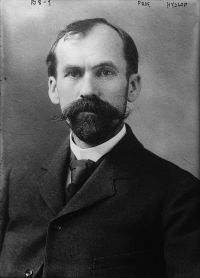
James H. Hyslop

James H. Hyslop

Summary

Portrait of James H. Hyslop James H. Hyslop The Philosophical Review (1892)

Freedom consists only in self-initiative and independence of external causes, whether there be any choice between alternatives or not, and we have shown how inhibition and deliberation bring about both of these circumstances. But this ability to choose otherwise than we do, while not essential to freedom, is essential to responsibility, which must not be regarded as convertible with freedom. If at any time we are able to choose otherwise than we do, the fact proves our freedom, but it is not the condition of it.
Source: Wikisource

Portrait of James H. Hyslop James H. Hyslop The Philosophical Review (1892)

Assuming instinctive impulses as the blind initiatives of volition, we have attributed neither freedom nor responsibility to agents governed by them; and then passing from these to conduct under the influence of emotion or desire, which are either expressions of instinctive impulse or necessary consequents of our nature and at the same time the "motives" or causes of volition, we very naturally carry with us the presumption that the volition excludes deliberation and choice between alternatives, because it is the necessary effect of the stronger motive.
Source: Wikisource

Portrait of James H. Hyslop James H. Hyslop The Philosophical Review (1892)

There are "motives" to action which are only efficient causes, and these are such as the reflexes and the instincts, according to the common conception of them. They produce an act immediately and necessarily upon their occurrence in the organism, and leave no room whatever for consciousness, deliberation, or choice. Hence they bring all such actions under the law of causality in a form that excludes freedom.
Source: Wikisource

Get perspective with Kwize: daily news enlightened by great literature