Henry Rutgers Marshall

Henry Rutgers Marshall

Summary

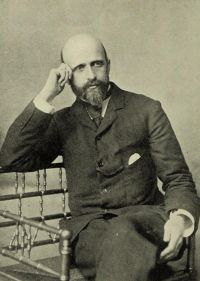
Portrait of Henry Rutgers Marshall Henry Rutgers Marshall The Philosophical Review (1892)

The very same conditions which are held to bring about the stimulation of pain nerves here seem to be productive of pleasure. How is it that the man who is well-rested and vigorous in health finds it difficult to experience pain, although he is more active than the average man? How is it, on the other hand, that the gentlest stimulus is painful to one who is exhausted by illness or who is thoroughly weary?
Source: Wikisource

Portrait of Henry Rutgers Marshall Henry Rutgers Marshall The Philosophical Review (1892)

PLEASURE-PAIN AND SENSATION.
THE direction in which the Psychology of our day has made its most striking advances is that of the development of psycho-physics. A very large proportion of the complex and absorbing investigations which are undertaken by those who devote themselves to this relatively new science deal with phenomena of Sensation, and therefore we should not be unprepared to find, as we clearly do find, those who become absorbed in this and kindred studies emphasizing the function of Sensation and to some extent exaggerating its importance in the mental field.
Source: Wikisource

Portrait of Henry Rutgers Marshall Henry Rutgers Marshall The Philosophical Review (1892)

Apparently no element of consciousness can be both pleasurable and painful at the same time: the one appears to exclude the other, although it seems equally certain that psychoses composed of diverse elements may have in their make-up coexistent elements both pleasurable and painful. It is the judgment of common sense that Pleasure and Pain are two states, too disparate to be commonly known by any one word, but so inseparably connected that they must be mentioned in one breath.
Source: Wikisource

Get perspective with Kwize: daily news enlightened by great literature