Summary

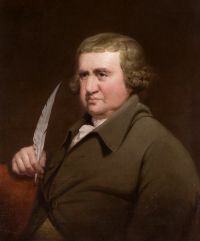
Portrait of Erasmus Darwin Erasmus Darwin Zoonomia, or, the Laws of Organic Life… (1796)

All of us have felt the pain of immoderate laughter; children have been tickled into convulsions of the whole body; and others have died in the act of laughing; probably from a paralysis succeeding the long continued actions of the muscles of respiration.
Hence we learn the reason, why children, who are so easily excited to laugh by the tickling of other people's fingers, cannot tickle themselves into laughter. The exertion of their hands in the endeavour to tickle themselves prevents the necessity of any exertion of the respiratory muscles to relieve the excess of pleasurable affection.
Source: Wikisource

Portrait of Erasmus Darwin Erasmus Darwin Zoonomia, or, the Laws of Organic Life… (1796)

This unmixed pleasure, if it be great, becomes painful, like all other animal motions from stimuli of every kind; and if no other exertions are occasioned at the same time, we use the exertion of laughter to relieve this pain. Hence laughter is occasioned by such wit as excites simple pleasure without any other emotion, such as pity, love, reverence. For sublime ideas are mixed with admiration, beautiful ones with love, new ones with surprise; and these exertions of our ideas prevent the action of laughter from being necessary to relieve the painful pleasure above described.
Source: Wikisource

Portrait of Erasmus Darwin Erasmus Darwin Zoonomia, or, the Laws of Organic Life… (1796)

It is probable, that this twofold use of the word volition in all languages has confounded the metaphysicians, who have disputed about free will and necessity. Whereas from the above analysis it would appear, that during our sleep, we use no voluntary exertions at all; and in our waking hours, that they are the consequence of desire or aversion.
To will is to act in consequence of desire; but to desire means to desire something, even if that something be only to become free from the pain, which causes the desire; for to desire nothing is not to desire
Source: Wikisource

Get perspective with Kwize: daily news enlightened by great literature