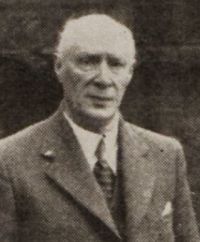
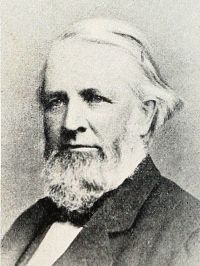
Bernard Le Bouyer de Fontenelle

Definition and stakes

1911 Encyclopædia Britannica, Volume 10… (1911)

Fontenelle forms a link between two very widely different periods of French literature, that of Corneille, Racine and Boileau on the one hand, and that of Voltaire, D’Alembert and Diderot on the other. It is not in virtue of his great age alone that this can be said of him; he actually had much in common with the beaux esprits of the 17th century, as well as with the philosophes of the 18th. But it is to the latter rather than to the former period that he properly belongs.
He has no claim to be regarded as a genius
Source: Wikisource

Various Encyclopaedia Britannica, 11th Edition…

The characteristic literary figures of the opening years of the period are d’Aguesseau, Fontenelle, Saint-Simon, personages in many ways interesting and remarkable, but purely transitional in their characteristics. Bernard le Bovier de Fontenelle (1657-1757) is, indeed, perhaps the most typical figure of the time. He was a dramatist, a moralist, a philosopher, physical and metaphysical, a critic, an historian, a poet and a satirist. The manner of his works is always easy and graceful, and their matter rarely contemptible.
Source: Gutenberg

1911 Encyclopædia Britannica, Volume 10… (1911)

But the cynical expressions of such a man are not to be taken too literally; and the mere fact that he lived and died in the esteem of many friends suffices to show that the theoretical selfishness which he sometimes professed cannot have been consistently and at all times carried into practice.
There have been several collective editions of Fontenelle’s works, the first being printed in 3 vols. at the Hague in 1728–1729. The best is that of Paris, in 8 vols.
Source: Wikisource

Get perspective with Kwize: daily news enlightened by great literature