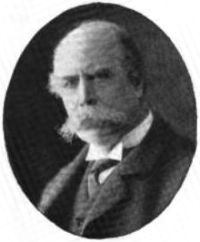
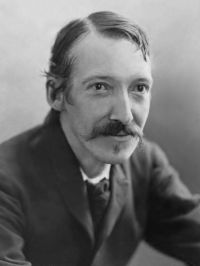
Charles Augustin Sainte-Beuve

Definition and stakes

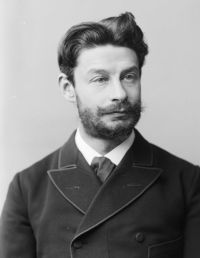
Portrait of George Saintsbury George Saintsbury A Short History of French Literature

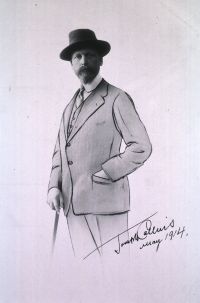
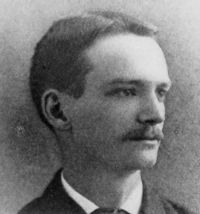
It is very seldom that the two different forces of criticism and creation work together as they did in the case of the Romantic movement. Each had numerous representatives, but the point of importance is that each was represented by one of the greatest masters. Charles Augustin Sainte-Beuve, the critic not merely of the Romantic movement, but of the nineteenth century, and in a manner the first scientific and universal critic that the world has seen, was born at Boulogne on the 23rd of December, 1804.
Source: Gutenberg

Various The Atlantic Monthly, Volume 17…

Before him French criticism, when it was not either acrimonious or simply learned, consisted in a mere commonplace repetition of precepts and formulas of which the sense had been lost. His perpetual mobility is but a constant good faith; he believes in the most opposite schools, because believing is with him only a mode of comprehending."
Let it not be supposed from this description that M. Sainte-Beuve is wanting in acuteness, that his enthusiasm predominates over his sagacity. On the contrary, there is no keener eye than his for whatever is false, pretentious, or unsound.
Source: Gutenberg

Various The Atlantic Monthly, Volume 17…

Nature had given him a peculiar mobility of temperament, and a strong instinctive sense of beauty under every diversity of form. Moreover, resistance would have been useless and Quixotic. In literature, as in politics, dynasties perish through their own weakness. The classical school of France had no living representative [Pg 435] around whom its adherents could have rallied. Its only watchword was "The Past," which is always an omen of defeat.
Properly speaking, therefore, M. Sainte-Beuve began his career, not as an opponent, but as the champion of the new school.
Source: Gutenberg

Get perspective with Kwize: daily news enlightened by great literature