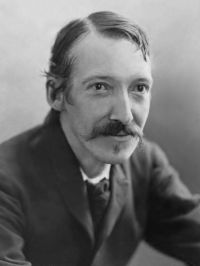
Robert Louis Stevenson

Robert Louis Stevenson

Summary

Portrait of Robert Louis Stevenson Robert Louis Stevenson Essays of Robert Louis Stevenson

The correction of silence is what kills; when you know you have transgressed, and your friend says nothing and avoids your eye. If a man were made of gutta-percha, his heart would quail at such a moment. But when the word is out, the worst is over; and a fellow with any good-humour at all may pass through a perfect hail of witty criticism, every bare place on his soul hit to the quick with a shrewd missile, and reappear, as if after a dive, tingling with a fine moral reaction, and ready, with a shrinking readiness, one-third loath, for a repetition of the discipline.
Source: Gutenberg

Portrait of Robert Louis Stevenson Robert Louis Stevenson Essays of Robert Louis Stevenson

The "dog's instinct" and the "automaton-dog," in this age of psychology and science, sound like strange anachronisms. An automaton he certainly is; a machine working independently of his control, the heart like the mill-wheel, keeping all in motion, and the consciousness, like a person shut in the mill garret, enjoying the view out of the window and shaken by the thunder of the stones; an automaton in one corner of which a living spirit is confined: an automaton like man. Instinct again he certainly possesses. Inherited aptitudes are his, inherited frailties.
Source: Gutenberg

Portrait of Robert Louis Stevenson Robert Louis Stevenson Essays of Robert Louis Stevenson

The most influential books, [3] and the truest in their influence, are works of fiction. They do not pin the reader to a dogma, which he must afterwards discover to be inexact; they do not teach him a lesson, which he must afterwards unlearn. They repeat, they rearrange, they clarify the lessons of life; they disengage us from ourselves, they constrain us to the acquaintance of others; and they show us the web of experience, not as we can see it for ourselves, but with a singular change—that monstrous, consuming ego of ours being, for the nonce, struck out.
Source: Gutenberg

Get perspective with Kwize: daily news enlightened by great literature