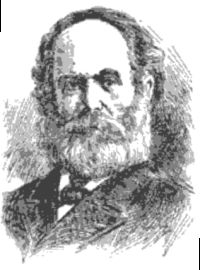
William Cleaver Wilkinson

William Cleaver Wilkinson

Summary

Portrait of William Cleaver Wilkinson William Cleaver Wilkinson French Classics

He is the only fabulist, of any age or any nation, that, on the score simply of his fables, is admitted to be poet as well as fabulist. There is perhaps no other literary name whatever among the French by long proof more secure than is La Fontaine’s, of universal and of immortal renown. Such a fame is, of course, not the most resplendent in the world; but to have been the first, and to remain thus far the only, writer of fables enjoying recognition as true poetry—this, surely, is an achievement entitling La Fontaine to monumental mention in any sketch, however summary, of French literature.
Source: Gutenberg

Portrait of William Cleaver Wilkinson William Cleaver Wilkinson French Classics

There is never a touch of noble moral sentiment to relieve the monotony of mockery that lightly laughs at you and tantalizes you, page after page, from the beginning to the end of the book. The banter is not good-natured; though, on the other hand, it cannot justly be pronounced ill-natured; and it is, in final effect upon the reader’s mind, bewildering and depressing in the extreme. Vanity of vanities, all is vanity; such is the comfortless doctrine of the book. The apples are the apples of Sodom, everywhere in the world. There is no virtue anywhere, no good, no happiness.
Source: Gutenberg

Portrait of William Cleaver Wilkinson William Cleaver Wilkinson French Classics

The one inspires, astonishes, masters, instructs; the other pleases, moves, touches, penetrates. Whatever there is most beautiful, most noble, most imperial, in the reason is made use of by the former; by the latter whatever is most seductive and most delicate in passion. You find in the former maxims, rules, and precepts; in the latter, taste and sentiment. You are more absorbed in the plays of Corneille; you are more shaken and more softened in those of Racine. Corneille is more moral; Racine, more natural. The one appears to make Sophocles his model; the other owes more to Euripides.
Source: Gutenberg

Get perspective with Kwize: daily news enlightened by great literature