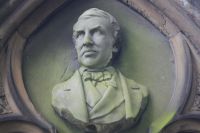
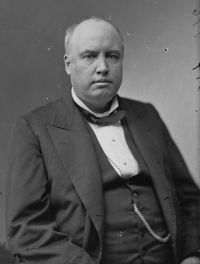
David Hume, a Scottish philosopher, economist, and historian, is celebrated for his empiricist philosophy, skepticism, and naturalism, as exemplified in A Treatise of Human Nature. He challenged rationalism by asserting that knowledge arises solely from experience, rejecting innate ideas and questioning causality through "constant conjunction." Authors like John Hill Burton highlighted his intellectual boldness and complex character, while James Frederick Ferrier emphasized his foundational role in modern philosophy.
Hume’s own writings, such as An Enquiry Concerning the Principles of Morals, reveal his ethical focus on sentiment, emphasizing emotion over abstract principles. His legacy, bridging Enlightenment thought and later analytic philosophy, lies in his rigorous examination of human nature and the boundaries of reason, shaping debates on free will, causality, and morality.
 James Frederick Ferrier,
Blackwood's Magazine
(1842)
James Frederick Ferrier,
Blackwood's Magazine
(1842)