Jean-Jacques Rousseau

Definition and stakes

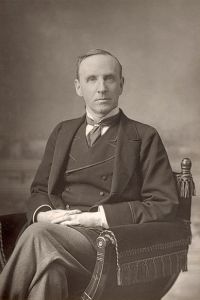
Portrait of William Cleaver Wilkinson William Cleaver Wilkinson,  Classic French Course in English

“ Jean Jacques Rousseau is perhaps the most squalid, as it certainly is one of the most splendid, among French literary names. The squalor belongs chiefly to the man, but the splendor is wholly the writer's. There is hardly another example in the world's literature of a union so striking of these opposites.
Rousseau's life he has himself told, in the best, the worst, and the most imperishable, of his books, the "Confessions."
”
Source: Gutenberg

Portrait of William Cleaver Wilkinson William Cleaver Wilkinson,  French Classics

“ Rousseau’s whole life was a series of self-indulgences, groveling, sometimes, beyond what is conceivable to any one not learning of it all in detail from the man’s own pen. The reader is fain at last to seek the only relief possible from the sickening story, by flying to the conclusion that Jean Jacques Rousseau, with all his genius, was wanting in that mental sanity which is a condition of complete moral responsibility. ”
Source: Gutenberg

Portrait of Jean-Jacques Rousseau Jean-Jacques Rousseau,  The Social Contract & Discourses

“ The State is not a mere accident of human history, a mere device for the protection of life and property; it responds to a fundamental need of human nature, and is rooted in the character of the individuals who compose it. The whole complex of human institutions is not a mere artificial structure; it is the expression of the mutual dependence and fellowship of men. If it means anything, the theory of the General Will means that the State is natural, and the "state of nature" an abstraction. Without this basis of will and natural need, no society could for a moment subsist ”
Source: Gutenberg

Get perspective with Kwize: daily news enlightened by great literature