Jacques-Bénigne Bossuet

Definition and stakes

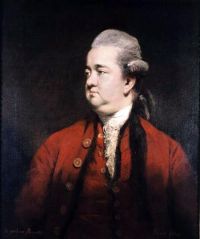
Portrait of George Saintsbury George Saintsbury 1911 Encyclopædia Britannica (1911)

Nor is this unjust, for though the most prominent of them all, Jacques Bénigne Bossuet (1627–1704) was remarkable as a writer of matter intended to be read, not merely as a speaker of matter intended to be heard, this double character is not possessed by most of the orthodox theologians of the time; and even Bossuet, great as is his genius, is more of a rhetorician than of a philosopher or a theologian. In no quarter was the advance of culture more remarkable in France than in the pulpit.
Source: Wikisource

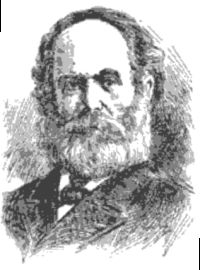
Portrait of George Saintsbury George Saintsbury A Short History of French Literature

The 'Siècle de Louis Quatorze' proper, that is the period subsequent to 1660, was the palmy time, from the literary point of view, of theological eloquence and discussion in France.
Bossuet.
Of the authors already named Bossuet deserves precedence in almost every respect except that of private character. Jacques Benigne Bossuet [279] was born at Dijon, in 1627, of a family of distinction in the middle class. He went to school to the Jesuits in his native town, and finished his education at the Collège de Navarre in Paris, receiving his doctor's degree and a canonry at Metz in 1652.
Source: Gutenberg

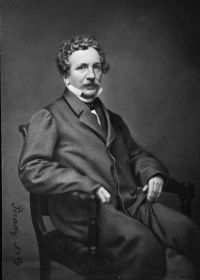
Edward Forbes The Palace and Park

Pascal was a great mathematician, a true philosopher, and one of the purest of men.
295. Jacques Benigne Bossuet. Prelate of France.
[Born at Dijon, 1627. Died in Paris, 1704. Aged 77.]
According to Voltaire, the eloquence of Bossuet stands unrivalled. His Universal History, published for his pupil, the son of Louis XIV., written to point out the influence of God animating all the changes of historic events—an idea expressed in the noble aphorism “l’homme s’agite: Dieu le mène;” (man struggles and strives: but it is God who leads him) .
Source: Gutenberg

Get perspective with Kwize: daily news enlightened by great literature