Stafford Henry Northcote

Biographical details

Stafford Henry Northcote,  1911 Encyclopædia Britannica (1911)

“ Like their contemporaries, the French Jansenists, and the Quakers and Anabaptists of northern Europe, the Quietists fell back on a doctrine of immediate inspiration of the individual conscience. To the many God spoke only in general terms through the Church; but to the few He made His will directly known. But how did He do so? How distinguish the voice of God from the vagaries of our own imagination? Quietism offered an easy test. The less “sense of proprietorship” a man had in his own good actions the more they came from a source outside himself-the surer might he be that they were divine. ”
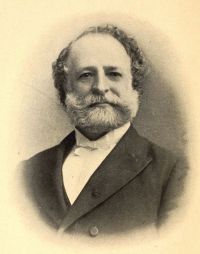
Source: Wikisource

Stafford Henry Northcote,  1911 Encyclopedia Britannica (1911)

“ But a purely controversial writer is seldom attractive to posterity. Anxiety to drive home every possible point, and cut his adversary off from every possible line of retreat, makes him seem intolerably prolix. “In spite of myself,” Arnauld once said regretfully, “my books are seldom very short.” And even lucidity may prove a snare to those who trust to it alone, and scornfully refuse to appeal to the imagination or the feelings. ”
Source: Wikisource

Stafford Henry Northcote,  1911 Encyclopædia Britannica, Volume 10… (1911)

“ More than most men, Fénelon “wanders between two worlds—one dead, the other powerless to be born.” He came just at a time when the characteristic ideas of the 17th century—the ideas of Louis XIV., of Bossuet and Boileau—had lost their savour, and before another creed could arise to take their place. Hence, like most of those who break away from an established order, he seems by turns a revolutionist and a reactionary. Such a man expresses his ideas much better by word of mouth than in the cold formality of print ”
Source: Wikisource

Get perspective with Kwize: daily news enlightened by great literature