“ Tragedy is the summit of poetic art. Here the unspeakable pain, the wail of humanity, the triumph of evil, the mastery of chance is unfolded before us. It is one and the same will that appears throughout. ”
Tragedy
Definition and stakes
Tragedy, a dramatic genre rooted in human suffering and sorrowful events, has long aimed to evoke catharsis—a transformative emotional release—for audiences. From ancient Greek playwrights like Aeschylus and Sophocles, who explored fate and moral conflict, to Shakespeare’s psychological depth and Ibsen’s naturalistic despair, tragedy has evolved through diverse cultural lenses.
Modernists like Beckett and postmodernists like Müller reimagined its themes, confronting existential dread and societal fragmentation. As philosophers from Aristotle to Camus have analyzed, tragedy remains a profound site of cultural reflection, bridging the universal human struggle with the search for meaning in hardship. Its enduring power lies in its ability to transform pain into a shared, almost sacred, experience of collective resonance.
Quotes about “tragedy”
 Owen Johnson,
The Wasted Generation
Owen Johnson,
The Wasted Generation
“ How little we foresee in the first quickening ecstasy of our beings the destiny of tragedy towards which we move! How little, in that one clear, untroubled afternoon, when all the beating frenzy in me grew still and peaceful with the knowledge that I was loved, did I divine that the rapture which held me was but the prelude to life denied and the ache of happiness remembered. Mystery of good and evil! ”
“ One tragedy seemed to invoke a thousand tragedies, in the cramped immobility of these inscrutable windows which had not yet begun to warm with the flicker of human cheer. He saw only the brutal struggle to live, and felt only the mystery of suffering, which was still a thing apart from his life. ”
Ashley Horace Thorndike, Tragedy
“ The harmony of the argument, the splendor of the verse, the grandeur of conception and expression may counterbalance the painfulness of the story. Yet more, tragedy may bring the inspiration of greatness and endurance, of purity and unselfishness of spirit. Its idealization of character, its revelation of beauty and power even in distress and downfall, may bring a reassurance that turns pity to exhilaration. In drama as in life there may come in moments of trial and ruin the visions of the eternities to console and exalt us. ”
Ashley Horace Thorndike, Tragedy
“ And this emphasis of the gloom of death required an equal emphasis on the glory and beauty of life. Tragedy was the passing into darkness from under this majestic roof fretted with golden fire, the loss of noble reason and infinite faculty ”
Credo Fitch Harris, Wings of the Wind
“ I am curious of nothing, and you will someday learn that curiosity is the root of tragedy." [97] "There's an epigram worthy of you: 'Curiosity is the root of tragedy'—and the blossom of delight!""I said nothing of delight," the professor blushed. "I said tragedy! And—ah, I see! You are cut-upping! I will not talk. Your conscience should hurt you!""Not conscience, old fellow! The wages of conscience is ennui, and the gods know how I hate that. Give me your epigrams on delight and love, and the Princess of Azuria!" ”
 Bertrand Russell,
Mysticism and Logic and Other Essays
(1910)
Bertrand Russell,
Mysticism and Logic and Other Essays
(1910)
“ Of all the arts, Tragedy is the proudest, the most triumphant; for it builds its shining citadel in the very centre of the enemy's country, on the very summit of his highest mountain; from its impregnable watchtowers, his camps and arsenals, his columns and forts, are all revealed; within its walls the free life continues, while the legions of Death and Pain and Despair, and all [54] the servile captains of tyrant Fate, afford the burghers of that dauntless city new spectacles of beauty. Happy those sacred ramparts, thrice happy the dwellers on that all-seeing eminence. ”
William Hazlitt, The Collected Works of William Hazlitt…
“ The old tragedy, if we understand it, is a display of the affections of the heart and the energies of the will; the modern romantic tragedy is a mixture of fanciful exaggeration and indolent sensibility; the former is founded on real calamities and real purposes: the latter courts distress, affects horror, indulges in all the luxury of woe, and nurses its languid thoughts, and dainty sympathies, to fill up the void of action. ”
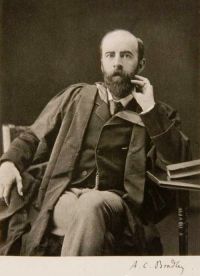 A. C. Bradley,
Shakespearean Tragedy: Lectures on Hamlet…
A. C. Bradley,
Shakespearean Tragedy: Lectures on Hamlet…
“ If we ask why the world should generate that which convulses and wastes it, the tragedy gives no answer, and we are trying to go beyond tragedy in seeking one. But the world, in this tragic picture, is convulsed by evil, and rejects it. ”
 Mrs. Jameson,
Characteristics of Women: Moral…
Mrs. Jameson,
Characteristics of Women: Moral…
“ But tragedy—majestic tragedy, is worthy to stand before the sanctuary of Truth, and to be the priestess of her oracles. "Whatever in religion is holy and sublime, in virtue amiable or grave, whatsoever hath passion or admiration in all the changes of that which is called fortune from without, or the wily subtleties and refluxes of man's thought from within;" [66] —whatever is pitiful in the weakness, sublime in the strength, or terrible in the perversion of human intellect, these are the domain of Tragedy. ”
Henry Albert Phillips, The photodrama (1914)
“ Tragedy is an exception, in that we often see a good character overwhelmed by circumstances, environment and nature. But tragedy should conform to inspiration, in that we behold the doomed character revealing unguessed sublimity in the unequal struggle. ”
A. C. Bradley,
Shakespearean Tragedy
(1912)
“ Tragedy, on this view, is the exhibition of that convulsive reaction; and the fact that the spectacle does not leave us rebellious or desperate is due to a more or less distinct perception that the tragic suffering and death arise from collision, not with a fate or blank power, but with a moral power, a power akin to all that we admire and revere in the characters themselves. ”
A. C. Bradley,
Shakespearean Tragedy
(1912)
“ Everywhere, from the crushed rocks beneath our feet to the soul of man, we see power, intelligence, life and glory, which astound us and seem to call for our worship. And everywhere we see them perishing, devouring one another and destroying themselves, often with dreadful pain, as though they came into being for no other end. Tragedy is the typical form of this mystery, because that greatness of soul which it exhibits oppressed, conflicting and destroyed, is the highest existence in our view. ”
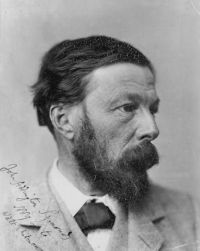 John Addington Symonds,
Studies of the Greek Poets (Vol 1 of 2…
John Addington Symonds,
Studies of the Greek Poets (Vol 1 of 2…
“ By exhibiting a spectacle that may excite the fear of really dreadful calamity, and compassion for truly terrible misfortune, tragedy exalts the soul above the ordinary miseries of life, and nerves it to face the darker evils to which humanity in its blindness, sin, and self-pride is exposed. ”
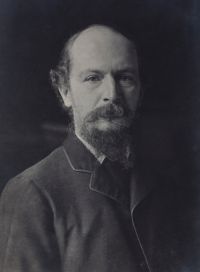 Algernon Charles Swinburne,
Essays and Studies
(1875)
Algernon Charles Swinburne,
Essays and Studies
(1875)
“ The tragic music of its measure, the swift yet solemn harmonies of dialogue and burden, hold in extract the very heart of a tragedy, the burning essence distilled from "Hate born of Love, and blind as he." ”
 G. K. Chesterton,
Fancies versus fads
G. K. Chesterton,
Fancies versus fads
“ From the fact that it is a tragedy flow all the forms and tests by which we say it is a murder or an execution, a martyrdom or a suicide. They all depend on an echo or vibration, not only in the soul of man, but in the souls of all men. ”
Ashley Horace Thorndike, Tragedy
“ From the nature of its subjects, tragedy may claim a certain preëminence in literature. If it be not truer, as is sometimes asserted, than comedy or other fiction, it has the opportunity to be more intense, more profound, more permeating in its emotional effect. As of all forms of literature, we ask for truth to life in incident, character, and word; of tragedy we ask for truth in regard to those things that affect us most deeply,—pain, disaster, failure, death. ”
“ The hopeless tragedy of the situation is admirably expressed without a trace of theatrical exaggeration. We see a young man, suffering from a grave and mysterious malady, extended upon his bed of suffering. ”
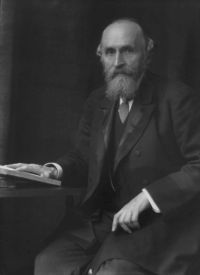 Lewis Campbell,
Sophocles
(1879)
Lewis Campbell,
Sophocles
(1879)
“ Is there in all philosophy a thing more dignified, more holy, or more lofty, than well-ordered tragedy;—more effective for the concentrated contemplation of the catastrophes and revolutions of human life? ”
Various, The Continental Monthly, Vol. 4…
“ Such was the source of the inspiration of classic tragedy, the spring of that stern and severe poetry which throws the lurid hues of a melancholy so profound upon the pallid and affrighted face of humanity. Man, struggling with all the gloomy energy of despair against this vague but formidable Horror, which no virtue or agony could conciliate—this dark Fate, the creation of his own misled and perverted intuitions—and vainly seeking to escape from the inflexible circle which he had traced around himself, is an object which cannot fail to awaken the deepest pity. ”
 Louisa May Alcott,
Hospital Sketches
(1863)
Louisa May Alcott,
Hospital Sketches
(1863)
“ The night whose events I have a fancy to record, opened with a little comedy, and closed with a great tragedy; for a virtuous and useful life untimely ended is always tragical to those who see not as God sees. ”
Ashley Horace Thorndike, Tragedy
“ The greatness of tragedy depends upon its allegiance to this meaning of literature. The dramatic form gives opportunity for a close approach to the semblance of actuality. The very subjects of tragedy, suffering and disaster, discourage the seeking of mere amusement or a contentment with mere beauty of expression. ”
Henry James, Notes on Novelists, with Some Other Notes
“ The effect and the achieved dignity are those of tragedy—tragedy rearranging, begetting afresh, in its own interest, all the elements of ecstasy and despair. How can it not be tragedy when this interest is just the interest, which I have touched on, of exemplary eloquence? There are lights in which the material, with its want of nobleness, want of temper, want even of manners, seems scarcely life at all, as the civilised conscience understands life; and yet it is as the most magnanimous of surrenders to life that the whole business is triumphantly reflected in the documents. ”
Ashley Horace Thorndike, Tragedy
“ It is in the realization of their emotions that the plays secure their great impressiveness. Tragedy has become not the presentation of history, myth, or events of any sort, but the presentation of the passionate struggle and pitiful defeat of an extraordinary human being. ”
 Lytton Strachey,
Landmarks in French Literature
Lytton Strachey,
Landmarks in French Literature
“ But this mass of character could never have been presented to us without a corresponding variety of incident; and, indeed, the tragedy is packed with an endless succession of incidents—battles, intrigues, marriages, divorces, treacheries, reconciliations, deaths. ”
 Maurice Leblanc,
The Teeth of the Tiger — Chapter XIV. The "Hater"
(1921)
Maurice Leblanc,
The Teeth of the Tiger — Chapter XIV. The "Hater"
(1921)
“ You are following the same stages by which I travelled and, like myself, you are hesitating before the last truth, before the truth which gives the tragedy its sinister character and deprives it of all human proportions. ”
Cyril Tourneur, Webster & Tourneur
“ When the bad bleeds, then is the tragedy good. ”
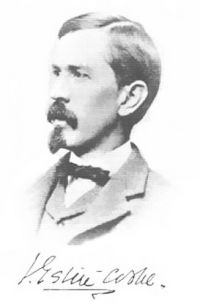 John Esten Cooke,
Mohun; Or, the Last Days of Lee and His Paladins
John Esten Cooke,
Mohun; Or, the Last Days of Lee and His Paladins
“ Suffering and death have met us so often! Can you wonder, my dear reader, that the historian of such an epoch longs to escape, when he can, from the gloom of the tragedy, and paint those scenes of comedy which occasionally broke the monotonous drama? ”
Ashley Horace Thorndike, Tragedy
“ We are stirred by the painful emotions of our fellows as readily as by their pleasurable ones. The tragic plays a large part in many forms of literature and in sculpture, music, and painting. And tragedy, dedicated to painful actions, also interests, fascinates, absorbs us. ”
 Karl Rosenkranz,
Pedagogics as a System
Karl Rosenkranz,
Pedagogics as a System
“ Instead of the all-embracing Epos they should now read Tragedy, whose purifying process, through the alternation of fear and pity, unfolds to the youth the secret of all human destiny, sin and its expiation. ”
 Aristotle,
Aristotle on the art of poetry
Aristotle,
Aristotle on the art of poetry
“ Reserving hexameter poetry and Comedy for consideration hereafter, let us proceed now to the discussion of Tragedy; before doing so, however, we must gather up the definition resulting from what has been said. A tragedy, then, is the imitation of an action that is serious and also, as having magnitude, complete in itself; in language with pleasurable accessories, each kind brought in separately in the parts of the work; in a dramatic, not in a narrative form; with incidents arousing pity and fear, wherewith to accomplish its catharsis of such emotions. ”
Ashley Horace Thorndike, Tragedy
“ A typical tragedy is concerned with a great personality engaged in a struggle that ends disastrously.In the Aristotelian tradition thus amended by the Shakespearean or modern conception we have a definition of tragedy that, in spite of differences of theorists and variations in practice, is extraordinarily comprehensive. ”
A. C. Bradley,
Shakespearean Tragedy: Lectures on Hamlet…
“ We remain confronted with the inexplicable fact, or the no less inexplicable appearance, of a world travailing for perfection, but bringing to birth, together with glorious good, an evil which it is able to overcome only by self-torture and self-waste. And this fact or appearance is tragedy. ”
 August Wilhelm von Schlegel,
Lectures on Dramatic Art and Literature
August Wilhelm von Schlegel,
Lectures on Dramatic Art and Literature
“ He says somewhere—"The extent of a tragedy is always sufficiently great, if, by a series of probable or necessary consequences, a reverse from adversity to prosperity, or from happiness to misery, is brought about." It is evident, therefore, that he, like all the moderns, understood by action something merely that takes place. ”
Ashley Horace Thorndike, Tragedy
“ During the periods that we have examined, blank verse, illustrious persons, the pomp of courts, the great passions of revenge, ambition, jealousy, lust, love, and hate, hideous crimes, and the conflict of potent wills have been the usual accompaniments of the actions of suffering and ruin. There has been only occasional departure from the Shakespearean conception of tragedy as representation of great personalities engaged in disastrous conflict. ”
 Percy Bysshe Shelley,
A Defence of Poetry and Other Essays
Percy Bysshe Shelley,
A Defence of Poetry and Other Essays
“ tragedy delights by affording a shadow of the pleasure which exists in pain. ”
 Frank Preston Stearns,
The Life and Genius of Nathaniel Hawthorne
Frank Preston Stearns,
The Life and Genius of Nathaniel Hawthorne
“ All tragedy is an investigation or exemplification of that form of human error which we call sin; a catastrophe of nature or a simple error of judgment may be tragical, but will not constitute a tragedy without the moral or poetic element. ”
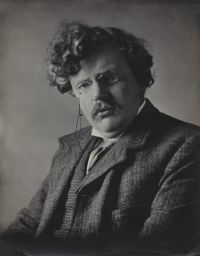 Gilbert Keith Chesterton,
Tremendous Trifles
(1909)
Gilbert Keith Chesterton,
Tremendous Trifles
(1909)
“ All the time that the eye took in these light appearances and the brain passed these light criticisms, there was in the heart a barbaric pity and fear which men have never been able to utter from the beginning, but which is the power behind half the poems of the world. The mood cannot even adequately be suggested, except faintly by this statement that tragedy is the highest expression of the infinite value of human life. ”
A. C. Bradley,
Shakespearean Tragedy
(1912)
“ Whatever may be said of accidents, circumstances and the like, human action is, after all, presented to us as the central fact in tragedy, and also as the main cause of the catastrophe. That necessity which so much impresses us is, after all, chiefly the necessary connection of actions and consequences. For these actions we, without even raising a question on the subject, hold the agents responsible; and the tragedy would disappear for us if we did not. The critical action is, in greater or less degree, wrong or bad. ”
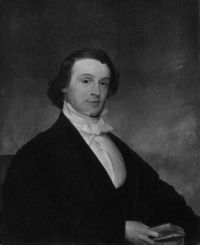 George E. Ellis,
The Red Man and the White Man in North America
(1882)
George E. Ellis,
The Red Man and the White Man in North America
(1882)
“ Enough of the destined victims escaped, by well-nigh superhuman effort and endurance, to leave for history full and harrowing narratives of the appalling tragedy, made so, not by its bringing human beings to the inevitable lot, but by its circumstances and aggravations of horror. ”
 David Hume,
Four Dissertations
(1757)
David Hume,
Four Dissertations
(1757)
“ An action, represented in tragedy, may be too bloody and atrocious. It may excite such movements of horror as will not soften into pleasure; and the greatest energy of expression bestowed on descriptions of that nature serves only to augment our uneasiness. ”
 Friedrich Schiller,
Aesthetical and philosophical essays
(1899)
Friedrich Schiller,
Aesthetical and philosophical essays
(1899)
“ Tragedy has not only to represent by imitation the feelings and the affections of tragic persons, but also the events that have produced these feelings, and the occasion on which these affections are manifested. ”
A. C. Bradley,
Oxford Lectures on Poetry
“ A large part of the nature of this form of drama is common to the drama in all its forms; and of this nothing need be said. It will be agreed, further, that in all tragedy there is some sort of collision or conflict—conflict of feelings, modes of thought, desires, wills, purposes; conflict of persons with one another, or with circumstances, or with themselves; one, several, or all of these kinds of conflict, as the case may be. Again, it may be taken for granted that a tragedy is a story of unhappiness or suffering, and excites such feelings as pity and fear. ”
Aristotle,
The Poetics translated by S. H. Butcher
(1922)
“ The plot, then, is the first principle, and, as it were, the soul of a tragedy; Character holds the second place. ”
William Hazlitt, Characters of Shakespear's Plays (1817)
“ It excites our sensibility by exhibiting the passions wound up to the utmost pitch by the power of imagination or the temptation of circumstances; and corrects their fatal excesses in ourselves by pointing to the greater extent of sufferings and of crimes to which they have led others. Tragedy creates a balance of the affections. It makes us thoughtful spectators in the lists of life. ”
 Thomas Kyd,
The Spanish Tragedy
Thomas Kyd,
The Spanish Tragedy
“ Then haste we down to meet thy friends and foes; To place thy friends in ease, the rest in woes. For here though death doth end their misery, I'll there begin their endless tragedy. ”
Related terms
Authors who wrote about “tragedy”
Ashley Horace ThorndikeA. C. BradleyLewis CampbellAristotleCyril TourneurEdwin MuirAugust Wilhelm von Schlegel Joseph TrappAlgernon Charles SwinburneH. T. SwedenbergAnne C. Lynch Botta
 Oscar WildeJohn Addington Symonds
 Miguel de UnamunoFriedrich SchillerDavid HumeWilliam HazlittPercy Bysshe ShelleyLouisa May AlcottThomas Kyd
A. C. BradleyLewis CampbellAristotleCyril TourneurEdwin MuirAugust Wilhelm von SchlegelJoseph TrappAlgernon Charles SwinburneH. T. SwedenbergAnne C. Lynch BottaOscar WildeJohn Addington SymondsMiguel de UnamunoFriedrich SchillerDavid HumeWilliam HazlittPercy Bysshe ShelleyLouisa May AlcottThomas KydRelated articles
The Laughing Tear, The Human Condition in Art and Life
Joy and sorrow are not opposites; they are two faces of the same coin. From ancient philosophy to modern drama, the human condition is a tragicomedy where laughter often masks deep suffering, and tears carve out space for future elation.
Kahlil Gibran, Arthur Schopenhauer, Georg Wilhelm Friedrich Hegel
The anatomy of the tragic fall: Is malignity a choice or a consequence?
The figure of the fallen angel—from classical tragedy to Mary Shelley—reveals that catastrophic transformation, forged in despair and willed through choice, is the engine of evil. This enduring principle explores the devastating interplay of character, circumstance, and moral responsibility.
Ashley Horace Thorndike, Mary Shelley, Victor Hugo
The enduring conflict of tragedy: fidelity to origins versus the demands of the modern stage
Staging ancient Greek works forces a confrontation between historical fidelity and contemporary relevance. Great tragedy requires uniting literary genius with theatrical experience, recognizing that every performance is an imitation shaped by its era. The tension between preserving the past and winning the audience is the genre’s vital, enduring conflict.
Ashley Horace Thorndike, Romain Rolland, Richard Claverhouse Jebb
Between Glory and Gore, The Enduring Paradox of War
From noble ambition to hellish crime, war's image shifts dramatically depending on who tells its story—and how technology increasingly shields us from its grim reality.
H. G. Wells, William James, Barack Obama
The tragedy of reflection: why Hamlet's genius led to his fatal delay
Hamlet's tragic struggle is an internal war: his philosophical mind, overwhelmed by moral idealism and reflective capacity, paralyzes the will, transforming the revenge tragedy into a profound study of human consciousness and irresolution.
A. C. Bradley, Samuel Taylor Coleridge, John Masefield
Echoes in the Ruins, Lessons in the Myth
From Pompeii's perfectly preserved last moments to the evolving malice of Loki, humanity consistently seeks human-scale narratives to grasp history's horrors and abstract evil. Yet, our compulsion to find meaning often clashes with the brutal, unvarnished facts, leading us to repeat the very mistakes we claim to learn from.
Friedrich Wilhelm Nietzsche, George Santayana, Paul Lachlan MacKendrick
The psychology of ambition: The great reversal of roles in Macbeth
Lady Macbeth's resolute will suppresses her humanity, driving the initial crime, while Macbeth's imagination causes hesitation. After the regicide, they undergo a devastating psychological reversal: he becomes a hardened tyrant, and her suppressed conscience emerges to destroy her.
A. C. Bradley, William Hazlitt, Mrs. Jameson
