AI-generated from sources
The Colour of the Moor and the Contest over a Universal Shakespeare
In Brief
- Critics who celebrated Shakespeare's universality also argued that Othello could not be imagined as truly black, or that his marriage revealed a natural racial aversion.
- In the play, the argument that Desdemona cannot long desire the Moor belongs to Iago; critics who read the marriage as a lesson in repugnance adopted the villain's logic.
- According to Stephen Graham, the one major role Shakespeare wrote for a Moor was closed to Black actors in white American companies.
- Black writers disagreed over whether art should be universal or rooted in racial experience, but none conceded that the literary canon was the property of whites.
Main authors
Few literary reputations have been framed as confidently in the language of universality as Shakespeare's. In 19th-century criticism the playwright appears as the one imagination capable of binding an unmanageable diversity of characters into a single order, and as the writer whose true subject is a core of human experience said to outlast every variation of race, nation and personal circumstance [1, 2]. Praise of this kind turns the plays into a common estate, open in principle to anyone who reads them. Yet the same critical tradition kept returning to one figure who put that promise under strain: the Moor of Venice, a black general married to a white Venetian, whose colour commentators could neither ignore nor comfortably accept [3, 4].
The question of who may claim Shakespeare was therefore not first raised by those kept at the edges of his audience; in practice it was posed by the self-appointed guardians of his meaning. Writers who celebrated the plays as the property of humanity also explained that their hero could not be imagined as dark as the text described him, or that his marriage dramatised an aversion written into nature itself [5, 6]. In the same decades, Black writers and performers in the United States confronted a mirror-image dilemma: whether the great tradition was theirs to inherit whole, or whether they were expected to speak only of, and for, their own people [7, 8, 9]. Read together, these testimonies suggest that the universality of the plays was less a fact than a frontier—guarded on one side, crossed with difficulty on the other.
A universality with unspoken terms
The classic case for a universal Shakespeare rests on a distinction between surface and depth. Hamilton Wright Mabie locates the inexhaustible interest of the plays in a substance of life that supposedly stays constant beneath the changes of racial, national and individual condition . A reviewer in The Atlantic Monthly in 1867 makes a related claim on formal grounds: where other dramatists of the period produce brilliant but disconnected scenes, Shakespeare alone is credited with the energy to forge a unified world out of a vast range of characters and incidents . In both versions, universality is an achievement of synthesis—the many are gathered into the one.
That formula carries an implicit hierarchy. To say that race belongs among the mutable surfaces a great author rises above is also to decide in advance what counts as accidental and what as essential, and the arguments leave open who is entitled to make that decision . A sharply different suspicion surfaces in Dorothy M. Richardson's Pilgrimage, where the heroine's reflections turn the praise on its head: if the plays are “universal,” it is perhaps because they confirm what every reader already believes and unsettle no one, and because their women are drawn as men imagine them rather than as women live [10]. Universality, in this view, is not transcendence but consensus—the comfort of a dominant point of view mistaken for the view from everywhere.
The suspicion was not idle. The History of Woman Suffrage records an orator who answered American women's demands for civil and political rights by holding up Shakespeare's heroines—Desdemona first among them, alongside Ophelia and Juliet—as models of innocence and trusting devotion for dissatisfied women to imitate [11]. Here the canon is not a common estate at all but a moral instrument, recruited to keep one group in its assigned place. The irony is considerable: the same Desdemona offered as a pattern of feminine docility would be read by other commentators as the bride of an unnatural union .
Taken together, these voices reveal the conditions attached to the universal. The plays could belong to everyone so long as everyone read them from roughly the same position, and so long as the figures in them could be enlisted for the social order of their readers . The confidence of Mabie or the Atlantic reviewer was sincere, but it presupposed a reader for whom race was indeed only a surface—a presupposition that the character of Othello would put to the test .
Lightening the Moor, critics and the colour of Othello
Shakespeare's own texts treat blackness as a disputed value rather than a settled fact. In Love's Labour's Lost, published in 1598, a king brands black as the emblem of hell and night, while Berowne insists that his dark-browed lady was born to make black beautiful and to overturn the fashion of the day [12]. Georg Brandes, reading the plays as a whole, observes that in the Sonnets and in that comedy “black” consistently designates a dark complexion, and that Iago in Othello uses the word in the same sense . The plays, in other words, stage the quarrel over colour from within; they do not resolve it.
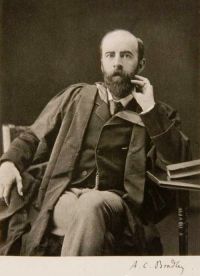
The critics, by contrast, often resolved it by redrawing the hero. Brandes, having established the literal meaning of “black,” then reclassifies the contrast between Othello and Desdemona in the racial taxonomy of his own time, as an opposition between a “Semite” and an “Aryan” girl—a move that keeps the difference while quietly removing the hero from blackness . A. C. Bradley, writing in 1912, goes further and more candidly: he concedes that a coal-black Othello seen on stage might provoke in modern spectators what he calls an aversion of the blood, almost physical, strong enough to drag them below the imaginative level of 17th- and 18th-century audiences . The admission is remarkable because it places the obstacle in the viewer rather than the play; yet its conclusion is to spare the eye, not to question the aversion.
Bradley's Othello is otherwise a figure of the highest rank, a public man defined by his office as general of the Republic and conscious of that dignity throughout [13]. Nobility is thus granted in the register of status while the body is held at a distance. Stage criticism shows the same pattern nearly a century earlier. Hermann Pückler-Muskau, recording his English theatre-going in the late 1820s, describes how the hero's simplicity and devotion make the audience forget the “ugly Moor,” until jealousy brings out a hidden ferocity that turns him, in the visitor's words, into a raging tiger rather than a fellow creature [14]. Colour is suspended only to return disguised as nature.
Horatio Alger's tribute to the tragedian Edwin Forrest takes another route: it praises a portrait of the Moor that makes the audience see, as Desdemona did, Othello's face in his mind—a phrase borrowed from the play that lets the visible face recede behind an interior one [15]. Each of these strategies—taxonomy, aversion, savagery, spiritualisation—works the same way, rescuing the hero by making his colour negotiable. What the play itself does with the racial argument is telling: the reasoning that Desdemona cannot long take pleasure in looking on a man likened to the devil is spoken by Iago, the villain, as part of his scheme to corrupt [16]. Critics who would later take that repugnance as nature's verdict were, knowingly or not, adopting the logic of the play's liar .
A marriage read as a lesson in nature
The most direct conversion of Shakespeare's authority into a racial doctrine appears outside literary criticism. George H. Napheys, in a medical advice book for women, enlists the play as evidence that aversion to marriage between Black and white is a warning from nature; he grants that the playwright had probably met few Black people, and turns that very inexperience into proof of a genius able to divine the repugnance a “refined” woman would feel . The argument is circular but revealing: the universality of the poet is invoked precisely to universalise a particular prejudice, recasting a social antipathy as a law of the species.
Literary critics put the case in subtler terms without abandoning its premise. A contributor to Lippincott's Magazine in 1873 calls Othello's race the hinge of the tragedy and describes the marriage as seeming unnatural even before any suspicion arises, adding that the discord lies deeper than complexion . John Weiss explicitly rejects a reading he attributes to John Quincy Adams—that the tragedy was written to demonstrate the disastrous consequences of what Adams called “miscegenation”—and places the fatal flaw in Desdemona's own weakness instead [17]. Yet Weiss, in the same passage, reads a line of Portia's as a hint of a natural aversion between distinct types . Rejecting the cruder moral did not mean rejecting the assumption on which it rested.
The critical tradition was not unanimous, and its dissenting strand matters. Bradley, the same critic who conceded the aversion of the blood, reproaches readers for failing to grasp how extraordinary and splendid it was for a gentle Venetian to love Othello and defy fortune with a hero's boldness [18]. Algernon Charles Swinburne, three decades earlier in 1880, had celebrated the spotless and invulnerable purity of Desdemona's choice in the face of every devil akin to Iago [19]. These readings honour the marriage as courage rather than error. Even so, they praise it as astonishing—a measure of how improbable such love still seemed to the critics who defended it .
The stakes of these interpretations were not confined to the study. An anonymous tract, The Call of the South, warns white readers that social equality would lead their daughters and sons to marry Black partners, framing intimacy as the ultimate threat of integration [20]. Lydia Maria Child, pleading the abolitionist cause, answers the same fear by reassuring her readers that opposition to such unions was as strong among Black Americans as among whites, and that prejudice itself made them rare [21]. Stephen Graham, observing American mores, notes that a white woman walking out with a Black man was all but unthinkable in a society that idealised white womanhood [22]. Read against this background, Othello's marriage sat on the most sensitive fault line of the culture that interpreted it, and the critics' verdicts on Desdemona were never only literary.
Black writers and the right to the whole inheritance
On the stage, the exclusion took a concrete form. Stephen Graham, writing as an observer from outside the community he describes, calls Othello the ideal play for a Black actor in a mixed cast—and records in the same breath that no white company in the United States would let a Black actor take even a minor role, while comic Black parts were themselves played by whites [23]. The one major part Shakespeare wrote for a Moor was thus closed to the very people whom critics judged too dark for it. Graham describes Black companies such as the Lafayette Players performing classical drama alongside popular fare, yet finds the result almost always received as comedy, a portrayal of whiteness by those to whom whiteness was foreign [24].
James Weldon Johnson gives this predicament its sharpest image: the Black artist resembles a great comedian who wishes to play tragedy, only to find the public determined to push him back into his old character and even willing to see him fail in serious work . Tragedy—the genre of Othello, reserved by tradition for persons of high degree—is precisely what is withheld . Elsewhere in the same novel, a sympathetic white character argues that music is a universal art belonging to everybody, and uses that argument to dissuade the protagonist from building his work on Black themes [25]. Universality, in Johnson's hands, cuts both ways: it is a right of access, but it can also serve as an invitation to abandon one's own material.
The tension runs through the whole debate on Black authorship. In 1866 an Atlantic Monthly reviewer looked forward to some “black Shakspeare” who would reveal the humour and poetry of Black life, and held that only a Black writer could depict that life truly [26]. The tribute is double-edged: Shakespeare is the yardstick of greatness, but the future Black genius is assigned in advance to a single subject. More than half a century later, Hubert H. Harrison, writing in 1920, attacked white critics who either praised mediocre Black writing with condescension or dismissed it out of prejudice, and lamented that the examples of valour and virtue held up to the young were exclusively white [27, 28]. Harrison does not name Othello, but his complaint describes a canon in which the one great Black hero had been carefully lightened by its interpreters .
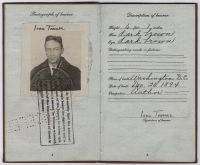
Among Black writers themselves, the answer divided. Jean Toomer held that the gifted artist must shed lesser identities in the larger well of life, lamenting a world that never let the Black poet forget his race [29]. George Samuel Schuyler, in 1926, scorned the demand for a distinct “Negro art” and pointed out that Black and white Americans of the same class shared the same furniture, books and conversation . Claude McKay, in 1937, insisted on the opposite truth: that no white person, however sympathetic, could fully feel the bitterness of colour discrimination, which only its victims knew [30]. These positions disagree on whether art should speak from a particular experience, yet none of them concedes that the common literary inheritance is the private property of whites. Schuyler's shared bookshelves and McKay's irreducible experience are two ways of claiming a seat at the same table .
The universality attributed to Shakespeare was never neutral. The critics who praised it most warmly built a series of exceptions around the one figure who embodied racial difference at the heart of the canon: they reclassified Othello, imagined him paler, read his love as an offence against nature or his jealousy as the return of savagery . The dissenting readings of Bradley, Swinburne and even Weiss show that this exclusion was a choice rather than a necessity of the text, which itself places the racial argument in the mouth of its villain . The record of reclaiming is quieter than the record of exclusion: it appears less in readings of the play than in the struggle for the stage, for tragic roles and for the right not to be confined to a single subject . Seen in that light, a Black claim of kinship with Shakespeare restores a share that had been withheld; it does not seize someone else's property.
The episode also unsettles the notion of universality itself. If a work belongs to everyone only when its interpreters agree on who counts as everyone, then universality is less a property of texts than a practice of readers—something conferred, contested and periodically renegotiated . Othello remains the exemplary case because the play anticipates its own reception: it stages the claim that a black man cannot be loved, and makes that claim the instrument of its deceiver . Whoever reads the tragedy inherits not only its poetry but that question—and the long history of answers to it.