AI-generated from sources
The Compounded Burden, Race Gender and the Politics of Recognition
In Brief
- Nineteenth-century abolitionist and women's suffrage movements frequently marginalized the unique subjugation of Black women, framing racial and gender rights as competing interests.
- Black women's persistent voices and intellectual contributions over the 20th century were instrumental in articulating a 'double burden' of racism and sexism, leading to the development of analytical frameworks like intersectionality.
- Modern legal and governmental institutions are increasingly acknowledging that forms of discrimination intersect and compound, leading to policies that address these multileveled identities.
- The hard-won conceptual progress toward intersectional understanding faces significant ideological backlash, which threatens to flatten complex narratives of justice in favor of a simpler, less accurate public discourse.
Main authors


The historical narrative of social justice is often recounted through distinct, parallel struggles—typically those defined by race or by gender. This categorization, however, frequently obscures a more complex reality where these forms of discrimination converge and intensify for individuals living at their nexus. This oversight is not a modern discovery but a tension present from the inception of major American civil rights movements in the 19th century [1, 6, 7]. The fraught political debates surrounding enfranchisement, for instance, consistently framed the rights of Black men and those of women as mutually exclusive or competitive endeavors. This dynamic created a political landscape where the unique position of Black women was systematically marginalized and their specific fight for liberation was rendered secondary to seemingly larger, more singular causes [9, 10, 11].
This historical tendency to view oppression through a single lens carries profound consequences, making certain experiences invisible while creating perceived hierarchies of grievance [4]. The movements for abolition and women’s suffrage, while ideologically aligned in their abstract pursuit of human rights, often failed to grasp the qualitatively different nature of subjugation faced by women of color [2, 3]. These women experienced not merely the burdens of their race or their gender in isolation, but a synergistic form of oppression that was unique to their standing in society [5]. Acknowledging this long-standing dynamic is crucial to contextualizing contemporary debates over justice, equity, and the very language used to define identity and discrimination in the modern era [12, 24].
Fractured Alliances, Race and Gender in 19th Century Activism
The abolitionist and early women's suffrage movements of the 19th century, while operating on a shared philosophical ground of emancipation, exposed deep fissures when their ideals were put into practice. Activists frequently drew rhetorical parallels between the injustices of slavery and the subjugation of women, but this comparison was often instrumental, used to prioritize one struggle over the other . For many women's rights advocates, the prospect of granting suffrage to Black men while women of all races remained disenfranchised was interpreted as the establishment of a new "aristocracy of sex," a profound betrayal of universal principles of equality . This perspective framed the issue as a zero-sum contest for political power, prompting questions as to why Black men should be constitutionally elevated above educated white women .
This competitive framing ignited a political firestorm, particularly around the passage of the Fourteenth and Fifteenth Amendments, which extended civil and voting rights to Black men . Republican and Abolitionist leaders viewed the immediate success of "negro suffrage" as paramount to the nation's political stability, making the simultaneous demand for women's suffrage seem like a dangerous distraction or an unholy alliance with opposing forces . This strategic prioritization effectively forced a choice between racial justice and gender equality, leaving Black women in a state of political abandonment . Their enfranchisement was not a central goal for either movement, leading some suffragists to voice fears that Black women would simply become newly subservient to Black men, trading one form of subjugation for another .
The experience of Black women, however, extended far beyond political exclusion to encompass a unique and pervasive social degradation. As Lydia Maria Child observed in the 1830s, enslaved women were systematically treated as property and laborers, subject to the despotic control of their masters without legal or social recourse against sexual exploitation . This reality was compounded by a generalized hostility that transcended class; later commentators noted that Black women were uniquely vulnerable to insult and abuse from all quarters of society in a way other women were not . This compounded oppression—being targeted for both race and gender—was a central, yet often unacknowledged, feature of the social order, a specific condition that mainstream political debates and movements consistently failed to adequately address [8].
Voicing the Double Burden, The Path to Intersectional Recognition
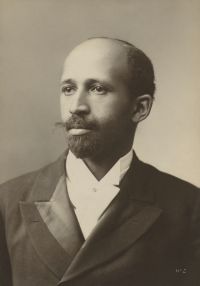
Over the course of the 20th century, the historical disregard for the compounded injustices faced by women of color slowly gave way to a more explicit articulation of their unique position. Thinkers and activists began to systematically identify what was often described as a "double burden," a crushing weight of discrimination that could not be neatly disentangled into separate components of race and sex [19]. This burden was understood to be so pervasive that it impacted individuals regardless of their social standing, differentiating their experience in kind, not merely in degree, from that of other marginalized groups [20]. Early in the century, intellectuals like W. E. B. Du Bois argued that systemic racism—including the specific and often violent exploitation of Black women—corroded the nation's entire moral and civic fabric [17].
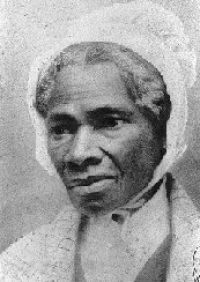
The narrative of this oppression is inseparable from the story of Black women's resilience and agency. Their voices have been instrumental in calling public attention to these "twin burdens" of racism and sexism, a tradition stretching from 19th-century orators like Sojourner Truth to modern literary figures [13]. This activism was not only about naming the problem but also involved the active work of building community and fostering self-respect as a powerful antidote to being ostracized by both white society and, at times, more privileged members of their own race [16]. Furthermore, economic shifts, particularly those following the cessation of mass foreign migration, opened new professional avenues for Black women. This change granted them a measure of economic freedom that challenged traditional patriarchal constraints and began to foreground their unique contributions and demands for full equality [21].
This long history of lived experience and intellectual labor eventually culminated in the development of new analytical frameworks, especially within legal and academic spheres. By the late 20th century, critical race feminism emerged to formalize the study of "multileveled identities" and the intersecting characteristics that serve as the basis for unfair discrimination . This approach, articulated by jurists like Albie Sachs in post-apartheid South Africa, insists on analyzing fundamental rights within the complex context of overlapping identities such as race, gender, and class . The systemic violence and exploitation historically directed at women of color, long treated as a secondary or separate issue, could now be properly understood as a key manifestation of this compounded discrimination, demanding a more nuanced and holistic approach to achieving justice [14, 15, 18].
Recognition and Reaction, Intersectionality in the Modern Arena
In the 21st century, the concept that forms of discrimination intersect and compound one another has gained significant traction in official and legal discourse. Governmental bodies have begun to formally acknowledge that different forms of marginalization, such as racism and gender discrimination, often overlap to produce unique harms [26]. This recognition is visible in policies designed to protect individuals on the basis of gender identity and sexual orientation, which explicitly note how these biases are frequently compounded by race or disability [28]. The understanding that racism and sexism converge to inflict specific harm—for instance, on Asian American women or transgender Black Americans—reflects a significant policy evolution toward a more equitable framework that addresses lived realities [22]. This development follows a legal tradition that has long sought to dismantle social harms rooted in archaic stereotypes about both gender and race [29, 30].
This growing institutional acknowledgment has, however, provoked a powerful and organized ideological backlash. Critics, including those tasked with producing documents like the 2021 "1776 Report," condemn these developments as a divisive form of "identity politics" that undermines national unity [23]. This counter-narrative posits that an emphasis on group identity creates a harmful hierarchy of victimhood, dividing Americans into camps of "oppressors and victims" and eroding the principle of individual equality [25]. This perspective actively rejects the notion that the United States is irredeemably shaped by systemic racism and sexism, promoting instead a universalist vision grounded in individual rights that deliberately avoids group-based considerations .
The contemporary conflict over intersectionality thus represents a fundamental schism in how society defines justice and equality. On one side stands a framework, built on generations of struggle and now increasingly reflected in legal and political institutions, that views compounded discrimination as a tangible reality requiring specific redress and recognition [27]. On the other side is a reactionary movement that perceives the very act of naming these overlapping identities as a pernicious threat to social cohesion and a departure from foundational principles . This clash is not merely an academic debate but a continuation of a historical pattern of erasure, where the complex, multi-layered experiences of those at the nexus of oppression are once again at risk of being flattened or ignored in favor of a simpler, yet profoundly less accurate, public narrative.
The historical journey from the fractured alliances of the 19th century to the polarized debates of the 21st reveals an enduring struggle to recognize the lived reality of compounded discrimination. The initial failure of the abolitionist and suffrage movements to adequately address the unique subjugation of Black women established a persistent pattern of competitive grievance and single-axis analysis . Over many decades, the persistent voices of those bearing this "double burden" carved out space for a more nuanced understanding, culminating in modern frameworks like intersectionality that now inform both social critique and public policy . This evolution charts a slow, heavily contested, yet discernible movement from implicit suffering toward the explicit recognition of multifaceted identities.
Today, this hard-won conceptual progress is at a critical juncture. While an intersectional understanding of identity has achieved unprecedented institutional acknowledgment, empowering a more precise and equitable approach to justice for individuals facing overlapping forms of bias , it has also become a primary target for intense ideological opposition . The forceful pushback against what is pejoratively labeled "identity politics" threatens to roll back these gains by reasserting a universalist framework that has historically rendered the most complex forms of discrimination invisible. The future of civil rights discourse may well depend on whether society can defend a multi-dimensional understanding of justice against a powerful resurgence of thinking that insists on seeing the world in a single, flattened dimension.