AI-generated from sources
The Protective Mandate, From Domestic Purity to Global Conservation
In Brief
- Women's early civic engagement in conservation stemmed from their domestic role of protecting family health, particularly regarding clean water and food.
- The expansion of this “protective mandate” led women to advocate for broader public health and environmental policies, including forest and water conservation.
- The concept of “protection” that empowered women in public life also underpinned their legal and social subordination—leading to a dual struggle for both civic influence and equal rights.
- Contemporary global consensus recognizes women's full and active participation as indispensable for achieving sustainable development and addressing global challenges like climate change and poverty.
Main authors

The historical foundations of women's civic engagement are deeply embedded in the perceived sanctity of the domestic sphere. A prevailing view, particularly in the early 20th century, held that a woman's primary duty was the conservation of the family unit—ensuring the mental, moral, and physical strength of children [1, 4]. This responsibility was not confined within four walls; it extended naturally to the immediate environment that sustained the household. The integrity of the home was seen as directly dependent on the purity of external resources, compelling women to become advocates for community-wide standards of health and safety. Issues such as clean water, effective sewage systems, and unadulterated food were thus framed not as abstract political matters, but as fundamental extensions of the homemaker's protective role [2, 3].
This domestic mandate provided a powerful, socially acceptable rationale for women to enter public discourse, particularly on the burgeoning issue of natural resource conservation. The fight against the contamination of rivers, for example, was articulated as a moral imperative to protect the nation's life-giving streams from becoming cesspools of industrial indifference . However, this very framework of protection concealed a profound tension. While it empowered women to organize and advocate for civic righteousness, it also operated within, and sometimes reinforced, a social structure that circumscribed their autonomy. The journey from safeguarding the household to stewarding the planet would therefore require not only an expansion of their sphere of influence but also a direct confrontation with the traditional gender barriers that defined their role primarily as one to be protected, rather than as one with an equal right to govern.
The Domestic Wellspring of Civic Duty
The imperative for women to safeguard the health of their children served as the primary catalyst for their entry into environmental advocacy . This role was understood to encompass not just moral and physical upbringing but also the protection of the very elements that sustained life. Control over the quality of the water supply, the efficiency of sanitation, and the purity of food were identified as critical domestic concerns, yet these were matters governed by publicly elected officials . Consequently, the private responsibility for family well-being created a public obligation to engage with municipal governance. The purity of water was framed as a life-or-death issue, making civic indifference to pollution a direct threat to the household that women were expected to shield .
This focus on pure water was a cornerstone of women's early conservation efforts, linking the health of the family directly to the health of the nation's waterways . Activism in this domain was presented as an inherent duty of the homemaker, questioning how any woman could refuse to protect her household from the physical infections that resulted from contaminated water supplies . Beyond the immediate threat of disease, this protective ethic also incorporated an aesthetic and moral dimension. There was a growing concern that conservation should not be purely utilitarian; the impoundment of water, for instance, should not come at the cost of natural beauty. The destruction of waterfalls and scenic landscapes for purely commercial ends was seen as the mark of a selfish society, arguing for a more holistic approach to resource management [6].
The logical extension of protecting local water sources was an understanding of their place within larger, interdependent ecosystems. The conservation of forests and water supplies were recognized as intrinsically linked, a view championed by figures like Theodore Roosevelt and adopted by organizations such as the General Federation of Women's Clubs [5, 8]. Forests were conceptualized as natural reservoirs that regulate stream flows, prevent soil erosion, and protect storage basins from siltation, making forest preservation an essential precondition for water conservation . The disruption of these broader aquatic systems was understood to have devastating consequences, degrading water quality, harming agriculture, and marginalizing rural communities whose livelihoods depended on a healthy environment [7]. This connected the micro-concerns of the household to the macro-imperatives of national resource policy.
Extending the Protective Mandate to the Public Sphere
Building upon the foundation of domestic responsibility, women began to articulate a broader social ethic that transcended individual duties. The notion that one's responsibility ended at their own doorstep was increasingly seen as an outdated delusion [9]. Instead, a sense of joint accountability for societal conditions emerged, framing the welfare of one's neighbor—and indeed, of all humankind—as a shared concern. This perspective propelled women's work from the private home into the public arena of social service, aiming to create conditions where all children could develop into useful citizens .
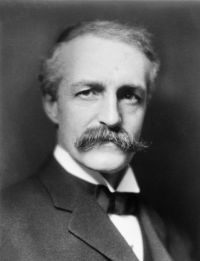
This expanded civic role was often conceptualized as an application of domestic virtues to the functions of the state. Influential thinkers like Anna Garlin Spencer described the conservation of natural resources for the benefit of all people as a fundamentally "fatherly and a motherly office" [10]. Women's clubs became instrumental in this process, working to support officials and advocate for the preservation of the public's natural inheritance . This mobilization was recognized by key leaders of the conservation movement, such as Gifford Pinchot, who saw the engagement of women as a vital force for instilling the principles of foresight and responsible resource use throughout society [11].
The ambition of this public work extended beyond resource conservation to encompass a wholesale effort to secure and advance civilization. Writers like Harriot Stanton Blatch argued that women could not afford a passive policy of laissez faire but must instead contribute their labor, economy, and intellect through broad cooperative action [12]. This civic participation was framed not merely as a right but as a profound duty. In countries where they had political influence, women consistently supported legislation aimed at social service and public betterment rather than mercenary profit [13]. This drive was animated by a conviction that the world belonged to women as much as to men, and that their maternal instincts had a role to play in comforting and uplifting all of humanity .
Protection as Power and Paradox
The very concept of "protection" that provided women with moral authority to engage in civic life was simultaneously the source of their legal and social subordination [15, 16]. While the law granted women protection, this was often framed in the same way it protected dependent entities like animals or property, rather than as a recognition of equal humanity . This dynamic created a fundamental paradox: women were tasked with protecting the home and community, yet they themselves were treated as a class in need of paternalistic shielding. Many activists rejected this arrangement, demanding not more protection but equal rights, so they could protect themselves and have agency over their own lives, labor, and property [14].
Some historical analyses, such as that of Theresa Schmid McMahon in 1912, traced the origins of this subordinate status to early social structures where females were protected during periods of pregnancy and lactation . While this arrangement may have been beneficial for the species, it laid the groundwork for a system of male authority and control, subjecting women to the "tyranny of their masters" . Other scholars like Eliza Burt Gamble argued that millennia of subjection to male influence, particularly after the rise of individual land ownership, had made women economically dependent and shaped their social roles in ways that obscured their original character as free individuals [17]. This subjugation often meant that a woman's individual identity and rights were completely sacrificed to her prescribed roles as a wife and mother [18].
This societal framework faced significant intellectual and social challenges. The idea that maternal functions were inherently incompatible with public duties was contested by thinkers like Edward Bellamy, who argued that with sufficient economic and social support, motherhood need not prevent women from performing civic roles [19]. Yet, the call for equality was frequently met with cultural resistance. Critics, as characterized by R. Austin Freeman's 1925 work, sometimes dismissed the demand for sex equality as a grievance of the marginalized, asserting that "normal women" were content with the existing social order [20]. Furthermore, educated women who pursued public careers were often accused of selfishly avoiding motherhood, allegedly threatening society with "race suicide" by prioritizing public service over childbearing [21].
Asserting Global Leadership in Sustainable Development
In the contemporary era, the historical link between women, water, and community well-being has gained formal international recognition. The 1992 Dublin Statement, for instance, explicitly identifies women as primary providers and users of water and guardians of the environment, while noting that this pivotal role has rarely been reflected in institutional arrangements [22]. This acknowledgment has led to a global consensus that effective resource management requires policies that empower women and ensure their participation at all levels of decision-making and implementation . The focus has shifted from seeing women as passive beneficiaries of policy to recognizing them as essential agents of change.
This principle now extends far beyond water management to the entire framework of sustainable development. Leaders like Barack Obama and global bodies such as the United Nations have affirmed that pressing global challenges, from climate change to poverty, cannot be solved without the full and active participation of women [24, 25]. Achieving sustainable development is considered impossible if half of humanity is denied equal opportunities in education, economic resources, and political leadership . This perspective has driven calls for concrete legal and social reforms, such as ensuring women have direct land rights, a critical step for enhancing food security, particularly in rural areas where they are primary agricultural producers [23, 26].
This modern emphasis on empowerment is the culmination of a long struggle for political agency. Historically, women advocating for social and environmental reforms found their efforts consistently frustrated by a lack of legislative power [28]. The demand for the vote was therefore not an abstract claim for rights but a practical necessity for enacting change. Arguments against their political participation were countered by the assertion that women were perfectly capable of defending their own femininity and that men had no special prerogative to define their sphere [27]. The success of this historical struggle has paved the way for women's indispensable role in contemporary governance and conservation.
Today, the management of critical resources like water is understood through a dual lens of human rights and economics. International consensus affirms the basic right of all people to access clean water at an affordable price, while also recognizing that managing water as an economic good is crucial for encouraging conservation and ensuring its efficient and equitable use [29]. In this modern paradigm, the empowerment of women is no longer just an issue of social justice; it is recognized as a vital strategy for achieving the sustainable and equitable management of the planet's most essential resources .
The trajectory of women's engagement in environmental stewardship reveals a complex evolution from a duty rooted in the domestic sphere to a recognized role in global leadership. Initially, the mandate to protect the health and purity of the home provided a legitimate avenue for women to influence public policy, particularly concerning vital resources like clean water. This protective ethic served as a powerful moral platform, enabling women to organize, advocate, and translate private responsibilities into public virtues. However, this same ethic was deeply entwined with a societal framework that defined women as a protected class, subject to legal and social subordination. Their journey was therefore a dual struggle: to expand their civic influence from the household to the ecosystem, and to dismantle the very notion of paternalistic protection in favor of equal rights and agency.
The contemporary international consensus that women's empowerment is indispensable for sustainable development is the direct inheritance of this historical arc. The challenges of the 21st century—from climate change to resource scarcity and global poverty—have transformed the once-radical demands for equal participation into pragmatic and essential strategies for collective survival . The principles of shared responsibility and equitable access, once confined to the scale of the local community, are now applied on a global stage. In this light, the historical "motherly office" of protecting the community's well-being has not been discarded but rather redefined and scaled up, becoming a global imperative for a more just and sustainable future.