AI-generated from sources
The Public Woman’s Paradox, From Idealization to Vilification
In Brief
- Historically, public women, particularly First Ladies, were idealized as national symbols of virtue and domesticity, wielding indirect moral influence.
- When women transitioned from symbolic roles to direct political engagement, they faced intense vilification, frequently depicted as threats to social order and female virtue.
- Arguments against women's public involvement ranged from fears of corrupting their feminine mystique to dramatic claims of societal collapse and tyranny.
- Through sustained advocacy and practical demonstrations, women have redefined public womanhood, asserting their fundamental right to self-determination and proving that political agency benefits society.
Main authors

Women who achieve public prominence, particularly those in roles such as the First Lady, have long occupied a precarious position in the national consciousness. They are often elevated beyond their individual identities to become living symbols of the nation's character and virtues. This symbolic status is not merely honorary; it has historically been portrayed as a crucial component of national stability and social harmony. From the very inception of the American republic, the woman in this visible role was expected to embody a specific set of ideals—purity, domesticity, and quiet moral strength—projecting a vision of the nation's soul through her personal conduct and social influence [1, 2, 6]. This transformation from person to paragon places an immense weight of expectation upon them, tying their public image directly to the perceived health of the society they represent.
This idealization, however, is the flattering side of a deeply restrictive coin. The same societal impulse that places prominent women on a pedestal ensures that any deviation from the prescribed role is met with intense scrutiny and often harsh condemnation. The line between being a revered national icon and a vilified public threat is remarkably thin, policed by rigid expectations about the proper sphere for female influence. When women step beyond the role of moral guardian or domestic exemplar to engage directly in the political arena, they risk shattering the idealized image. This transgression often provokes anxieties about social decay, the corruption of female virtue, and the destabilization of established power structures, revealing a profound societal tension between celebrating female influence in the abstract and accepting female power in practice [7, 9, 12].
The Idealized Symbol of National Virtue
The position of the First Lady in the United States was established early on as a symbolic benchmark for American womanhood. Martha Washington was seen as the first woman to fill this role, and her dignified performance was considered a fortunate precedent for the future of American society . Women in such high-profile positions become the focus of national and even international attention, serving as representatives of the nation in the highest social circles and receiving homage as public figures . Their importance, however, has often been framed in terms of indirect influence rather than direct power. According to observers like Laura C. Holloway, the intelligent aid of these women was essential for any presidential administration to be deemed successful, casting them as a formidable "power behind the throne" whose social contributions were vital to the nation's official history [3].
This idealized role extends beyond social management to that of a moral compass for the nation. The First Lady, and prominent women by extension, are often expected to be public teachers of virtue and civic responsibility. This tradition has persisted into the 21st century, with figures like Melania Trump using the platform to encourage parents to educate their children on national heroes and to instill values of integrity and community care through personal example [4]. This positions the prominent woman not as a political actor, but as a guardian of the nation’s foundational principles, operating through the soft power of exhortation and domestic example.
This concept of woman as a moral anchor was a powerful theme in 19th-century American thought. Women were seen as the answer to humanity's destiny, their domain defined by love, charity, and justice, and their souls temples of purity, sacrifice, and devotion [5]. This elevated status was intimately linked to their role within the family, which was portrayed as the bedrock of the nation. An 1858 publication went so far as to claim that without the virtue of Mary, the mother of George Washington, America itself would not exist, positioning the patriotic mother as the ultimate source of national liberty . In this framework, female influence is celebrated as essential, but it is also circumscribed—confined to the domestic sphere where it can shape great men and, through them, the nation.
The Transgressive Woman as a Societal Threat
The transition from idealized symbol to political actor has historically been fraught with peril, triggering deep-seated fears that public engagement would irrevocably corrupt female nature. One of the central arguments against women's entry into public life was that it would destroy the mystique and reverence they commanded. As Rafael Palma articulated, men would cease to view women as sacred idols to be worshipped and would instead see them as rivals to be defeated, dragging the "pure flower of her virtue into the mire of political life" . This sentiment, prevalent in the 19th century, favored women who shunned public notoriety and remained in the "quiet retirement of home," where their sensibilities would not be shocked by the gaze of the crowd [8]. To step onto a public platform was to risk admiration being replaced by mere amazement, a form of intellectual curiosity devoid of love and respect.
Political involvement was also seen as fundamentally antithetical to inherent feminine qualities of charm and modesty. The writer Marie Corelli suggested that no woman could engage with political intrigue without losing the natural reticence that inspired men to noble deeds, framing the choice as a stark one between being a spiritual icon—a "Madonna of a Faith"—or a political functionary . This view was echoed in popular fiction and social commentary, which asserted that women lacked the "large-minded grasp of affairs" necessary for governance. According to this logic, a woman seeking public office was not only unqualified but was also demeaning her own dignity and influence by stepping into the masculine arena of public life [10].
At its most extreme, the opposition to women in politics portrayed their participation as an existential threat to the state itself. The actions of militant suffragettes in the early 20th century were seized upon by commentators like E. Belfort Bax as proof of the female intellect's incapacity for logical or political thought, making any concession of public power to them dangerous [11]. Decades earlier, in 1874, Goldwin Smith made the dramatic claim that granting women the franchise would ultimately lead to the "demolition of free institutions." He speculated that women would elect a popular favorite who would consolidate personal power, destroying liberty in the process . These arguments cast female political agency not just as inappropriate, but as a potential catalyst for tyranny and social collapse.
Underlying these fears was the foundational belief that political action was simply incompatible with women's essential nature and their divinely or naturally ordained function within the home and society [13]. From this perspective, the movement for women's suffrage was not a quest for equality but a misguided and dangerous "imitation-of-man movement." Its success, opponents argued, would come at the cost of women's unique and vital contributions to the family and, by extension, to civilization itself, risking the very deterioration of the human race [14].
The Personal Cost of Public Scrutiny
For women thrust into the national spotlight, the personal toll of public life could be immense, particularly when it conflicted with a desire for privacy and domestic peace. Mary Clemmer's 1881 account of one president's wife illustrates how a presidential nomination could feel like an invasion of a hard-won home, prompting the wife's heart to rebel against the imposition of yet more public duties upon her husband [15]. Once in that position, the scrutiny is unforgiving. A woman's entire character is subject to public judgment, and any perceived personal failing can be interpreted as a failure to meet the demands of her role. Clemmer critiques another First Lady for being too self-centered, suggesting her inability to rise above her own ambitions and sufferings meant she failed to seize the opportunities her position offered [16].
This intense scrutiny was not limited to First Ladies but was the common experience of any woman who dared to demand a place in the public sphere. Margaret Fuller described the valor required to withstand the onslaught of "public squibs, private sneers, anger, scorn, derision" directed at those who advocated for women's legal and political equality [17]. John Stuart Mill analyzed this phenomenon as a systemic form of control, in which every woman is caught in a state of "bribery and intimidation combined." To challenge this system required an almost complete personal sacrifice from its leaders and followers, making organized resistance incredibly difficult [18].
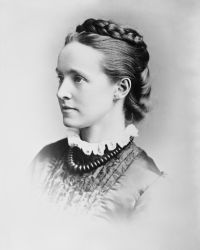
The opposition to women's public roles was often marked by a profound hypocrisy. Millicent Garrett Fawcett, writing in 1911, pointed to the contradiction of anti-suffrage men who argued that politics was a degrading turmoil unfit for women, yet simultaneously established classes to train young women as anti-suffrage public speakers [19]. A similar paradox was observed by others who insisted that women's influence should be felt in government, but only if they remained distinct from men, not as voters or office-holders. This halfway concession aimed to harness female influence without granting female power, under the pretext that direct participation would corrupt women more than it would reform politics [20].
This constant negotiation between idealization and vilification could ultimately diminish the very role these women occupied. The intense social and political pressures of the 19th century led to a point where, according to John Ruse Larus, the established traditions of the White House were overthrown. The First Lady, while still theoretically the "first lady of the land," was no longer the undisputed leader of a national social court. This shift marked a departure of the "social glory" of Washington, reflecting a broader change in how the public role of prominent women was understood and valued [21].
Redefining Public Womanhood Through Agency
In contrast to the historical constraints placed upon them, women have actively and strategically worked to redefine their public roles, moving from symbolic figures to agents of change. In the modern era, this is visible in the work of First Ladies who, as noted in a 2021 White House briefing, drive government action through a personal commitment to what they define as a "moral imperative" [22]. This represents a significant evolution from the passive, domestic influence of the past to a direct and purposeful engagement with policy and governance, claiming a new kind of authority within the public sphere.
This claim to agency is rooted in fundamental principles of democracy and self-determination. Writing in 1869, John Stuart Mill made a powerful case that the desire to shape one's own destiny under a sense of moral responsibility is a feeling shared equally by women and men, and that no offer of skillful administration by others could compensate for the loss of this freedom [23]. More than three decades later, Brougham Villiers framed the denial of suffrage as a "blasphemy against the spirit of democracy." For advocates like him, building a new democratic society required a truly human conception of politics, not a merely masculine one, making female participation an essential, non-negotiable component [25].
The arguments for female agency were not only philosophical but also practical. Women's direct involvement in civic life—from tackling urban sanitation to organizing for the vote—demonstrated their capacity and had a tangible impact on society [24]. Contrary to fears of degradation, experience showed that the presence of women in previously all-male political meetings had a civilizing effect, elevating the discourse and behavior of men [28]. Furthermore, a key argument shifted from what women could do for politics to what politics could do for women. Political engagement was seen as a vehicle for female development, which in turn would benefit their families and communities, directly challenging the notion that public life was detrimental to the domestic sphere [29].
This redefinition of public womanhood was a cumulative process, built upon the struggles of previous generations. Proponents of suffrage pointed out the irony of modern anti-suffragists who freely used the rights—to education, property, and public organization—that had been won for them by women who endured immense hostility and ridicule [26]. The fight was ultimately against a system that, for the first time in history through universal male suffrage, made all women the political inferiors of all men, regardless of their individual merits [27]. Decades of experience have since shown that women can fully participate in political life without ceasing to be effective in their other roles, dismantling the old fears and proving that female agency is not a threat to the social order, but a vital part of its evolution [30].
The historical journey of the public woman has been a constant navigation between the pedestal and the pillory. Confined for centuries to a symbolic role as the nation's moral guardian, her influence was idealized as long as it remained indirect and domestic. This idealized image, however, was conditional, demanding conformity to a narrow standard of behavior. When women sought to translate their influence into direct political power, they crossed a critical threshold, provoking deep-seated anxieties about social order, gender roles, and the very stability of government. The admiration of the pedestal quickly gave way to the condemnation of the pillory, as women who entered the public arena were cast as unnatural, corrupting, and dangerous.
Yet, through sustained acts of agency and compelling intellectual arguments, women have systematically dismantled this binary. They asserted that the right to self-determination was a fundamental democratic principle that knew no gender and demonstrated that their participation enriched, rather than degraded, public life. The process revealed that the development of women through political engagement was not a threat to their families or society, but a benefit to them. While vestiges of the old paradox remain, the narrative has fundamentally shifted. The story of the public woman is no longer solely one of symbolic idealization or punitive scrutiny, but one of claimed authority and the ongoing redefinition of power in a more inclusive democracy.