AI-generated from sources
Sculpted by Society: Gender, Labor, and the Meanings of Muscularity
In Brief
- Muscularity is not solely a biological outcome but a cultural artifact, shaped by societal norms, gender expectations, and economic demands.
- The 19th-century ideal of feminine delicacy was actively enforced through restrictive fashions like the corset, leading to physical debilitation in affluent women.
- Working-class women's bodies were sculpted by arduous labor, creating a visible contrast that exposed the class-based nature of the 'delicate' female ideal.
- Movements advocating for women's physical autonomy challenged existing gendered definitions of strength and envision an era of complete physical equality.
Main authors


The human body, in its muscular form, is often perceived as a testament to pure biological potential—a direct outcome of effort, genetics, and function. Yet, this view overlooks the profound extent to which our perceptions of muscularity are sculpted by forces far beyond anatomy. The ideal physique, whether defined by overt strength or subtle firmness, is not a timeless absolute but a cultural artifact, shaped by the prevailing social norms, gender expectations, and economic demands of a given era. What constitutes a 'strong' or 'beautiful' body is therefore a site of constant negotiation, reflecting deep-seated societal values and power dynamics. The muscles we cultivate, admire, or suppress are physical manifestations of these abstract ideals, revealing how intimately the body is intertwined with the social world.
Historically, this cultural shaping of the body has been most pronounced along the lines of gender. A persistent tension has existed between an idealized vision of feminine delicacy and the inherent physical capacity of the female form. This was not merely an aesthetic preference but a prescribed norm, often enforced through physical constraints and social conditioning that discouraged muscular development in women. This binary was further complicated by the realities of class and labor, which molded bodies according to practical necessity rather than abstract ideals, creating stark physical contrasts between women of different social strata. In response to these limitations, a counter-movement eventually emerged, advocating for women's physical autonomy and challenging the very foundations of gendered physical norms, envisioning a future where strength is defined by individual potential rather than by societal dictate.
The Prescribed Ideal of Feminine Delicacy
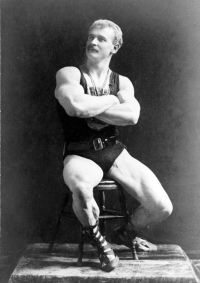
Throughout the 19th and early 20th centuries, the dominant Western conception of the ideal female body was one of softness, grace, and rounded contours, explicitly contrasted with the well-defined musculature celebrated in men [5]. Even proponents of female exercise, such as Eugen Sandow, were careful to frame physical training as a means to achieve firmness and 'graceful contours', not the prominent, visible muscles associated with masculinity [1]. In this view, female muscle was intended to be a hidden foundation providing shape to the overlying flesh, an unseen structural support rather than a feature to be displayed [2]. This aesthetic preference found expression in popular culture, where even a physically capable woman's strength was often described as being cannily masked beneath soft, white, and conventionally 'womanly' arms [3].
This ideal of a non-muscular female form was not left to chance but was actively enforced through fashion, most notably by the corset. This garment served as an external support that supplanted the natural function of the abdominal and back muscles, which are meant to hold the trunk erect [4]. Over time, this reliance on an artificial splint caused these core muscles to weaken and atrophy from disuse, creating a physical dependency on the very device that debilitated the body [6]. This practice was not a fleeting trend but part of a long historical tradition of using waist-confining bandages to mold the female figure, a preoccupation with artificial reduction that has been documented in various civilizations [9]. The result was a physique that society deemed appropriately delicate but which, in reality, was systematically de-muscled and structurally compromised.
The social and psychological consequences of this enforced fragility were profound. Women of the upper classes were often conditioned to aspire to a state of delicacy, viewing the robust appearance of health and muscularity as 'coarse' or 'unladylike' [8]. This cultivated physical incapacity was identified by early feminists like Millicent Garrett Fawcett as a direct consequence of a woman's lifelong subordination and the systematic denial of opportunities for physical exercise [7]. This societal suppression of the female body has been interpreted by some modern scholars as part of a broader historical framework that positioned woman as 'nature'—wild and disordered—in opposition to the ordered, cultural realm of man [10]. By codifying gender roles that prized female passivity and physical constraint, society effectively limited women's physical and, by extension, social potential .
Labor, Class, and the Working Body
The idealized fragility of the female form was, in practice, a luxury afforded only to the comfortable classes, creating a stark physical divide based on social standing. While sedentary lifestyles and restrictive fashions led to muscular deterioration among affluent women, the bodies of their working-class counterparts were shaped by the demands of manual labor [11, 19]. Observers in the 19th century noted the visible contrast between the 'spare, thin, and delicate' American girl of means and the Irish domestic servant, whose daily tasks of sweeping, scrubbing, and ironing developed a 'finely rounded arm and bust' . This demonstrates that the societal ideal of a non-muscular woman was not a universal biological state but a class-based construct, directly contradicted by the physical realities of the laboring majority [17].
Society maintained a deeply contradictory stance on female physical strength, largely determined by the context of the labor being performed. A clear division of labor was often assumed, with tasks requiring significant muscular force naturally falling to men [14]. Yet, this boundary was permeable and selectively enforced. Women routinely engaged in arduous manual labor—from picking cotton to working in coal mines—without societal objection [15]. According to observers like Olive Schreiner, men historically showed no inclination to relieve their own female kin of physical toil if it meant assuming those burdens themselves [18]. Protests only tended to arise when women sought to enter professional or intellectual fields traditionally reserved for men, suggesting that objections were rooted in preserving social hierarchies, not in concerns about female physical capacity . Rhetoric that framed women as creatures of 'beauty, peace, repose' who must be shielded from toil was a romanticized notion applied to a privileged few, not the vast population of women whose labor was essential [16].
The onset of industrialization and mechanization began to destabilize traditional valuations of physical prowess. In an era where complex tasks could be performed with the push of a button, sheer muscular strength lost some of its primacy [12]. A man with immense biceps could find himself functionally equivalent to a frail child in operating machinery, creating a paradox where brute force no longer guaranteed superiority . Even specialized physical activities created new, sometimes ambiguous, bodily forms, such as the 'bicycle stoop' that could accompany well-developed calf muscles [13]. This technological and cultural shift created an opening to reconsider the nature of strength itself, moving beyond a simple equation of muscle mass with social value and challenging the gendered assumptions that underpinned the division of labor .
Reclaiming the Physique, Redefining Strength
In response to centuries of physical repression, a powerful movement emerged advocating for women's right to full and untrammeled physical development. Thinkers like Edward Bellamy envisioned economic independence as the key that would unlock a new era of physical vitality for women, allowing them to engage in the same kind of vigorous, regular exercise that had long been the province of men [28]. This was positioned as a direct corrective to the enforced inactivity that had contributed to a general state of ill health among women of certain classes [30]. This push for physical liberation was not merely about aesthetics or fitness but was connected to a broader sense of empowerment. Some theorists argued that a woman's growing courage and mental fortitude would inevitably manifest in an improved physique, challenging the notion of inherent female physical inferiority [29].
This new ideal was not without its critics and complexities. The prospect of women engaging in athletics and physical training sparked anxieties about 'masculinization', with some worrying that overtrained women would deviate from a 'healthy life of nature' by conforming to a male physical type [26]. More radical visions of the future even imagined a new female form entirely—bony, muscular, and stripped of traditional curves—optimized for manual labor and free from the 'slavery' of reproduction [22]. The debate also centered on the question of innate biological limits. While some researchers presented data suggesting women were physically inferior to men in nearly every measurable way [25], others contended that the visible weakness of civilized women was an artificial product of their environment and training [23]. The undeniable existence of female muscular power, evident in activities from dance to motherhood, served as proof of a latent potential waiting to be fully expressed [24].
Ultimately, the call for women's physical development evolved into a radical rethinking of strength and equality. Some thinkers began to dismiss superficial metrics like height or the size of specific muscles, such as the biceps, as inadequate measures of a superior physique [27]. Olive Schreiner hypothesized that in a society no longer dominated by muscular force and pugilism, the entire scale of social values might be inverted, elevating qualities other than brute strength and thereby improving women's social standing [21]. The most forward-looking vision was one where economic and social freedom would allow the female physique to rebuild and flourish, eventually leading to a state of 'entire physical equality' between the sexes, where differences were merely individual [31]. This represented a fundamental challenge to inherited stereotypes, aiming to redefine beauty, health, and strength based on individual capacity rather than gendered norms [20].
The journey through historical perspectives on the body reveals that muscularity is far from a simple biological fact; it is a canvas upon which societies project their deepest anxieties, ideals, and power structures. The prescribed ideal of feminine delicacy in the Western world was a social construct, physically enforced through restrictive fashions and cultural norms that systematically weakened the female body in the name of a specific aesthetic. This ideal, however, was fractured by the realities of a class-based society, where the strenuous labor of working women provided a constant, living contradiction to the myth of universal female frailty. The subsequent challenge to these norms marked a pivotal shift, as advocates for women's rights began to reclaim physical development as a cornerstone of liberation, sparking a debate over biology, beauty, and equality that continues to this day.
While the specific constraints of the corset have faded into history, the cultural negotiation over the ideal body persists with vigor. Modern fitness culture, professional sports, and media representations continue to grapple with the legacy of these historical tensions, debating the appropriate and desirable forms of female strength and muscularity. The historical struggle to disentangle physical potential from prescribed gender roles is an ongoing project. It serves as a crucial reminder that the bodies we inhabit are shaped not only by our personal efforts but by the enduring weight of cultural expectations, and the path toward true physical autonomy requires a constant questioning of the norms we inherit.