AI-generated from sources
The Mustache as Metaphor, Masculinity, and the Mark of Transgression
In Brief
- The mustache has historically served as a potent symbol of masculinity, virility, and social status for men across diverse cultures.
- Facial hair on women is almost universally interpreted as an aesthetic transgression, often leading to societal horror and personal humiliation.
- Gendered beauty ideals, particularly concerning facial hair, are socially constructed, shaped over time by the interplay of sexual preferences and an 'androcentric culture'.
- Challenging these rigid aesthetic norms promotes a broader understanding of human qualities and beauty, uncoupled from sex-specific physical ideals.
Main authors


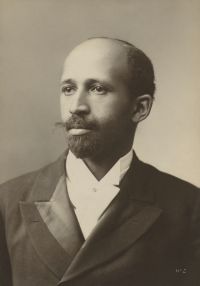
Across cultures and throughout history, the mustache has served as a potent and often revered symbol of masculinity. It has been treated as a marker of the transition to full manhood, a signifier of social standing, and an essential component of a man's character and appearance [1, 4]. From ancient Roman youths dedicating their first facial hairs to the gods to the venerable elders of Asia whose mustaches signified dignity, its presence has been associated with virility, respect, and a distinct masculine aesthetic [8]. The styling of the mustache, whether through curling, clipping, or its complete removal, has long been a subject of fashion and cultural negotiation, reflecting evolving ideals of male refinement and beauty [2, 3].
In stark contrast, the appearance of facial hair on a woman has been almost universally framed as an aesthetic transgression, a biological anomaly that disrupts deeply ingrained conceptions of gender and beauty [10]. Where a mustache on a man enhances his perceived strength and character, on a woman it is often seen as a shocking flaw, capable of provoking reactions of horror or ridicule [12]. This dramatic inversion in meaning reveals a rigid societal binary in which physical traits are strictly policed along gender lines. The mustache thus becomes a focal point for understanding not only what constitutes masculinity, but also the strict, and often punishing, aesthetic confines imposed upon femininity [11, 13].
The Mustache as Masculine Ideal
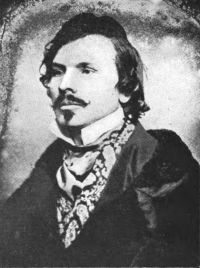
The mustache has long been upheld as a quintessential emblem of manhood, a physical marker separating boys from men and a symbol of physical vigor . Historically, its presence was so valued that its absence could be seen as diminishing the gravitas of even the most powerful men . This connection between facial hair and virility is a recurring theme, with a luxurious growth often interpreted as a direct sign of physical strength and masculine potency . The inability of a young man to grow a mustache could even be a source of personal humiliation, underscoring its role as a key attribute of achieving full adult male status .
Beyond simple virility, the mustache functions as a powerful tool for aesthetic and social expression. It is perceived to add distinct character to a man's face, capable of conveying traits ranging from gentleness to violence without obscuring the underlying features that betray one's nature . Its careful styling could significantly enhance a man's attractiveness, making an otherwise effeminate face appear more conventionally masculine or lending a sophisticated, even foreign, air to a handsome individual [6, 7]. In this sense, the mustache is not merely a biological feature but a cultivated accessory that completes and defines the male visage, with its removal by shaving viewed by some as a form of
civilized barbarism
The social and cultural weight of the mustache is evident in its varied regulations and meanings across the globe. Fashion dictated its presence or absence among English people for centuries, while in other regions, specific religious or national customs determined its appropriateness . In some Asian societies, for example, the mustache served as a badge of dignity, a privilege permitted only after a man reached a certain age, underscoring its role as a marker of venerable status . Conversely, among other groups, the practice of shaving facial hair was seen as essential, with some medical practitioners in 19th-century China noting that cultural attachment to certain mustache styles persisted despite health risks .
The Feminine Transgression
When facial hair appears on a woman, its cultural meaning undergoes a dramatic and overwhelmingly negative inversion. What signifies vigor and respectability in a man becomes a source of horror and humiliation in a woman . The presence of even an
incipient moustache
is framed as a significant flaw, a defect capable of undermining a woman's perceived wit, wisdom, or overall beauty [9]. This reaction reveals a deep-seated societal expectation that female faces must remain smooth, a standard enforced by an aesthetic preference for clear distinctions between the sexes .
This aesthetic norm is so potent that a mustache on a woman is often depicted as a
cruel change
or a monstrous decoration, transforming a celebrated beauty into an object of petrified astonishment . For some observers, any trace of bodily hair on a woman can render her unattractive, viewing it as a masculine trait that makes her
disgusting
. The ideal woman, according to this perspective, must be quintessentially and exclusively
a woman,
a state defined by the absence of any physical reminders of masculinity, such as sharp figures or a lack of breasts . This perspective extends to a disdain for women involved in social movements, linking physical non-conformity with ideological rebellion .
The psychological and social consequences of this rigid standard are profound. For an individual who identifies as female but possesses a male physique, even a slight growth of facial hair is described as a
curse
and a
trifling male stigma
that causes immense personal grief . This highlights how deeply personal identity is tied to conforming to externally imposed physical norms of gender. In this context, the failure to meet the feminine ideal is not merely an aesthetic issue but a source of deep, heart-rending suffering, a fate imagined as one of the worst a girl could endure .
The Social Construction of the Gendered Face
These divergent standards are not innate but socially constructed, often shaped over time by the interplay of sexual preferences. Historically, female influence is credited with encouraging men to abandon long beards in favor of more elegant mustaches, guiding them toward greater cleanliness and refinement [14]. Conversely, women’s beauty ideals have been molded by a male-centric selective process. As man has become the primary chooser of mates based on aesthetic grounds, he has consistently favored smooth-faced partners, while women, choosing on
dynamic grounds,
preferred bearded, vigorous men . This dynamic, as thinkers like Charlotte Perkins Gilman argue, has bred a race of women whose ideas of beauty are almost entirely defined by characteristics that attract men [18].
This process has resulted in what Gilman terms an
androcentric culture,
in which the human female inverts a common law of nature by taking on the primary burden of ornamentation, akin to the peacock [17]. This intense focus on sex-decoration and costume gives a specific
cant
to the female beauty-sense, prioritizing what is considered beautiful for a woman rather than what might constitute a more universal human beauty [16]. This can result in a
sexuo-aesthetic confusion,
a phenomenon where the feminine itself is mistaken for the beautiful, simply because it aligns with gendered expectations, regardless of its objective aesthetic merit [22].
While these boundaries are powerful, they are not immutable and can be deliberately subverted or blurred. There are accounts of men's faces being made to conform to a feminine ideal through the complete removal of mustaches and beards, sometimes against their will [15]. Conversely, the adoption of traditionally feminine grooming practices like makeup by men has been viewed by some commentators as a decadent
amalgamation of the sexes
that erodes the piquant and essential contrast between him and her [19]. Such transgressions—whether involving a man with a carefully curled mustache and painted face or a woman who defies facial norms—challenge the long-held notion that masculine and feminine beauty are as fundamentally opposed as magnetic poles [20, 21].
The cultural journey of the mustache reveals it to be more than mere facial hair; it is a potent symbol marking the rigid boundary between accepted masculine identity and feminine transgression. For men, it has historically served as an emblem of virility, status, and refined character, its presence lauded and its absence sometimes lamented . For women, the same feature is constructed as a biological error and an aesthetic flaw, a source of social horror and personal shame that violates fundamental norms of beauty . This stark dichotomy underscores how deeply societal standards of appearance are intertwined with prescribed gender roles, creating a visual language where a single trait can signify either honor or disgrace depending entirely on the sex of the wearer.
Yet, these deeply entrenched norms are not without their challengers. Provocative critiques question the very basis of a world that hinders women for unconventional appearances while allowing men to succeed regardless [26]. Voices like W.E.B. Du Bois demand a re-examination of
what is beauty,
rejecting the decree that a woman's worth is tied to her conformity to a narrow, often racialized, standard [27]. Some perspectives go further, arguing for the possibility of a beauty that transcends these norms, suggesting a woman with a mustache can be a
grand sight
[23]. This call for a more expansive understanding of human qualities, uncoupled from a rigid binary of male and female traits, points toward a future where beauty is not defined by sex-specific ideals but by a broader appreciation of human diversity [24, 25].