Chin

Definition and stakes

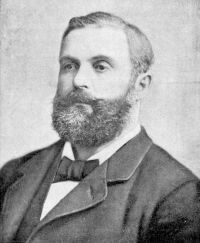
Portrait of Henry T. Finck Henry T. Finck,  Romantic Love and Personal Beauty

“ DIMPLES IN THE CHIN An oval, well-rounded chin is one of the most important elements of formal beauty, and is a characteristic trait of humanity; for man is the only animal that has a chin. Lavater distinguishes three principal varieties of chin: the receding chin, which is peculiar to lower races and types; the chin which does not project beyond a line dropped from the lips; and the chin which does project beyond that line. Of all parts of the face the chin has the least variety of form and capability of emotional expression. ”
Source: Gutenberg

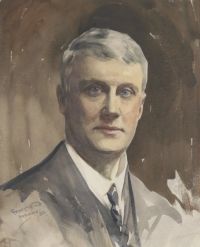
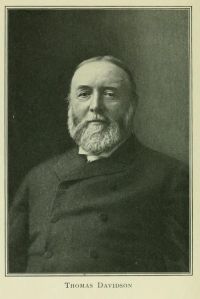
Portrait of Thomas Davidson Thomas Davidson,  Chambers's Twentieth Century Dictionary 1908… (1908)

“ Chin, chin, n. the jutting part of the face below the mouth.—Up to the chin, deeply immersed. [A.S. cin; Ger. kinn, Gr. genys.]
China, chīn′a, n. fine kind of earthenware, originally made in China: porcelain.—ns. Chin′a-bark, a common name of cinchona bark (derived not from the empire of China, but from. Kina or Quina, the Peruvian name of cinchona—see Quinine) ; Chin′a-clay, a fine white clay used in making porcelain; Chin′a-grass (Bœhmeria nivea) , a small shrubby-like plant, allied to the nettle, native to China
”
Source: Wikisource

Wang Yinglin,  San Tzu Ching (1900)

“ Chin is composed of 斤 chin an axe-head, a Chinese pound weight (= 11⁄3 lb. av., probably adopted from the weight of the axe-head) as phonetic, and the contraction of an obsolete word 辵 cho (辶 in composition) meaning to go on and stop as radical. The latter is commonly seen in characters dealing with movement, and is popularly known as the walking radical.
Hsi is composed of 羽 yü feathers as radical and 白 pai white, and seems to have been associated with young birds practising flight.
”
Source: Wikisource

Get perspective with Kwize: daily news enlightened by great literature