 Max Stirner,
The Ego and His Own
Max Stirner,
The Ego and His Own
“ People is the name of the body, State of the spirit, of that ruling person that has hitherto suppressed me. ”
A person is a being endowed with abilities such as reason, ethics, and self-awareness, with the concept of personhood differing across cultural and philosophical contexts. From Stirner’s claim of the individual’s autonomy over societal structures to Leslie Stephen’s focus on the moral importance of a person, writers have examined this theme from varied perspectives.
Emerson emphasized the authenticity of personal identity, while Royce described personhood as a moral being directed toward ideals. These viewpoints together highlight the lasting complexity of defining and comprehending the human self.
Max Stirner,
The Ego and His Own
“ People is the name of the body, State of the spirit, of that ruling person that has hitherto suppressed me. ”
 Leslie Stephen,
Social Rights And Duties: Addresses to Ethical Societies…
Leslie Stephen,
Social Rights And Duties: Addresses to Ethical Societies…
“ But above and beyond all the separate instances, such a person,—the object only to a few, perhaps, of love and reverence, but to those few the object of those feelings in the most unreserved and unequivocal form,—is something far more than a source of any number of particular benefits. ”
Forbes Robinson, Letters to His Friends
“ But you'll learn it is true. You'll understand later on why I am always talking about a Person; why to know that Personal Being is life. Meanwhile, thank you very, very much for what you have taught me. ”
Oliver Wendell Holmes, The Autocrat of the Breakfast-Table
“ You see, my friends, what immense conclusions, touching our lives, our fortunes, and our sacred honor, may be reached by means of very insignificant premises. This is eminently true of manners and forms of speech; a movement or a phrase often tells you all you want to know about a person. ”
 Josiah Royce,
The Conception of God
(1897)
Josiah Royce,
The Conception of God
(1897)
“ In short, the term “person,” in its metaphysical sense, can mean only the moral individual, i.e. the individual viewed as meaning or aiming towards an ideal, good or relatively bad, angelic or relatively diabolical, lawful or relatively anarchical ”
“ This occurs oftenest when, to divine what any known person will do in a case stated, we go boldly by his character, his habits, or his interest: for these are great forces, towards which men gravitate through various and even contrary circumstances. ”
 Ralph Waldo Emerson,
Essays — First Series
Ralph Waldo Emerson,
Essays — First Series
“ We parry and fend the approach of our fellow-man by compliments, by gossip, by amusements, by affairs. We cover up our thought from him under a hundred folds. I knew a man who under a certain religious frenzy cast off this drapery, and omitting all compliment and commonplace, spoke to the conscience of every person he encountered, and that with great insight and beauty. At first he was resisted, and all men agreed he was mad. ”
Ralph Waldo Emerson,
The Conduct of Life — Fate
(1860)
“ The secret of the world is, the tie between person and event. Person makes event, and event person. ”
William James, The Principles of Psychology, Volume 1…
“ We may sum up by saying that personality implies the incessant presence of two elements, an objective person, known by a passing subjective Thought and recognized as continuing in time. Hereafter let us use the words me and I for the empirical person and the judging Thought. ”
 I. A. Richards,
Principles of literary criticism
(1928)
I. A. Richards,
Principles of literary criticism
(1928)
“ The experiences which one person values are thought vicious by another. We must allow, it is true, for widespread confusion between intrinsic and instrumental values, and for the difficulty of identifying experiences. ”
Samuel Finley Breese Morse, Samuel F. B. Morse, His Letters and Journals
“ I shall quote from other letters on this subject as they appear in chronological order, but as no person of any mental caliber thinks and acts continuously along one line of endeavor, so will it be necessary in a truthful biography to change from one subject of activity to another, and then back again, in order to portray in their proper sequence the thoughts and actions of a man which go to make up his personality. ”
 Frederik van Eeden,
The Bride of Dreams
Frederik van Eeden,
The Bride of Dreams
“ What became now of all the beautiful light of Grace and Revelation? persuasion! nothing else! impress of personality on personality! as the teacher impels the child, the market crier his peasants, the general his loyal soldiers, the judge the timid witness, and as the ruling idea - public opinion - impels every individual, wholly beyond all reason or judgment, or absolute sense, no matter how strongly, we all may imagine the contrary. ”
Henry Churchill King, Theology and the Social Consciousness
“ The recognition by {18} psychology of respect for personality as one of the three or four most fundamental conditions—if not the most essential of all—of happiness, of character, and of influence, is explicit confirmation of the truth of this element of the social consciousness. ”
“ We shall analyse that complication of mental qualities which form what, in common life, we call personal merit: We shall consider every attribute of the mind, which renders a man an object either of esteem and affection, or of hatred and contempt ”
 Marie Curie,
Pierre Curie
(1923)
Marie Curie,
Pierre Curie
(1923)
“ But there may be in a life some general direction, some continuous thread, due to a few dominant ideas and a few strong feelings, that explain the life and are characteristic of a human personality. Of my life, which has not been easy on the whole, I have described the general course and the essential features, and I trust that my story gives an understanding of the state of mind in which I have lived and worked. ”
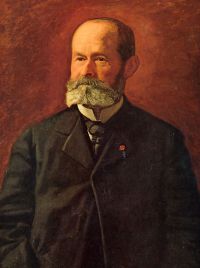 Daniel G. Brinton,
Essays of an Americanist
Daniel G. Brinton,
Essays of an Americanist
“ If I may venture a suggestion as to how it does confer peculiar strength to expressions, it is that it brings into especial prominence the idea of Personality; it directs all subjects of discourse by the notion of an individual, a living, personal unit. ”
Mervin James Curl, Expository Writing
“ You have the choice of observing the personality through the medium of events, or events through the medium of personality. Of the two, the latter is to be preferred. To understand the personality we heed to know whether it controls and directs events, or merely receives them. Into every life a large measure of chance enters. Does the personality merely receive the events, or does it master chance? ”
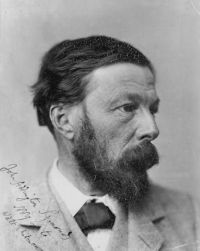 John Addington Symonds,
Sketches and Studies in Italy and Greece…
John Addington Symonds,
Sketches and Studies in Italy and Greece…
“ During that long period of time, the most delicate gradations of human personality, divinised, idealised, were presented to the contemplation of the consciousness which gave them being, in appropriate types. ”
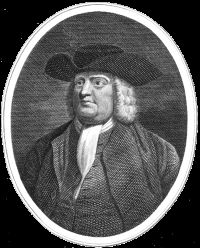 William Penn,
No cross, no crown
William Penn,
No cross, no crown
“ The Testimonies of several great, learned, and virtuous personages among the Gentiles, urged against the excesses of the age, in favour of the self-denial, temperance, and piety, recommended in the first part of this discourse. ”
Sydney T. Klein, Science and the Infinite; or, Through a Window in the Blank Wall
“ Let us first try to understand what we know concerning ourselves. The longer one lives and the more one studies the mystery of "Being," the more one is forced to the conclusion that in every Human Being there are two Personalities, call them what you like—"the Real and its Image," "the Spiritual and its Material Shadow," or "the Transcendental and its Physical Ego." ”
Mervin James Curl, Expository Writing
“ We have our choice of interpreting them as resulting from his personality or of determining his personality as revealed by the deeds. In general it is better to view deeds and events in the light of personality. ”
Portal:Anonymous texts, The Urantia Book (1955)
“ But these are typical of the exceptional few; the great majority have bona fide personality forms, forms which are individually characteristic, and which are recognizable and personally distinguishable. ”
 Evelyn Underhill,
The essentials of mysticism
(1920)
Evelyn Underhill,
The essentials of mysticism
(1920)
“ Here, then, we have in one volume three aspects of human life as seen within the limits of one personality: the biographical facts, the supernal vision, and the ordered conclusions drawn from those facts and that vision, for the instruction of other men. ”
John Doughty, The Parable of Creation (1892)
“ While, therefore, in coming into this much to be desired state, our personality is more and more keenly felt, our trust in, and reliance on, the Lord, and our perception of Him as our light, our life, our all, become also more and more inwardly realized. ”
 E. E. Brown,
The Life and Public Services of James A. Garfield
E. E. Brown,
The Life and Public Services of James A. Garfield
“ Those who saw him enter public life, and were with him to the end, have in mind a wonderful growth, and have in admiration, also, a wonderful character, personal, mental and moral, ever charming, sure to be instructive and always exemplary. ”
 Arthur Schopenhauer,
The Essays of Arthur Schopenhauer…
Arthur Schopenhauer,
The Essays of Arthur Schopenhauer…
“ What a man is: that is to say, personality, in the widest sense of the word; under which are included health, strength, beauty, temperament, moral character, intelligence, and education. ”
Henry James, Views and Reviews
“ You must also be serious. You must forget yourself in your ideas. Your personal qualities—the vigour of your temperament, the manly independence of your nature, the tenderness of your heart—these facts are impertinent. ”
Josiah Royce,
The World and the Individual, First Series
(1899)
“ The whole individual life that expresses and presents the meaning of any single idea. But you will still properly be dissatisfied. You will say: “Are not the individuals as various as are all our various ideas? And how are these individuals of which you have so far spoken to be related to what we mean when we talk of individual men, of souls, of moral personalities, or of one man as different from any other man?” ”
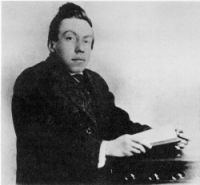 Randolph Silliman Bourne,
Youth and Life
(1913)
Randolph Silliman Bourne,
Youth and Life
(1913)
“ We classify people by new categories. We look for personality, for sincerity, for social sympathy, for democratic feeling, for social productiveness, and we interpret success in terms of these attainments. ”
 Andrew Lang,
Custom and Myth
(1874)
Andrew Lang,
Custom and Myth
(1874)
“ Tales, at first told of ‘Somebody,’ get new names attached to them, and obtain a new local habitation, wherever they wander. ‘One of the leading personages to be met in the traditions of the world is really no more than—Somebody. ”
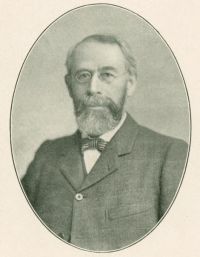 Josephus Nelson Larned,
Popular Science Monthly
(1877)
Josephus Nelson Larned,
Popular Science Monthly
(1877)
“ It is upon that discipline chiefly that those qualities which I have called the moral qualities of the personal order, and which have their root in truthfulness and courage, depend for their evolution. ”
 Joseph Conrad,
'Twixt Land & Sea: Tales
Joseph Conrad,
'Twixt Land & Sea: Tales
“ but I wondered how far I should turn out faithful to that ideal conception of one’s own personality every man sets up for himself secretly. ”
 James George Frazer,
The Golden Bough: A Study in Magic and Religion…
James George Frazer,
The Golden Bough: A Study in Magic and Religion…
“ In order that the tendencies I have described should acquire their full force, it was necessary that they should be represented or illustrated in some great personage, who, by the splendour and the beauty of his career, could fascinate the imaginations of men. ”
 Oscar Wilde,
The Picture of Dorian Gray
(1890)
Oscar Wilde,
The Picture of Dorian Gray
(1890)
“ and you have often told me that it is personalities, not principles, that move the age." ”
Calvin Olin Davis, A Guide to Methods and Observation in History
“ It implants ideals of personal character by disclosing the personal qualities and moral accomplishments of men and women who have, in large ways, affected history, and who have in consequence received lasting honor and renown. ”
Oscar Wilde,
The Picture of Dorian Gray
(1890)
“ Suddenly I found myself face to face with the young man whose personality had so strangely stirred me. ”
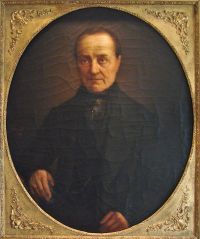 Auguste Comte,
A General View of Positivism
Auguste Comte,
A General View of Positivism
“ There are three successive states of morality answering to the three principal stages of human life; the personal, the domestic, and the social stage. ”
George Müller, Answers to Prayer, from George Müller's Narratives
“ Then there was another class of persons, individuals who were in professions in which they could not continue with a good conscience, or persons who were in an unscriptural position with reference to spiritual things ”
Josiah Royce,
The World and the Individual, Second Series
(1901)
“ I still defend, and, in the fourth lecture of this volume I expound afresh, the thesis that the contrast between our “descriptive” knowledge of the physical world and our “appreciative” knowledge of the facts of finite life, is determined precisely by this difference between our social consciousness of what is “valid for all individuals” and our personal consciousness of what is valid for the Self. ”
Portal:Anonymous texts, The Urantia Book (1955)
“ Though we can hardly undertake to define personality, we may attempt to narrate our understanding of the known factors which go to make up the ensemble of material, mental, and spiritual energies whose interassociation constitutes the mechanism wherein and whereon and wherewith the Universal Father causes his bestowed personality to function. ”
Portal:Anonymous texts, The Urantia Book (1955)
“ That personality is superordinate. 4. That the indwelling spiritual force is potentially directive. In all concepts of selfhood it should be recognized that the fact of life comes first, its evaluation or interpretation later. The human child first lives and subsequently thinks about his living. In the cosmic economy insight precedes foresight. ”
Josiah Royce,
The World and the Individual, Second Series
(1901)
“ The known empirical facts of “multiple personality” possess nothing surprising for such a doctrine. The individual Human Self appears, in my account, as a part of the Selfhood of the race. Social intercommunication amongst Selves is explained as a phenomenal indication that they share in a common larger Selfhood. The phenomenal dependence of Mind upon Matter is interpreted as another sort of evidence whereby our personal participation in the various forms and stages of Selfhood that are present in Nature is indicated. ”
Portal:Anonymous texts, The Urantia Book (1955)
“ Upon your death, your records, identity specifications, and the morontia entity of the human soul—conjointly evolved by the ministry of mortal mind and the divine Adjuster—are faithfully conserved by the destiny guardian together with all other values related to your future existence, everything that constitutes you, the real you, except the identity of continuing existence represented by the departing Adjuster and the actuality of personality. ”
Portal:Anonymous texts, The Urantia Book (1955)
“ The Supreme is the divine channel through which flows the creative infinity of the triodities that crystallizes into the galactic panorama of space, against which takes place the magnificent personality drama of time: the spirit conquest of energy-matter through the mediation of mind. ”
 B. H. Roberts,
The Life of John Taylor
B. H. Roberts,
The Life of John Taylor
“ When we recount the activity of his life, when we contemplate the dignity of his character and of his course, and how exceptional it has been, what an example it is for us! Should we not be tending upward too and continually so? ”
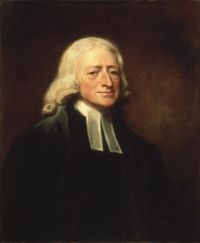 John Wesley,
The works of the Rev. John Wesley…
John Wesley,
The works of the Rev. John Wesley…
“ And in that day shall be discovered every inward working of every human soul: every appetite, passion, inclination, affection, with the various combinations of them, with every temper and disposition that constitute the whole complex character of each individual. ”
Joseph Conrad,
A Personal Record — Preface
(1912)
“ The manner in laughter, in tears, in irony, in indignations and enthusiasms, in judgments--and even in love. The manner in which, as in the features and character of a human face, the inner truth is foreshadowed for those who know how to look at their kind. ”
 Nathaniel Parker Willis,
Idleness
(1838)
Nathaniel Parker Willis,
Idleness
(1838)
“ Rest on the human faces that pass by, Each with its gay or busy interest: And then I muse upon their lot, and read Many a lesson in their changeful cast, And so grow kind of heart, as if the sight Of human beings were humanity. ”
Various, Popular Science Monthly (1915)
“ Such portraitures of human peculiarities, gauged by their moral or social desirability as examples to be followed or avoided, form an attractive compendium for the interpretation of men and their ways. Their consideration, ranging from gossip to philosophy, supplies the common touch of nature that makes the world of every time and clime akin, and presents graphically for our psychological contemplation the outward issues of disposition as shaped by opportunity and circumstance. ”
American slavery was built on a legal fiction: transforming humans into property. This foundational dehumanization led to paradoxical laws, sanctioned violence, and an ultimate erasure that extended beyond life itself, leaving millions nameless.
Catastrophic natural events expose the psychological and political fragility of human systems. From scientific causality to legal frameworks, humanity's quest for predictability is a constant, defining struggle against the vast unknown, navigating the narrow path between anarchy and tyranny.
State sovereignty grants the unquestioned power to expel aliens, viewing temporary protection as a revocable privilege rather than a vested right. The non-citizen exists in a state of precarious tenure defined by the enduring conflict between national interests and universal human rights principles.
Synthetic image fabrication forces a critical legal confrontation: How can personality rights be protected when likeness is synthesized, not stolen? The law must now prosecute the creation of a believable lie that wears a familiar face.
From the rack to the secret confines of the police station, the integrity of legal testimony rests on the prohibition of compulsion. We trace the history of jurisprudence, revealing why due process condemns methods of psychological pressure, threats, and intimidation regardless of the confession's truthfulness.
When fundamental rights are challenged, the simple assertion of identity ceases to be a personal choice and becomes a public act of political significance. Classical and modern texts define resistance as a moral duty essential to upholding the law against systemic injustice, turning classrooms and playing fields into vital arenas of conflict.
An analysis of moral coercion and lethal intent, arguing that when systematic abuse extinguishes the will to live, the ensuing self-destruction must be viewed as the culmination of a homicide perpetrated over time. The 'efficacious cause' is the abuser's sustained violence against the victim's spirit and autonomy.


