
“ It is ‘temperament’ that you are thinking of—and about that you are perfectly right. Your temperament is as open to the impulses of the moment—kindly, generous, compassionate and all that—as a flower is to the bees. ”
Temperament
Definition and stakes
Temperament refers to the innate, biologically grounded elements of personality that influence behavior independently of learning or environment. Historically connected to Galen’s four humors—sanguine, choleric, melancholic, and phlegmatic—modern research, such as Kagan’s emphasis on reactivity or Thomas and Chess’s nine traits, underscores its consistency throughout a person’s life.
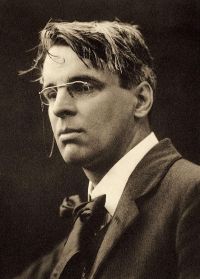
Writers like William James compared a sanguine temperament to an unshakable tendency toward optimism, while W.B. Yeats mourned its decline in poetry, highlighting its cultural significance. Current models focus on neurophysiological and emotional aspects, yet all agree that temperament remains a fundamental framework for understanding and expressing individuality.
Quotes about “temperament”
William James, Psychology: Briefer Course
“ And those of sanguine temperament, when their spirits are high, find it impossible to give any permanence to evil forebodings or to gloomy thoughts. In an instant the train of association dances off to flowers and sunshine, and images of spring and hope. ”
Elizabeth Sara Sheppard, Charles Auchester, Volume 1 (of 2…
“ That strange reminiscence of what we never have really seen, in what we at present behold, appertains to a certain temperament only,—that temperament in which the ideal notion is so definite that all the realities the least approximating thereunto strike as its semblances, and all that it finds beautiful it compares so as to combine with the beautiful itself. ”
 W. B. Yeats,
The Cutting of an Agate
W. B. Yeats,
The Cutting of an Agate
“ Old writers gave men four temperaments, and they gave the sanguineous temperament to men of active life, and it is precisely the sanguineous temperament that is fading out of poetry and most obviously out of what is most subtle and living in poetry—its pulse and breath, its rhythm. ”
 Andrew Lang,
Adventures Among Books
Andrew Lang,
Adventures Among Books
“ We begin to see how much that looks like thought is really the expression of temperament, and how individual a thing temperament is, how each of us must construct his world for himself, or be content to wait for an answer and a synthesis “in that far-off divine event to which the whole creation moves.” ”
 Giacomo Casanova,
The Memoirs of Jacques Casanova de Seingalt…
Giacomo Casanova,
The Memoirs of Jacques Casanova de Seingalt…
“ Heart and head are the constituent parts of character; temperament has almost nothing to do with it, and, therefore, character is dependent upon education, and is susceptible of being corrected and improved. ”
Henry James, Views and Reviews
“ You must also be serious. You must forget yourself in your ideas. Your personal qualities—the vigour of your temperament, the manly independence of your nature, the tenderness of your heart—these facts are impertinent. ”
Carleton Eldredge Noyes, The Enjoyment of Art
“ By temperament is to be understood the receptive faculty, the power to feel, the capacity for sensations, emotions, and "such intellectual apprehensions as, in strength and directness and their immediately realized values at the bar of an actual experience, are most like sensations." The function of temperament is to receive and to transmit, to interpret, to create in the sense that it reveals. In the result it is felt to be present only as the medium through which the forces behind it come to expression. ”
Alexander Walker, Beauty: Illustrated Chiefly by an Analysis and Classificatin of Beauty in Woman
“ The temperament, moreover, of each individual is not always characterized by well-marked symptoms; and even where it has been strongly marked by nature, education, age, the influence of climate, the exercise of professions and trades, and various habits, produce in it infinite changes. ”
baron d' Paul Henri Thiry Holbach, Letters To Eugenia; Or, A Preservative Against Religious Prejudices
“ It is our temperament which decides our condition; the acquisition of moderate passions, of honest habits, sensible opinions, laudable examples, and practical virtues, is a difficult task, but not impossible when undertaken with reason for one's guide, It is difficult to be virtuous and happy with a temperament so ardent as to sway the passions to its will. ”
Ray Vaughn Pierce, The People's Common Sense Medical Adviser in Plain English
“ What then is a Temperament but a mixing together of these determining forces, a certain blending manifested in the constitution by signs, or traits, which we denominate character. The different races of mankind must have their several standards of temperament, for the peculiarities of one are not fully descriptive of, and applicable to the other. ”
William James, The Principles of Psychology, Volume 2…
“ The hysterical temperament is the playground par excellence of this unstable equilibrium. One of these subjects will be filled with what seems the most genuine and settled aversion to a certain line of conduct, and the very next instant follow the stirring of temptation and plunge in it up to the neck. ”
 Leslie Stephen,
Studies of a Biographer
(1902)
Leslie Stephen,
Studies of a Biographer
(1902)
“ If I am not a trained psychologist, I shall not have the proper terms, or shall confuse different terms; and if I am a trained psychologist, I may too probably be misled by my own theories, and I shall certainly find that all the common phrases by which we describe character are too vague and shifting to reflect the vast variety of delicate shades of emotional temperament which we can yet recognise in observation. ”
 Oscar Wilde,
Intentions
(1891)
Oscar Wilde,
Intentions
(1891)
“ Under what conditions, and by what means, this temperament is engendered in race or individual, we will not discuss at present. It is sufficient to note that it exists, and that there is in us a beauty-sense, separate from the other senses and above them, separate from the reason and of nobler import, separate from the soul and of equal value—a sense that leads some to create, and others, the finer spirits as I think, to contemplate merely. ”
“ Besides, it is a temperament peculiarly sensitive, or generous, or enjoying, which at the beginning impels these to their special pursuits; and that temperament, like everything else in the world, strengthens with use, and grows with what it feeds on. ”
 Theodore Dreiser,
Hey Rub-a-dub-dub: A Book of the Mystery and Wonder and Terror of Life
(1920)
Theodore Dreiser,
Hey Rub-a-dub-dub: A Book of the Mystery and Wonder and Terror of Life
(1920)
“ My answer to this question, based on my own individual temperament, would be Yes, but I cannot help speculating{219} as to the opinions of those whose temperaments are so cool or so unemotional that they can put social precedence, material comfort, or the general welfare of the state, as they see it, above affection or passion. ”
Giacomo Casanova,
The Memoirs of Jacques Casanova de Seingalt…
“ The sanguine temperament rendered me very sensible to the attractions of voluptuousness: I was always cheerful and ever ready to pass from one enjoyment to another, and I was at the same time very skillful in inventing new pleasures. Thence, I suppose, my natural disposition to make fresh acquaintances, and to break with them so readily, although always for a good reason, and never through mere fickleness. The errors caused by temperament are not to be corrected, because our temperament is perfectly independent of our strength: it is not the case with our character. ”
 Rose Hawthorne Lathrop,
Memories of Hawthorne
Rose Hawthorne Lathrop,
Memories of Hawthorne
“ The interest which you express in my thoughts, and their influence over you, I can explain in no other way than as arising from similarity of temperament and of taste, heightened exceedingly by an instinctive tendency— almost preternatural—to reverence whatever approaches, either in Spirit or Form, your standard of the Ideal. Of minds of this class it is impious to ask for tempered expressions. They admire, they marvel, they love. ”
 Neith Boyce,
The Bond
(1908)
Neith Boyce,
The Bond
(1908)
“ Many of your amusements wouldn't appeal to me at all. But I understand all you say about the claims of the temperament, and, do you know, I believe I have got a temperament, too! I'm certain I'm dying to be amused. ”
 Mrs. George de Horne Vaizey,
A Question of Marriage
Mrs. George de Horne Vaizey,
A Question of Marriage
“ What sports of circumstances we are! I was looking round the table at lunch to-day and puzzling for the hundredth time over the question of temperament. Does it interest you at all? Do you find it a difficulty? Why are some of us born into the world handicapped with temperaments which hold us in chains all our days, and others with some natural charm or quality of mind which acts as an open sesame wherever they go? Look at Miggles! A plain, lonely old woman, without a sou. ”
Alexander Walker, Beauty: Illustrated Chiefly by an Analysis and Classificatin of Beauty in Woman
“ A temperament may be defined a peculiar state of the system, depending on the relative proportion of its different masses, and the relative energy of its different functions, by which it acquires a tendency to certain actions. ”
 Raffaello Piccoli,
Benedetto Croce: An Introduction to His Philosophy
Raffaello Piccoli,
Benedetto Croce: An Introduction to His Philosophy
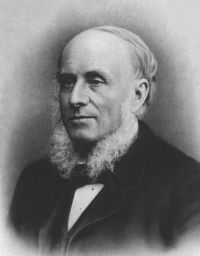
“ But temperament, or the empirical individuality, is not yet character, or virtue; and the respect that we owe to it, as the necessary condition of our action, must not be confused with the ultra-modern tendency which expresses itself in the cry for the rights of the individual temperament and for the free development of the passions. ”
 Alexander Bain,
Practical Essays
Alexander Bain,
Practical Essays
“ More especially must we conclude, provisionally at least, that a buoyant, hopeful, elated temperament lacks some other virtues, aptitudes, or powers, such as are seen flourishing in the men whose temperament is sombre, inclining to despondency. ”
William Harvey, The Works of William Harvey M.D
“ In mental constitution, also, and its manifestations, such as manners, docility, voice, and gait, a similar temperament is discoverable. For as we say of a certain mixture, that it is composed of elements, because their qualities or virtues, such as heat, cold, dryness, and moisture, are there discovered associated in a certain similar compound body, so, in like manner, the work of the father and mother is to be discerned both in the body and mental character of the offspring, and in all else that follows or accompanies temperament. ”
Irwin Edman, Human Traits and their Social Significance
“ There are others by temperament rebellious and iconoclastic, who combine a keen sense of present difficulties and problems with small reverence, use for, or interest in the past, and small imaginative sympathy with it. ”
Arthur Compton-Rickett, The Vagabond in Literature
“ Differing frequently in character and in intellectual power, a basic similarity of temperament gives the various writers discussed a remarkable spiritual affinity. For in each one the wandering instinct is strong. Sometimes it may take a physical, sometimes an intellectual expression—sometimes both. But always it shows itself, and always it is opposed to the routine and conventions of ordinary life.These papers are primarily studies in temperament; and the literary aspects have been subordinated to the personal element. ”
John Brown, Horae subsecivae. Rab and His Friends…
“ That this depended fully as much upon the activity and the quantity—if we may so express ourselves—of his affections, upon that combined action of mind and body which we call temperament, and upon a straightforward, urgent will, as upon what is called the pure intellect, will be generally allowed ”
William James, The Varieties of Religious Experience (1902)
“ All writers about that temperament make the inner heterogeneity prominent in their descriptions. Frequently, indeed, it is only this trait that leads us to ascribe that temperament to a man at all. A “dégénéré supérieur” is simply a man of sensibility in many directions, who finds more difficulty than is common in [pg 170] keeping his spiritual house in order and running his furrow straight, because his feelings and impulses are too keen and too discrepant mutually. ”
Grant M. Overton, Cargoes for Crusoes (1924)
“ Each shows the force of temperament—that quality in people which makes the drama of life. But who are the temperamental people? A queen, a cowboy, a famous singer, a wife, a great sculptor and a business man’s secretary are some of them. People as diverse as life ”
 William Walker Atkinson,
How to Read Human Nature: Its Inner States and Outer Forms
William Walker Atkinson,
How to Read Human Nature: Its Inner States and Outer Forms
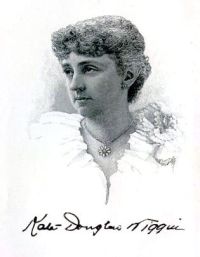
“ Some later authorities added a fifth temperament, called the Nervous temperament, which was held to be characterized by a medium complexion, large brain, small physical frame, fineness of organization, thin hair, finely cut features, quick lively disposition, intellectual tastes and tendencies, sensitive nature, high capacity for enjoyment and suffering. ”
 Kate Douglas Smith Wiggin,
Children's Rights: A Book of Nursery Logic
Kate Douglas Smith Wiggin,
Children's Rights: A Book of Nursery Logic
“ One timid, self-distrustful temperament needs frequently to bask in the sunshine of your approval, while another, somewhat predisposed to vanity and self-consciousness, feeds a more bracing moral climate. ”
 William Isaac Thomas,
The Unadjusted Girl, With Cases and Standpoint for Behavior Analysis
William Isaac Thomas,
The Unadjusted Girl, With Cases and Standpoint for Behavior Analysis
“ The attitudes of a given person at a given moment are the result of his original temperament, the definitions of situations given by society during the course of his life, and his personal definitions of situations derived from his experience and reflection. ”
William Windsor, How to Become Rich: A Treatise on Phrenology…
“ The well balanced temperament, the temperamentum temperatum, of the ancients is an ideal condition in which there is in fact no temperament, all the organs of the body being perfectly in harmony, and exhibiting no preponderance of one over the other. ”
Baron Edward Bulwer Lytton Lytton, Paul Clifford — Volume 07
“ But as those who pursue pleasure are above all others impatient of interruption, so to such as interfered with thy main pursuit thou didst testify a deep, a lasting, and a revengeful anger. Yet let not such vices of temperament be too severely judged! For to thee were given man's two most persuasive tempters, physical and moral,—Health and Power! Thy talents, such as they were,—and they were the talents of a man of the world,—misled rather than guided thee, for they gave thy mind that demi-philosophy, that indifference to exalted motives, which is generally found in a clever rake. ”
Oscar Wilde,
Intentions
(1891)
“ Temperament is the primary requisite for the critic—a temperament exquisitely susceptible to beauty, and to the various impressions that beauty gives us. ”
Muhsin Fani, The Dabistán, or School of manners…
“ If a body that is united with a temperament has the probability of subsisting for a protracted time, and of retaining its compound substance, it is called ‘permanent,’ or ‘perfect;’ if not, ‘imperfect,’ or ‘wanting permanence.’”—Lower down: “And there can be no temperament so equalised that the elements in it should be exactly of the same quantity and mode. ”
Portal:Anonymous texts, The Urantia Book (1955)
“ He possessed a healthy and well-proportioned body, a keen and analytical mind, a kind and sympathetic disposition, a somewhat fluctuating but aggressive temperament, all of which were becoming organized into a strong, striking, and attractive personality. ”
Furneaux Jordan, Body, Parentage and Character in History…
“ In this temperament we find repose or even gentleness, quiet reflection, tenacity of purpose. The feelings—love, or hate, or joy, or grief, or anger, or jealousy—are more or less deep and enduring. In this class also there are fine characters, especially (as in the unimpassioned) when the mental gifts are high and the training refined. In this class too are found perhaps the worst characters which degrade the human race. ”
Elisabeth Luther Cary, William Morris: Poet, Craftsman…
“ From the weary experience of working in constant intercourse with men whose temper and practice and many of whose theories were directly antagonistic to his own, although identified with them in the public mind by a common responsibility, he learned to subdue those elements of his temperament that worked against the success of what he had most loyally at heart. ”
 Edward Bradford Titchener,
A Beginner's Psychology
Edward Bradford Titchener,
A Beginner's Psychology
“ The word ‘temperament’ comes to us from popular psychology, which classifies mental phenomena under the headings of intellect, feeling and will, and places individual endowment under the corresponding headings of talent, temperament and character. ”
Th. Ribot, The Psychology of the Emotions (1897)
“ From the perception to the image, and from the image to the concept, the concomitant emotional element keeps on diminishing, other things being equal; for we must take into account differences of temperament and individual variations. ”
 Charles Webster Leadbeater,
The Inner Life: volume II — Fourth Section…
Charles Webster Leadbeater,
The Inner Life: volume II — Fourth Section…
“ There are fundamental differences of temperament, and these cannot but colour the views taken of other planes. The adept has a perfect perception of life, but below that level we are sure to have some prejudices. ”
William James, The Varieties of Religious Experience…
“ One can but recognize in such writers as these the presence of a temperament organically weighted on the side of cheer and fatally forbidden to linger, as those of opposite temperament linger, over the darker aspects of the universe. In some individuals optimism may become quasi-pathological. ”
 August Weismann,
Essays Upon Heredity and Kindred Biological Problems
August Weismann,
Essays Upon Heredity and Kindred Biological Problems
“ If such a man begins his wanderings in obedience to the impulse of his own will, his own pleasure or interest,—proceeding forwards, to the right or left, or even backwards, with longer or shorter pauses, and starting at any particular time,—it is obvious that the route taken lies in the man himself and is determined by his own peculiar temperament. ”
Alexander Walker, Beauty: Illustrated Chiefly by an Analysis and Classificatin of Beauty in Woman
“ C. arrives, and which he maintains with great ingenuity is, that independently of all other causes, differences in human temperament are to be attributed, in part, to corresponding differences in the organization of certain portions, or the whole of the body; and that, other things being equal, in consequence of this source of influence alone, one person differs from another in many of the qualities of both person and intellect. ”
Rosa Baughan, The Influence of the Stars: A book of old world lore
“ The temperament has an immense amount of influence over the character and this temperament is shown more especially by the colour and texture of the skin and hair. It is temperament which precipitates, or retards, the effects of illness and age and temperament is the result of the astral influence which presided at our birth. ”
Related terms
Authors who wrote about “temperament”
Alexander WalkerWilliam WindsorFurneaux JordanRosa BaughanOscar WildeArthur Compton-RickettL. N. FowlerEly Van de Warker Joseph DrozElisabeth Luther CaryTheodore DreiserCarleton Eldredge NoyesWilliam JamesGiacomo CasanovaRay Vaughn PierceTh. RibotHenry Jamesbaron d' Paul Henri Thiry HolbachMrs. George de Horne VaizeyNeith Boyce
Oscar WildeArthur Compton-RickettL. N. FowlerEly Van de WarkerJoseph DrozElisabeth Luther CaryTheodore DreiserCarleton Eldredge NoyesWilliam JamesGiacomo CasanovaRay Vaughn PierceTh. RibotHenry Jamesbaron d' Paul Henri Thiry HolbachMrs. George de Horne VaizeyNeith Boyce