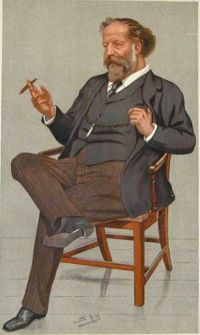
Arthur Compton-Rickett

Biographical details

Arthur Compton-Rickett,  The Vagabond in Literature

“ Why should the elemental forces of Nature appeal so strongly to us? Why does the dweller in the open air feel that an unseen bond of sympathy binds him to the lowest forms of sentient life? Why is a St. Francis tender towards animals? Why does a Thoreau take a joy in the company of the birds, the squirrels, and feel a sense of companionship in the very flowers? Nay, more: what is it that gives a Jefferies this sense of communion? why, if the Earth has no “concern with man,” should it soothe with its benison, and fire his being with such ecstatic rapture? ”
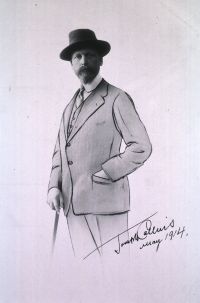
Source: Gutenberg

Arthur Compton-Rickett,  The Vagabond in Literature

“ The spirit of his time was not conducive to Vagabond literature. The spirit of the succeeding age especially favoured the Vagabond strain.
The Gothic Revival, and the newly-awakened interest in medievalism, warmed the imaginations of verse men and prose men alike. The impulse to wander, to scale some “peak in Darien” for the joy of a “wild surmise,” seized every artist in letters—poet, novelist, essayist. A longing for the mystic world, a passion for the unknown, surged over men’s minds with the same power and impetuosity as it had done in the days of the Renaissance.
”
Source: Gutenberg

Arthur Compton-Rickett,  The Vagabond in Literature

“ Behind joy and laughter there may be a temperament coarse, hard, and callous. But behind sorrow there is always sorrow. Pain, unlike pleasure, wears no mask. Truth in Art is . . . no echo coming from a hollow hill, any more than it is a silver well of water in the valley that shows the moon to the moon, and Narcissus to Narcissus. Truth in Art is the unity of a thing with itself—the soul made incarnate, the body instinct with spirit. ”
Source: Gutenberg

Get perspective with Kwize: daily news enlightened by great literature