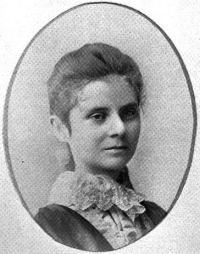
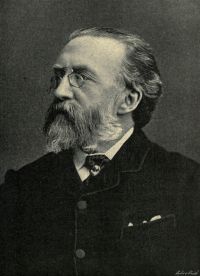
“ He inherited all the curses that made the career of Samuel Taylor Coleridge so disastrous, he was constitutionally unable to settle down to hard work, he was weak, and prone to give way to temptation on the least provocation. A great part of his life was passed in the Lake Country, where William and Mary and Dorothy Wordsworth were his staunch friends, loving him perhaps as much for his father's sake as for his own. ”
Samuel Taylor Coleridge
Definition and stakes
Samuel Taylor Coleridge (1772–1834) was an English poet, literary critic, and philosopher, a foundational figure of the Romantic Movement and a key member of the Lake Poets. His works, such as The Rime of the Ancient Mariner and Kubla Khan, combine supernatural imagery with profound psychological insight, while his critical writings, including Biographia Literaria, connected German idealism with English intellectual traditions.
Coleridge’s life was shaped by battles with mental illness, opium dependence, and personal difficulties, yet his legacy grew after his death, solidifying his impact on thinkers like Emerson and the transcendentalists. Authors such as Thomas De Quincey praised his wide-ranging intellect, Joseph Cottle mourned his decline due to opium use, and James Gillman highlighted his humility and brilliance, together portraying Coleridge as a complex individual whose literary and philosophical achievements remain enduring despite his personal challenges.
Quotes about “Samuel Taylor Coleridge”
 Thomas De Quincey,
Narrative and Miscellaneous Papers
“ Heavy, indeed, are the arrears still due to philosophic curiosity on the real merits, and on the separate merits, of Samuel Taylor Coleridge. Coleridge as a poet—Coleridge as a philosopher! How extensive are those questions, if those were all! and upon neither question have we yet any investigation—such as, by compass of views, by research, or even by earnestness of sympathy with the subject, can, or ought to satisfy, a philosophic demand. Blind is that man who can persuade himself that the interest in Coleridge, taken as a total object, is becoming an obsolete interest. ”
May Byron, A Day with Samuel Taylor Coleridge
“ About sunrise on a May morning of 1790, a young man awoke in a little wayside cottage there: and, resolutely thrusting back his natural inclination to indolence, rose and dressed, and set himself to the performance of such humble duties as devolve upon a very poor householder with a wife and child.Samuel Taylor Coleridge was in his twenty-sixth year: pale, stoutish, black-haired: not an immediately attractive man. ”