
“ CHILD. Why will parents use that expression? What right have you to have a favorite child? The All-Father maketh his sun to shine alike upon the daisy and the rose. Where would you be, were His care measured by your merits or deserts? Is your child none the less your child, that nature has denied him a fluent tongue, or forgotten her cunning, when, in careless mood, she fashioned his limbs? Because beauty beams not from the eye, is there no intelligence there? Because the rosy flush mantles not the pale cheek, does the blood never tingle at your coldness or neglect? ”
Child
Definition and stakes
A child is a human being between birth and puberty, encompassing legal, social, and developmental aspects. Authors like Fanny Fern critiqued parental favoritism, while Pye Henry Chavasse stressed the importance of play in childhood. Charlotte Mason emphasized the cultivation of habits, and John Neal pondered the child's potential influence on adult identity.
E. Nesbit pointed out the gap between children and adults, portraying the former as keepers of an untainted viewpoint. These diverse perspectives together reveal the child's changing role in society and their deep effect on human growth.
Quotes about “child”
Pye Henry Chavasse, Advice to a Mother on the Management of Her Children
“ What an unnatural thing it is to confine a child several hours a day to his lessons; why, you might as well put a colt in harness, and make him work for his living! A child is made for play; his roguish little eye, his lithe figure, his antics, and his drollery, all point out that he is cut out for play—that it is as necessary to his existence as the food he eats, and as the air he breathes! ”
 Laura Elizabeth Howe Richards,
Melody : The Story of a Child
Laura Elizabeth Howe Richards,
Melody : The Story of a Child
“ What can the child have, if she spends her life here? No education, no pleasure,—nothing. Nice little place, no doubt, for those that are used to it, but—Lord! a child that has the whole world before her, to pick and choose! ”
Charlotte Marie Mason, Home Education (Mason) — Part III: 'Habit Is Ten Natures'
“ The child goes to dress for a walk; she dreams over the lacing of her boots--the tag in her fingers poised in mid air--but her conscience is awake; she is constrained to look up, and her mother's eye is upon her, hopeful and expectant. ”
 Alexander Francis Chamberlain,
The Child and Childhood in Folk-Thought
Alexander Francis Chamberlain,
The Child and Childhood in Folk-Thought
“ May the child have good thoughts and know its mother-earth, the giver of food. May it have good thoughts and grow from childhood to manhood. May the child be beautiful and happy. Here is the child's bed; may the child be beautiful and happy. Ashes man, let me make good medicine for the child. We will receive the child into our arms, that it may be happy and contented. May it grow from childhood to manhood. ”
 Hugh Miller,
Scenes and legends of the north of Scotland
(1869)
Hugh Miller,
Scenes and legends of the north of Scotland
(1869)
“ The young are growing up to maturity, the old dropping into their graves; but the infant of her affections ever remains an infant—her charge in middle life, when all her other children have left her and gone out into the world, and, amid the weakness of decay and decrepitude, the child of her old age. ”
 John Neal,
Great Mysteries and Little Plagues
John Neal,
Great Mysteries and Little Plagues
“ What are children? To which you reply at once, without any sort of hesitation perhaps,—"Just as the twig is bent the tree's inclined"; or, "Men are but children of a larger growth"; or, peradventure, "The child is father of the man." ”
 E. Nesbit,
Wings and the Child; Or, The Building of Magic Cities
E. Nesbit,
Wings and the Child; Or, The Building of Magic Cities
“ I might say elders, parents, teachers, spiritual pastors and masters, but the word which the child himself uses seems to me, for all reasons, to be the best word for my use, because it expresses fully and finally the nature of the gulf between. The grown-ups are the people who once were children and who have forgotten what it felt like to be a child. ”
 William Blake,
The Pickering Manuscript
(1804)
William Blake,
The Pickering Manuscript
(1804)
“ He who mocks the infant's faith Shall be mock'd in age and death. He who shall teach the child to doubt The rotting grave shall ne'er get out. He who respects the infant's faith Triumphs over hell and death. The child's toys and the old man's reasons Are the fruits of the two seasons. ”
 Charles Dickens,
Speeches: Literary and Social
Charles Dickens,
Speeches: Literary and Social
“ The dream-children whom I would now raise, if I could, before every one of you, according to your various circumstances, should be the dear child you love, the dearer child you have lost, the child you might have had, the child you certainly have been. ”
Jean Macé, The History of a Mouthful of Bread
“ And then, my dear child, remember that a day will come, when the revered hands that now take care of your childhood—those hands which to-day are yours, as it were—will become weak and incapacitated by age. ”
 Isaac Watts,
Divine Songs for the Use of Children
(1847)
Isaac Watts,
Divine Songs for the Use of Children
(1847)
“ And shall I learn to know thee more, and less obey thee still?3How senseless is my heart and wild! how vain are all my thoughts!Pity the weakness of a child, and pardon all my faults.4Make me thy heav'nly voice to hear, and let me love to pray, Since God will lend a gracious ear to what a child can say. ”
 Letitia Elizabeth Landon,
The Vow of the Peacock and Other Poems
(1835)
Letitia Elizabeth Landon,
The Vow of the Peacock and Other Poems
(1835)
“ Look on yon child, it droops the head, Its knees are bow'd with pain; It mutters from its wretched bed, "Oh, let me sleep again!" Alas! 'tis time, the mother's eyes Turn mournfully away; Alas! 'tis time, the child must rise, And yet it is not day. ”
 S. M. I. Henry,
Good Form and Christian Etiquette
S. M. I. Henry,
Good Form and Christian Etiquette
“ Begin with the baby, therefore, so that the child shall grow up into correct forms of speech, and into that regard of all good form which shall not only give him at once the ears, but the hearts of the people. ”
William T. Preyer, The Mind of the Child, Part II
“ Precisely the epoch at which this takes place belongs to the most interesting in intellectual development. Like a pantomimist, the child, by means of his looks and gestures, and further by cries and by movements of all sorts, gives abundant evidence of his understanding and his desires, without himself speaking a single word. ”
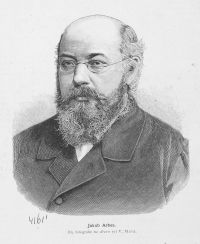 Jakub Arbes,
Poet Lore
(1910)
Jakub Arbes,
Poet Lore
(1910)
“ In a word, I shall tell the story of a little child who had passed only the second year of its age, of a child that was noted neither for any bodily beauty nor for any mental abilities, nor distinguished in any way from millions of other children of the same age. ”
Alexander Francis Chamberlain,
The Child and Childhood in Folk-Thought
“ When some one says in the hearing of the father or mother of a child that it ought not to have a certain apple, a certain article of clothing, or the like, the answer is, "That is no illegitimate child." ”
Charlotte M. Mason, Parents and children (1897)
“ The child is full of imagination, and figures to herself endless scenes, evolved like the German student’s camel. The thousand and one things which might happen are so real to her that the child is, as you said, bewildered ”
Charlotte M. Mason, Parents and children (1897)
“ Don’t I know that every mother of a first child is infallible, and knows more about children than all the old doctors in creation? But, supposing you had asked me, I should have said—Get him each day to occupy himself a little longer with one plaything than he did the day before. ”
 Ellen Key,
The Education of the Child
Ellen Key,
The Education of the Child
“ Thou seest old and young children, nothing else. And in whom Thou hast more joy, Thy Son announced ages ago. But people believe in Him and do not hear Him—that, too, is an old trouble, and they model their children after themselves. ”
 Julia McNair Wright,
Nature readers
(1891)
Julia McNair Wright,
Nature readers
(1891)
“ Why should we set the fortunate child of the nineteenth century in the condition of the child of the first or fourteenth centuries? Let us give the pupil the benefit of the best that has been discovered and detailed. ”
 William Wordsworth,
Lyrical Ballads with Other Poems…
William Wordsworth,
Lyrical Ballads with Other Poems…
“ This Son of his old age was yet more dear— Effect which might perhaps have been produc'd By that instinctive tenderness, the same Blind Spirit, which is in the blood of all, Or that a child, more than all other gifts, Brings hope with it, and forward-looking thoughts, And stirrings of inquietude, when they By tendency of nature needs must fail. ”
Stanley Waterloo, The Wolf's Long Howl
“ Of the Child it may be said that it is a beautiful male infant, nothing more, to the ordinary eye, and conducting itself not differently from any babe of its age. It clings to its mother's bosom, knowing nothing of the world, and as yet, caring nothing. ”
Charlotte M. Mason, Home education (1906)
“ Once more, the Kindergarten professes to take account of the joyousness of the child’s nature: to allow him full and free expression for the glee that is in him, without the ‘rampaging’ which follows if he is left to himself to find an outlet for his exuberant life. ”
 Elizabeth Blackwell,
Essays in medical sociology, Volume 1…
(1902)
Elizabeth Blackwell,
Essays in medical sociology, Volume 1…
(1902)
“ Where the conscience of the parent has only been awakened late in life to this high duty to the child, the attempt to approach the subject with the young adult is often deeply resented by both boy and girl. ”
 Herbert Brenon,
Peter Pan
(1924)
Herbert Brenon,
Peter Pan
(1924)
“ Pull the beard off the fairy king, and you would find the face of a child. This, then, is the spirit of the play. And it is necessary that all of you—no matter what age that you may have individually attained—should be children. ”
 Margaret Fuller,
Memoirs of Margaret Fuller Ossoli…
Margaret Fuller,
Memoirs of Margaret Fuller Ossoli…
“ What a difference it makes to come home to a child!—how it fills up all the gaps of life, just in the way that is most consoling, most refreshing! ”
 Horace Annesley Vachell,
The Soul of Susan Yellam
Horace Annesley Vachell,
The Soul of Susan Yellam
“ Some of you, I daresay, are unconscious of this latent power. We don't expect much of a child, do we? A child eats and plays and sleeps. But children of the tenderest years have performed amazing, incredible deeds. ”
 Louisa May Alcott,
Louisa May Alcott : Her Life, Letters…
Louisa May Alcott,
Louisa May Alcott : Her Life, Letters…
“ And very happy hours they were to us, for my father taught in the wise way which unfolds what lies in the child's nature, as a flower blooms, rather than crammed it, like a Strasburg goose, with more than it could digest. ”
Ellen Key,
The Morality of Woman, and Other Essays
“ It is true the child in certain measure is a repetition of the child nature of all times, but at the same time, and this in a far higher degree, an absolutely new synthesis of soul qualities, with new possibilities for sorrow and joy, strength and weakness. ”
 Lillian Eichler Watson,
Book of Etiquette, Volume I
Lillian Eichler Watson,
Book of Etiquette, Volume I
“ It is the complete volume that counts—not just one page. Follow your child through all his chapters of childhood, enter into his play and study and ambitions. There are so many little incidents that remain in the memory and permanently change the behavior. ”
Sidonie Matsner Gruenberg, Your Child: Today and Tomorrow
“ There are, fortunately, many parents who arrive at an understanding of the nature of the child through sympathetic insight, through quick observation, through the application of sound sense and the results of experience to the problems that arise. ”
 Hermann Hesse,
Demian
(1923)
Hermann Hesse,
Demian
(1923)
“ I led the double life of a child, who is yet a child no longer. ”
Sarah A. Southall Tooley, The life of Florence Nightingale (1916)
“ It is home that teaches the child, after all, more than any other schooling. A child learns before it is three whether it shall obey its mother or not; and before it is seven, wise men tell us that its character is formed. ”
Edwin Seward Puller, Your boy and his training (1916)
“ At the age of eight or nine, when the child emerges from infancy into early boyhood, he begins gradually and imperfectly to leave behind the characteristics of childhood and, with the development of his mental and physical processes, he acquires the distinguishing traits of the individualistic period. ”
James Gall, A Practical Enquiry into the Philosophy of Education
“ When we examine the matter a little farther in regard to infants, we perceive, that all the little arts used by the mother or the nurse, to "amuse the child," as it is called, are nothing more than means employed to excite this reiteration of ideas by the mind. A toy, for example, is presented to the infant, and his attention is fixed upon it. ”
Margaret Fuller,
Summer on the Lakes, in 1843
“ The character and history of each child may be a new and poetic experience to the parent, if he will let it. ”
 Jacob Abbott,
Gentle Measures in the Management and Training of the Young
Jacob Abbott,
Gentle Measures in the Management and Training of the Young
“ It is true that those faculties of the mind by which we apprehend distant things and govern our conduct by them are not yet developed in the child; but they are to be developed, and the aid of the parent will be of the greatest service in promoting the development of them. At proper times, then, the pleasures and advantages of knowing how to read should be described to the child, and presented moreover in the most attractive form. The proper time for doing this would be when no lesson is in question— during a ride or a walk, or in the midst of a story, or while looking at a book of pictures. ”
Montrose Jonas Moses, Children's books and reading (1907)
“ This is not an exclusive list; the attempt has been made to have it a practical, workable list, for parents and teachers and librarians to consult, bringing to it their own personal judgment as to individual taste and development of the child under consideration. Such a term as “the child” has been used reluctantly, since there is no other term, more human, less mechanical, to take its place. Because of this dislike for a stereotyped grading of childhood, the reader will here find no indication as to age demands. ”
 Will Levington Comfort,
Child and Country: A Book of the Younger Generation
Will Levington Comfort,
Child and Country: A Book of the Younger Generation
“ In one year I have been so accustomed to see young people change—to watch the expression of their splendid inimitable selves, that it comes like a grim horror how the myriads of children are literally sealed in the world. ”
 Lewis Carroll,
Through the Looking-Glass
(1871)
Lewis Carroll,
Through the Looking-Glass
(1871)
“ What do you suppose is the use of child without any meaning? Even a joke should have some meaning—and a child’s more important than a joke, I hope. You couldn’t deny that, even if you tried with both hands.’ ‘I don’t deny things with my hands,’ Alice objected. ”

“ There Was a Child Went Forth There was a child went forth every day, And the first object he look’d upon, that object he became, And that object became part of him for the day or a certain part of the day, Or for many years or stretching cycles of years. ”
 Lydia Sigourney,
Letters to Mothers
(1839)
Lydia Sigourney,
Letters to Mothers
(1839)
“ To reveal its complacence by gifts, seems to be one of the native dialects of love. The little child presents its favourite teacher, with a fresh flower. It hastens to its mother, with the first, best rose, from its little garden. In the kiss to its father, with which it resigns itself to sleep, it gives away its whole heart. ”
 Josiah Royce,
The Philosophical Review Volume 3 Number 5…
Josiah Royce,
The Philosophical Review Volume 3 Number 5…
“ The child's interest in expressions of face, its subtle, unconscious responses to the moods and to the current general nervous conditions of its nurse or mother, its delights, and later its terrors in the contemplation of strange persons, these things go far beyond what the mere association of ideas can warrant or explain. ”
 James George Frazer,
The Golden Bough: A Study in Magic and Religion…
James George Frazer,
The Golden Bough: A Study in Magic and Religion…
“ These people “believe that an infant is the child, not of its parents, but of the spirits, and in this belief they go through the following formalities. As soon as an infant is born it is bathed and dressed, laid upon a rice-sieve, and placed—by the grandmother if present, if not, by the next near female relative—at the head of the stairs or of the ladder leading to the house. ”
Estelle M. Hurll, Child-life in Art
“ Unnatural as was the custom, it by no means indicated a lack of family affection, as is seen in these charming compositions. In both cases, the child, at first an infant, and later a little boy a year or two old, is the centre of the group, fondled and admired by all. ”
 Lady Gregory,
Three Wonder Plays
Lady Gregory,
Three Wonder Plays
“ If the play has a moral it is given in the words of the Mother, "It's best make changes little by little, the same as you'd put clothes upon a growing child." ”
“ What the child acquires at school must be carefully digested, but the example and guidance of the parents are involuntarily absorbed into the flesh and blood. It remains then with the parents to lay in the child the foundation for a sound conception of the world. ”
 Grace Greenwood,
Stories of Many Lands
Grace Greenwood,
Stories of Many Lands
“ Children all the world over laugh and weep, quarrel and make up, play hard, and eat heartily, love and try their mammas, pet and tease their little brothers and sisters,—are a sweet care and a dear perplexity, and are God's little folk, all of them. ”
Edwin Seward Puller, Your boy and his training (1916)
“ CHILD PSYCHOLOGY A SYSTEMATIC knowledge of the powers and limitations of the human mind and soul before maturity and the characteristic changes which they undergo at puberty will throw a flood of light on the boy-problem. ”
Related terms
Authors who wrote about “child”
Charlotte M. MasonAlexander Francis ChamberlainEllen KeySidonie Matsner GruenbergCharlotte Marie MasonJakub ArbesVarious James Sully
 Abby Morton DiazCharles DickensPye Henry ChavasseLouisa May AlcottJames GallWilliam WordsworthEdwin Seward Puller
 Arthur Conan DoyleMargaret Fuller
 Virginia Woolf
 Henry Rowe SchoolcraftJames Napier Bailey
Alexander Francis ChamberlainEllen KeySidonie Matsner GruenbergCharlotte Marie MasonJakub ArbesVariousJames SullyAbby Morton DiazCharles DickensPye Henry ChavasseLouisa May AlcottJames GallWilliam WordsworthEdwin Seward PullerArthur Conan DoyleMargaret FullerVirginia WoolfHenry Rowe SchoolcraftJames Napier BaileyRelated articles
The thermal tyranny of the nursery: How climate change redefined the duty of care
The traditional focus on maintaining a perfect 60°F micro-climate in the nursery has been rendered obsolete by systemic global warming. The historical fear of localized thermal danger contrasts sharply with the contemporary crisis of inherited planetary instability.
Pye Henry Chavasse, William A. Alcott, Barack Obama
The Contested Ground of Childhood, Between Ideal and Reality
Society clings to an idealized vision of childhood—a sacred time of innocence and joy. Yet, for countless children, reality is a brutal landscape of neglect, abuse, and premature disillusionment, revealing a profound collective failure to protect the young.
E. H. Chapin, Charles Dickens, Fanny Fern
From Gentle Sorrow to Public Grief, The Changing Face of Infant Loss
Centuries ago, infant death was a private, romanticized sorrow, meant to be borne gently. Today, it is a public health crisis and a battleground for modern ethics, shaped by technology and legal debates. This profound shift reveals how perceptions of life itself have changed.
Charles Dickens, Honoré de Balzac, Bernard Nathanson
The Contested Kingdom, Art and Ideology in Childrens Literature
Children's literature, a realm often seen as innocent, is a battleground where the very purpose of stories—to instruct or to ignite imagination—is fiercely contested. From illustrations to commercial pressures, the fight to define quality and protect a child's artistic spirit rages on.
Montrose Jonas Moses, Alice Isabel Hazeltine, Porter Lander MacClintock
The conditional nature of parental authority: Duty, failure, and the state as guardian
Parental power is not an inherent right of ownership, but a provisional function contingent upon fulfilling duties of care and education. When natural bonds falter, through abuse or even misguided affection, the state must intervene as the ultimate guardian to secure the child's imprescriptible rights and welfare.
Sigmund Engel, Charlotte M. Mason, John Locke
The psychology of fear: How early discipline and violence shape lifelong mental health
A deep dive into the historical debate on child-rearing reveals that fear-based discipline—from harsh obedience training to exposure to domestic violence—does not build character but cripples the soul, creating lifelong nervous and mental illnesses, demanding radical societal intervention.
Boris Sidis, Ellen Key, Bill Clinton
The Nature of Youth, Between Innocence and the Call to Arms
Children are seen as symbols of peace, yet societies relentlessly mold their "warring spirit" into instruments of conflict. From playful mock battles to systematic indoctrination, the line between youthful innocence and the call to arms is blurred, shaping a generation destined for—or against—war.
William Wordsworth, Karl Groos, W. E. B. Du Bois
The Bittersweet Echo, Navigating the Dynamic Landscape of Childhood Memory
Childhood memories are not a pristine archive but a living, shifting landscape, perpetually re-colored by adult experiences. What was once pure joy can become a 'sweet shadow,' and even forgotten sorrows can leave enduring marks, shaping who we become.
John Wilson, W. H. Sparks, Albert Mordell
Beyond Instinct, The Politics of Motherhood
The romanticized ideal of motherhood as an innate, sacred instinct crumbles under the weight of historical legal constraints, economic pressures, and the ongoing fight for women's reproductive autonomy. Motherhood is not merely natural; it is profoundly political.
Charlotte Perkins Gilman, Helen H. Gardener, W.E.B. Du Bois
The unquestioned autocrat: The dangerous conflict between sporting authority and child protection laws
The system that demands absolute respect for sports officials fundamentally conflicts with the imperative to disqualify known offenders from positions of trust. Historical texts show the tension between the revered autocrat of the pitch and the urgent need for stringent moral vetting to protect vulnerable youth.
John Cameron, Sandra Day O'Connor, Sigmund Engel
