AI-generated from sources
What the Rod Teaches, and Why a Law That Measures the Blow Cannot See the Harm
In Brief
- Where the law has stepped between parent and child, it has looked for a threshold of gravity, such as actual abuse or a serious offence, and left humiliation, sarcasm and the ordinary blow to parental affection.
- The case against the rod was rarely about pain: blows were said to teach a false scale of wrongs, lying, evasion and cowardice, lessons that depend less on how hard a child is struck than on why, when and how often.
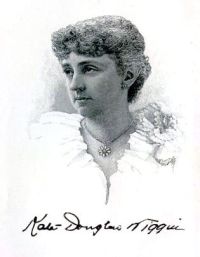
- Kate Douglas Smith Wiggin, author of a book on children's rights, likened the child who obeys only from fear to a slave under the lash; writers against slavery had described the same mechanism, by which domination breeds deceit rather than conscience.
- Even the rod's defenders argued about what fear teaches, not about force, and where the law condemned corporal punishment outright, it named the culture of violence and the loss of dignity it sustains rather than a gentler limit.
Main authors

A boy is pointed out in a school as so unruly that everyone agrees a flogging would do him good. Then the truth emerges: his father's floggings at home had made him what he was [1]. Ellen Key, who reports the scene, draws a blunt wager from it. Were statistics kept of “ruined sons,” she writes, the flogged would certainly outnumber the pampered . The episode holds the whole problem in small. The school sees a disorder to be cured by the rod; the boy's history shows a disorder produced by it. Between those two readings lies a question that is not about force at all: what does a blow actually teach?
Where the law has stepped between parent and child, it has looked for a threshold—the point at which correction becomes actual abuse or a serious offence [2, 3]. Below that line, the blow belongs to the parent. The long critique of the rod, carried by educators, physicians and moralists, many of them writing in the decades around 1900, asked something else. It asked what the child learns from being struck. Its answer was a catalogue: moral confusion, lying, evasion, cowardice and a servile temper [4, 5, 6, 7]. Those lessons depend less on how hard the child is hit than on why, when and how often [8]. Even the rod's defenders argued on that ground, claiming that fear could teach restraint [9, 10]. A standard that weighs the blow is therefore blind to the very thing in dispute.
Up to the line where abuse begins
The law's blindness was once confessed rather than defended. An essay in The Bay State Monthly in 1884 states the limit with unusual candour. The humiliating reproach and the stinging sarcasm wound a child in its tenderest feelings, it concedes; yet these are not forms of cruelty the law can reach . The law may step in only for an actual and serious offence. For everything else, it must rely on the affection that nature plants in parents . The writer does not call the unseen wounds minor. He says only that they lie beyond the law's instruments. The law sees what leaves a mark; the rest is entrusted to love.
The same threshold could be stated as a principle of government rather than an admission of weakness. A passage in Oliver Optic's Dikes and Ditches grants the parent or the teacher absolute authority: his will is law, and the child can only obey or rebel . The sole limit is placed on the line “where tyranny ends and actual abuse begins” . The phrase is revealing in spite of itself. It implies a zone of tyranny that remains legitimate, provided it stops short of abuse. What happens inside that zone—what the child learns there—falls by definition outside the reckoning.
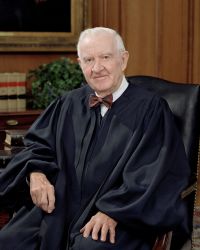
When the law does reach the striking parent, it tends to weigh gravity and intention rather than effect. Sigmund Engel, writing on child protection, wanted offences against children punished severely, the more so when the offender is responsible for the child's upbringing [11]. Yet he observed that many such offences by parents, guardians and teachers are nothing more than a “misuse in all good faith” of the authority entrusted to them . Engel does not treat good faith as an excuse. But his remark shows that harm can coexist with the best intentions, and a law that looks for malice will miss it. In a different setting, a dissent in an American case on parental rights in 2000, Justice John Paul Stevens drew the state's power to protect children along the line of motive: it reaches parental authority exercised arbitrarily and not in fact driven by the child's welfare [12].
Reformers who wanted firmer intervention often accepted the law's terms. The author signing as Jacobus X, in Discipline in School and Cloister, wished to see beating parents denounced and punished at the police court [13]. An assault with violence, he argued, is no less one because it is committed by the child's natural protector . The demand is humane, and its logic is that of criminal law: the beating becomes an assault, an act measured by its violence. It widens the law's gaze without changing what the law looks at. The objection that mattered most to the rod's critics lay elsewhere, in the mind of the child.
Spanked for lying, spanked for torn clothes
The first thing a blow teaches is a false equivalence. Marion Foster Washburne imagines a child spanked for lying, spanked for disobedience and spanked again for tearing his clothes. Since all three lead to the same result, he concludes that they weigh the same . This, she argues, lays the foundation of a “permanent moral confusion”: a man who cannot rank wrongs cannot guide himself or others . Nothing in her argument depends on how hard the child is struck. The confusion comes from the sameness of the penalty, and from its silence about the reason why the act is wrong .
Ellen Key found the same distortion in the occasion of punishment. A child left uncorrected at home for what earns a blow away from home concludes that the fault lies in being seen, not in the deed . A mother ashamed of her son's behaviour strikes him—when she might, Key says, strike her own breast. A failed exploit is beaten, a successful one praised . In each case the child learns a lesson the parent never meant to teach. Punishment, he discovers, follows the parent's embarrassment and the accident of outcome. Key calls the result demoralisation .
Lying is the second lesson, and the most paradoxical. A contributor to Popular Science Monthly in 1895 held that a large share of childish untruth arises precisely in connection with moral authority and discipline . The child takes up a hostile stance of self-defence toward whoever administers law and inflicts punishment—even toward a beloved mother . James Devon, who wrote on crime and the community, saw the same reflex in its practical form. Children punished in a fit of parental temper bear it as best they can, and keep out of the way the next time they misbehave [14]. The boy who is beaten without mercy whenever he annoys his parents keeps out of their way too, and may drift into bad company [15]. Fear does not remove the fault. It teaches concealment and flight.
Devon adds a detail that upsets the logic of measure. A whipping given in cold blood, he observes, children do not accept in the same spirit as a parent's outburst, and he thinks they are right . The deliberate, calibrated punishment—the kind a rule of measure would favour—is the one the child resents most. Devon's broader objection to arbitrary punishment follows: it may do far more harm than good, even when it succeeds in producing obedience through fear . Success, on this account, is part of the danger.
Cowardice is the third lesson, and the one that most clearly escapes any scale of force. Felix Adler did not object to pain as such. Children, he wrote, should be trained to bear unavoidable pain without flinching . His charge concerned frequent and severe chastisement, which makes a sensitive child ever more afraid of blows, so that parents, by their own discipline, “stamp the ugly vice of cowardice” upon their children . The qualification matters: Adler does not claim that every slap breeds a coward. But the variable he cares about is the child's temperament as much as the force applied. Kate Douglas Smith Wiggin reached the same verdict in general terms: undue severity makes the child a liar and a coward .
A slave who cowers under the lash
The rod's critics reached for one analogy more than any other: slavery. Wiggin wrote that the child who obeys merely from fear of punishment is “a slave who cowers under the lash of the despot” . He hates his master, and he hates the task he is made to do . Writers against slavery had described, in that institution, the very traits the educators feared. Epes Sargent's 1863 tale of slavery shows lying and fraud becoming legitimate in the slave's eyes, his conscience stunted by subordination to the master's [16]. John Wesley Cromwell framed it as a law of reaction: the greater the master's cruelty and tyranny, the greater the slave's cunning and deceit [17]. These texts concern chattel slavery, not the nursery, and the comparison is the educators'. Yet the mechanism is the one Wiggin saw: domination by fear breeds dissimulation, not virtue.
The deeper charge is that obedience extracted by terror forecloses moral life itself. A writer in The Chautauquan in 1883 posed a question no scale can answer: when is the enforcement of obedience to stop? As long as a child does right only from force and terror of punishment, his moral freedom has no scope, and the virtue born of free choice cannot even begin [18]. Edwin Seward Puller, in 1916, carried the argument toward delinquency. A boy is a rational being. When his own standards of right and justice are violated again and again, they erode, and he adopts a code of expediency in place of morals [19]. Fear yields compliance. It does not yield a conscience.
The servile temper has its counterpart in the one who strikes. A contributor to Popular Science Monthly in 1889 judged corporal punishment wholly unnecessary, and noted that even its advocates could not deny it was bad for parents, since no one is virtuous enough to be “judge, jury, and executioner in one” [20]. Jacob Abbott saw in the mother who punishes in a passion the working of a brute instinct, a government of the same kind animals exercise over their young [21]. He granted that it was still a government, and better than none . Ellen Key went further. Administering corporal punishment, she held, demoralises the educator, feeding his thoughtlessness rather than his patience, his brutality rather than his intelligence [22].
Children watch this, and they draw conclusions. Hector Charles Cameron, the author of The Nervous Child, described the hasty slap as nothing but the motor discharge of the educator's irritability. The child, a sharp observer on such points, sees through it and measures the frailty of his judge [23]. Worse, older children who hear constant reproof and see constant punishment soon practise both on their younger brothers and sisters . The rod thus transmits a model of authority: the stronger may hurt the weaker when vexed. That is a lesson about power, and it passes from one child to the next.
Solomon's rod and the case for fear
The rod's defenders deserve a hearing, and the strongest of them argued on the same ground as its critics. Charlotte Mason held that the light, smart slap a mother gives a naughty little child is often “both effective and educative” . It changes the current of his thoughts, and he no longer wishes to pull his sister's hair . Carl Avery Werner argued that in the earliest years only corporal punishment works. A very young child cannot yet grasp the distance between cause and effect, and moral penalties act too slowly [24]. Neither speaks of force. Both make a claim about what the child learns, and when.
Yet the defence carried its own limits. Mason herself counselled sparing the rod—not out of tenderness toward the child's body, since he must learn to endure hardness, but because it is hard to find a punishment that does not defeat its own ends . Fichte's case was the most rigorous. In his scheme of education, the prohibitions on which the community depends are to be enforced by fear of immediate punishment, without indulgence or exception . Such fear, he argued, does not impair the pupil's morality, because it incites him not to do good but only to abstain from evil . The argument concedes a great deal. On Fichte's own account, fear can forbid; it cannot form. The critics drew the opposite conclusion from the same premise: obedience compelled by terror leaves moral freedom no room to begin .
Behind both camps stood an older justification, religious rather than pedagogical. Wiggin observed that discipline had for ages been aimed at the body more than the mind, on the idea that the pains of the flesh would save the soul [25]. Pious parents treated flogging as a religious obligation, and many a tender mother steeled her heart to give blows she thought essential to her child's spiritual welfare . The scriptural warrant was contested from within. Brigham Young, in his discourses, denied that Solomon's words on the rod justified ruling children with an iron hand. Chastening might sometimes be needed, he allowed, but parents should govern by faith rather than by the rod [26]. Even inside the tradition, the question was not how hard to strike but what kind of rule to build.
The public law of punishment shows how the question could shift. T. Baron Russell, imagining the legislation of a century to come, argued that when the law itself adopts hanging and flogging, it sanctions violence. Since the law is supposed to be the exemplar of public morality, it must tend nearly as much to perpetuate violent crime as to deter it [27]. Sir John Salmond, in 1913, reported the view of the reformative school. Its advocates condemned flogging and other corporal penalties as relics of barbarism, degrading and brutalising both to those who suffer and to those who inflict them [28]. Neither argument turns on the force of the stroke. Both ask what the practice teaches—to the punished, to the punisher, to the community that adopts it.
Where the law did move beyond the measure, it borrowed the critics' language. In 1995 the Constitutional Court of South Africa found the state's institutionalised whipping of juvenile offenders cruel, inhuman and degrading [29]. Its reasoning reached past the stroke itself: “a culture of authority which legitimates the use of violence” is inconsistent with the values of the Constitution . That ruling concerned judicial whipping, not the family. A Chinese human rights action plan for 2021–2025 goes further, forbidding corporal punishment of minors in any form, along with any other degradation of their dignity, and prohibiting beatings and domestic violence against children [30]. The prohibition is drawn by kind, not by degree. Once the question is what violence teaches, there is no moderate dose of the lesson.
The rod has been judged with two different instruments. The law, where it intervened, asked how hard a parent may strike before correction becomes abuse, and entrusted everything short of that line to parental affection . The critics of corporal punishment asked what the child learns from the blow. Their answers were concrete: that a lie and torn clothes deserve the same penalty, that the fault lies in being seen, that the safe course is to hide, that frightened obedience is the obedience of a slave . Not all of them claimed that every slap does harm; some reserved their charge for frequent and severe chastisement, others allowed a light slap in early childhood . Yet even the rod's defenders argued about what fear teaches, not about the weight of the hand .
That is why a measure of force sees so little. It can tell a bruise from a tap. It cannot tell obedience from servility, or a child who has learned what is right from one who has learned to hide and to calculate . Where the law came to condemn the rod outright, it did so by naming what violence teaches—a culture of authority resting on force, a degraded dignity—rather than by drawing a gentler line . A blow can be weighed. What it teaches cannot.