“ But great love, like great genius, can never be a duty: both are life’s gracious gifts to its elect. There can be no other standard of morality for him who loves more than once than for him who loves once only: that of the enhancement of life. He who in a new love hears the singing of dried-up springs, feels the sap rising in dead boughs, the renewal of life’s creative forces; he who is prompted anew to magnanimity and truth, to gentleness and generosity, he who finds strength as well as intoxication in his new love, nourishment as well as a feast—that man has a right to the experience. ”
Ellen Key
Biographical details
.jpg)
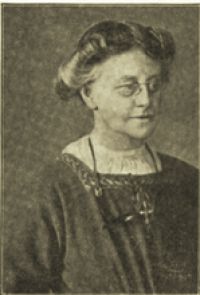
Ellen Key (1849–1926), a Swedish writer and intellectual linked to the Modern Breakthrough movement, examined themes of education, feminism, and ethics through a progressive perspective. Promoting child-centered teaching methods and maternal independence, she challenged societal conventions in works such as The Century of the Child (1900), which reshaped educational thought, and Love and Marriage (1911), which questioned traditional gender roles.
Her writings, combining socialism with an emphasis on personal growth, highlighted the power of supportive environments to transform both children and society, portraying education as a route to shared and individual emancipation.
Quotes by Ellen Key
 Ellen Key,
The Century of the Child
Ellen Key,
The Century of the Child
“ Only the person who, through the mental nourishment he has received, sees more clearly, feels more ardently, has absorbed completely the wealth of life, has been really educated. This education can be gained in the most irregular way, perhaps around the hearth or in the field, on the seashore or in the wood; it can be acquired from old tattered books or from nature itself. It can be terribly incomplete, very one-sided, but how real, personal, and rich it appears to those who for the period of fifteen years in school have ground out the wheat on strange fields, like oxen with muzzled mouths! ”
“ Never has the earth seen a more complicated and contradictory being than this woman, melancholy and wistful, cold and sensitive, thirsting for life and tired of life at the same time. The blood dances otherwise in her veins, sings another song in her ears, than it has in those of any other woman since time began. She sees through her husband and is a stranger to him; his desire seems brutal to her finely-shaded and contradictory moods: she is not won, even when she allows herself to be embraced. She fears the child, since she knows she cannot fulfil its simple demands. ”
Common terms
Works by Ellen Key
Similar authors


Related articles
The clash between sovereign choice and societal duty in love and procreation
The debate over procreation is torn between the mandate for societal improvement—historically enforced through law and discipline—and the modern insistence on individual autonomy, particularly the woman's right to choose her reproductive future. This conflict defines the moral architecture of family planning.
The choice and contour of existence: The historical struggle for female autonomy
From the confining "domestic treadmill" to radical self-creation, historical texts reveal the fight for female self-determination. True autonomy rests on economic independence, bodily integrity, and the right to choose one's purpose, often necessitating a deliberate rejection of prescribed marriage and societal expectations.
