 Ralph Waldo Emerson,
Compensation
(1841)
Ralph Waldo Emerson,
Compensation
(1841)
“ Crime and punishment grow out of one stem. Punishment is a fruit that unsuspected ripens within the flower of the pleasure which concealed it. ”
Punishment, the enforcement of an unwelcome consequence by an authority to discourage unacceptable behavior, occurs across various contexts, from criminal law to child rearing. Thinkers such as Cesare Beccaria advocated for fair, corrective actions, criticizing torture and the death penalty as both ineffective and cruel.
Jeremy Bentham regarded all forms of punishment as fundamentally harmful, whereas John Stuart Mill supported the death penalty as less severe than other options. Ralph Waldo Emerson connected crime and punishment as interrelated elements of human nature. These viewpoints highlight a range of discussions concerning justice, ethics, and the effectiveness of corrective actions in influencing social conduct.
Ralph Waldo Emerson,
Compensation
(1841)
“ Crime and punishment grow out of one stem. Punishment is a fruit that unsuspected ripens within the flower of the pleasure which concealed it. ”
 Cesare Beccaria,
An Essay on Crimes and Punishments…
(1764)
Cesare Beccaria,
An Essay on Crimes and Punishments…
(1764)
“ To every crime, which from its nature must frequently remain unpunished, the punishment is an incentive. Such is the nature of the human mind, that difficulties, if not insurmountable, nor too great for our natural indolence, embellish the object, and spur us on to the pursuit. ”
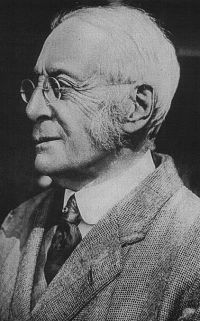 Charles William Eliot,
The Harvard Classics Vol. 3
(1909)
Charles William Eliot,
The Harvard Classics Vol. 3
(1909)
“ To one that hath committed Murther, if the Judge should only ordain a Fine, it were a madness to call this a punishment, and to repine at the sentence, rather than admire the clemency of the Judge. Thus, our offences being mortal, and deserving not only Death, but Damnation, if the goodness of God be content to traverse and pass them over with a loss, misfortune, or disease, what frensie were it to term this a punishment, rather than an extremity of mercy, and to groan under the rod of His Judgements, rather than admire the Scepter of His Mercies! ”
Cesare Beccaria,
An Essay on Crimes and Punishments…
(1764)
“ It is, then, of the greatest importance, that the punishment should succeed the crime as immediately as possible, if we intend, that, in the rude minds of the multitude, the seducing picture of the advantage arising from the crime, should instantly awake the attendant idea of punishment. ”
 John Stuart Mill,
Speech In Favor of Capital Punishment
(1868)
John Stuart Mill,
Speech In Favor of Capital Punishment
(1868)
“ Society is asked, then, to denude itself of an instrument of punishment which, in the grave cases to which alone it is suitable, effects its purposes at a less cost of human suffering than any other; which, while it inspires more terror, is less cruel in actual fact than any punishment that we should think of substituting for it. ”
Cesare Beccaria,
An Essay on Crimes and Punishments…
(1764)
“ THE useless profusion of punishments, which has never made men better, induces me to inquire, whether the punishment of death be really just or useful in a well governed state? What right, I ask, have men to cut the throats of their fellow-creatures? ”
Earl of Beaconsfield Benjamin Disraeli, Alroy: The Prince of the Captivity
“ Your punishment is public, that all men may know that the guilty never escape, and that, if your heart be visited by the slightest degree of compunction for your numerous victims, you may this day, by the frank confession of the irresistible means by which you seduced them, exonerate your victims from the painful and ignominious end with which, through your influence they are now threatened. ”
Cesare Beccaria,
An Essay on Crimes and Punishments…
(1764)
“ It may be objected, that the same punishment inflicted on a nobleman and a plebeian, becomes really different from the difference of their education, and from the infamy it reflects on an illustrious family; but I answer, that punishments are to be estimated, not by the sensibility of the criminal, but by the injury done to society; which injury is augmented by the high rank of the offender. ”
Cesare Beccaria,
An Essay on Crimes and Punishments…
(1764)
“ The uncertainty of crimes hath sacrificed more victims to secret tyranny, than have ever suffered by public and solemn cruelty. What are, in general, the proper punishments for crimes? Is the punishment of death really useful, or necessary for the safety or good order of society? Are tortures and torments consistent with justice, or do they answer the end proposed by the laws? Which is the best method of preventing crimes? Are the same punishments equally useful at all times? ”
 Jeremy Bentham,
An Introduction to the Principles of Morals and Legislation…
(1780)
Jeremy Bentham,
An Introduction to the Principles of Morals and Legislation…
(1780)
“ But all punishment is mischief: all punishment in itself is evil. ”
 Philip Schaff,
Nicene and Post-Nicene Fathers…
(1885)
Philip Schaff,
Nicene and Post-Nicene Fathers…
(1885)
“ For if one bearing a dead body into the king’s courts and burying it would have suffered the utmost punishment, thou setting thy foot in the sacred courts, and filling the house with so much ill savor, consider what a punishment thou wilt undergo. ”
Cesare Beccaria,
An Essay on Crimes and Punishments…
(1764)
“ The end of punishment, therefore, is no other, than to prevent the criminal from doing further injury to society, and to prevent others from committing the like offence. Such punishments, therefore, and such a mode of inflicting them, ought to be chosen, as will make the strongest and most lasting impressions on the minds of others, with the least torment to the body of the criminal. ”
 Arthur Sherburne Hardy,
The Mystery of Célestine
(1920)
Arthur Sherburne Hardy,
The Mystery of Célestine
(1920)
“ But is the motive of punishment for retribution worthy of a moral person? If the proper aim of punishment were retributive, the returning of evil for evil in proportionate measure, how could the amount of punishment be determined in case of such offenses as perjury, deception, or treason? ”
Francis Colburn Adams, An Outcast; or, virtue and faith… (1861)
“ In nine cases out of ten, improper punishment makes the hardened criminals with which your prisons are filled, destroying forever that spark of ambition which might have been fostered into a means to higher ends. ”
 Kersey Graves,
The Bible of Bibles; Or, Twenty-Seven "Divine" Revelations
Kersey Graves,
The Bible of Bibles; Or, Twenty-Seven "Divine" Revelations
“ If a culprit were sentenced to the penalty of death for murder, and the punishment of another man were accepted in his stead, every court in the civilized world would decide that two wrongs were committed,—the punishment of the innocent, and the pardon of the guilty. ”
Cesare Beccaria,
An Essay on Crimes and Punishments…
(1764)
“ Crimes are more effectually prevented by the certainty, than the severity of punishment. ”
 Henry Kingsley,
The Recollections of Geoffrey Hamlyn
Henry Kingsley,
The Recollections of Geoffrey Hamlyn
“ Men would knock out one another's brains in order to get hung, and escape it. Men would cry aloud to the judge to hang them out of the way! It was the most terrible punishment known, for it was hopeless. ”
 Robert Southey,
The Curse of Kehama, Volume 2…
Robert Southey,
The Curse of Kehama, Volume 2…
“ Punishment is the Inspirer of Terror; Punishment is the Defender from Calamity; Punishment is the Guardian of those that sleep; Punishment, with a black aspect and a red eye, tempts the guilty.—Halhed’s Gentoo Code, ch. ”
 Laurence Housman,
Ploughshare and Pruning-hook
(1919)
Laurence Housman,
Ploughshare and Pruning-hook
(1919)
“ We have got it firmly into our heads that punishment is a superior ordering of consequences. And as the law of cause and effect which we see operating in nature is the basis of our moral sense, we have fallen to the confused notion that punishment is the same. ”
Sir John W. Salmond, Jurisprudence (1913)
“ Consistently with this view, he derives the measure of punishment, not from any elaborate considerations as to the amount needed for the repression of crime, but from the simple principle of the lex talionis: 83“Thine eye shall not pity; but life shall go for life, eye for eye, tooth for tooth, hand for hand, foot for foot.” ”
 Theodore Dwight Weld,
The Bible Against Slavery
(1838)
Theodore Dwight Weld,
The Bible Against Slavery
(1838)
“ The doctrine that the loss of the servant would be a penalty adequate to the desert of the master, admits his guilt and his desert of some punishment, and it prescribes a kind of punishment, rejected by the law, in all cases where man took the life of man, whether with or without intent to kill. ”
Cora May Williams, A Review of the Systems of Ethics Founded on the Theory of Evolution
“ Punishment wears different shapes according to the point of view from which it is regarded, but, in the distinctively moral view, is reformatory. All punishment is retribution, but not in the sense that it is personal vengeance. ”
 Johann Gottlieb Fichte,
The Science of Rights — Book Third Concerning Municipal Law
(1889)
Johann Gottlieb Fichte,
The Science of Rights — Book Third Concerning Municipal Law
(1889)
“ Against the theory of punishments as established here by us, there is usually opposed another theory, which establishes an absolute right of punishment, and looks upon judicial punishment not as a means, but as an end in itself. ”
Charles Stuart, A memoir of Granville Sharp (1836)
“ For certain, if your judges were sensible of the shocking treatment of the convicts here, they would hang every one of them, as infinitely less punishment; and transport only those, whose crimes deserve the severest death. ”
John Stuart Mill,
Speech In Favor of Capital Punishment
(1868)
“ There is not, I should think, any human infliction which makes an impression on the imagination so entirely out of proportion to its real severity as the punishment of death. The punishment must be mild indeed which does not add more to the sum of human misery than is necessarily or directly added by the execution of a criminal. ”
 Enrico Ferri,
Criminal Sociology
Enrico Ferri,
Criminal Sociology
“ We have only to distinguish between punishment as a natural sanction and punishment as a social sanction in order to see how the really great power of natural punishment almost entirely disappears in social punishment, which in all our systems is but a sorry caricature. ”
 Clarence Darrow,
Crime: Its Cause and Treatment
Clarence Darrow,
Crime: Its Cause and Treatment
“ So long as punishment persists it will be a subject of discussion and dispute. No doubt the idea of punishment originated in the feeling of resentment and hatred and vengeance that, to some extent at least, is incident to life. ”
 Henry Charles Lea,
A History of the Inquisition of Spain…
Henry Charles Lea,
A History of the Inquisition of Spain…
“ Punishment retained enough of the character of penance to justify the theologian in treating its non-performance as a proof that repentance had been feigned, and that the offender had relapsed into heresy, the penalty for which, under the canons, was death by fire without trial. ”
 Lillian Moller Gilbreth,
The Psychology of Management
Lillian Moller Gilbreth,
The Psychology of Management
“ Definition of Punishment. — The word "punishment" is defined as — "pain, suffering, loss, confinement, or other penalty inflicted on a person for a crime or offense by the authority to which the offender is subject," with synonyms, "chastisement, correction, discipline." ”
Cesare Beccaria,
An Essay on Crimes and Punishments…
(1764)
“ I shall only add, that in a nation willing to prove the utility of moderate punishment, laws, which, according to the nature of the crime, increase or diminish the time of inquiry and justification, considering the imprisonment or the voluntary exile of the criminal as a part of the punishment, will form an easy division of a small number of mild punishments for a great number of crimes. ”
James Anson Farrer, Crimes and Punishments
“ The close connection, therefore, of crime and punishment is of the utmost importance, if it be desirable that in rough and common minds there should, together with the seductive idea of an advantageous crime, immediately start up the associated idea of its punishment. ”
 W. S. Gilbert,
Songs of a Savoyard
(1890)
W. S. Gilbert,
Songs of a Savoyard
(1890)
“ My object all sublime I shall achieve in time— To let the punishment fit the crime— The punishment fit the crime; ”
John Stuart Mill,
Speech In Favor of Capital Punishment
(1868)
“ But the influence of a punishment is not to be estimated by its effect on hardened criminals. Those whose habitual way of life keeps them, so to speak, at all times within sight of the gallows, do grow to care less about it; as, to compare good things with bad, an old soldier is not much affected by the chance of dying in battle. ”
W. L. Melville Lee, A History of Police in England
“ It was customary, moreover, in sentencing a man to the pillory, to make the punishment fit the crime as much as possible, and to compel the culprit to advertise his guilt in some personally unpleasant fashion ”
William O. Blake, The History of Slavery and the Slave Trade (1861)
“ Every man, conscious of the uncertainty of punishment by the courts, will take the law in his own hands, and the slayer of one individual will fall a victim to the retaliatory vengeance of another. Or should he be brought before a judge or court, and liberated upon bail, an offended people will arise in their majesty, and prevent his escape by the infliction of summary punishment. ”
 Helen Hunt Jackson,
A Century of Dishonor
(1881)
Helen Hunt Jackson,
A Century of Dishonor
(1881)
“ Whoever shall, by violence, do bodily harm to the person of another shall be arrested, and suffer such punishment as may on trial be adjudged against him; and should death result from such bodily harm done to the person of another, the offender shall be arrested, and suffer such punishment as may be adjudged against him. ”
comte de Emmanuel-Auguste-Dieudonné Las Cases, Memoirs of the life, exile, and conversations of the Emperor Napoleon…
“ The punishment is his business; and humanity discovers many hidden modes of relieving his physical suffering. His ideas previously to the commission of the crime, the feelings which his punishment creates in the minds of the spectators, and the effect it produces on society in general:—these are the points which must claim the attention of the legislator in deciding the question of the equalization of punishments. ”
State Trials, Political and Social…
“ Sir, it is an heinous and crying sin: And truly, Sir, if any man will ask us what Punishment is due to a Murderer, let God's Law, let man's law speak. Sir, I will presume that you are so well read in Scripture, as to know what God himself hath said concerning the shedding of man's blood: Gen. ix., Numb. xxxv. will tell you what the punishment is: And which this Court, in behalf of the whole kingdom, are sensible of, of that innocent blood that has been shed, [Pg 114] whereby indeed the land stands still defiled with that blood ”
William Horatio Barnes, History of the Thirty-Ninth Congress of the United States
“ Cruel or unusual punishment is not to be inflicted, but who is to decide what is cruel and what is unusual? * * * Each officer may define cruelty according to his own temper, and if it is not usual, he will make it usual. Corporal punishment, imprisonment, the gag, the ball and chain, and the almost insupportable forms of torture invented for military punishment lie within the range of choice. ”
Cesare Beccaria,
An Essay on Crimes and Punishments…
(1764)
“ From what I have written results the following general theorem, of considerable utility, though not conformable to custom, the common legislator of nations. That a punishment may not be an act of violence, of one, or of many against a private member of society, it should be public, immediate and necessary ”
 Jacob Abbott,
Gentle Measures in the Management and Training of the Young
Jacob Abbott,
Gentle Measures in the Management and Training of the Young
“ Punishment may be considered in the light of a vindictive retribution for sin—a penalty demanded by the eternal principles of justice as the natural and proper sequel and complement of the past act of transgression, with or without regard to any salutary effects that may result from it in respect to future acts. ”
 William Bennett Munro,
Social Civics
(1922)
William Bennett Munro,
Social Civics
(1922)
“ The Theory of Punishment.—Among primitive people punishment was regarded as a retaliation or vengeance, but as civilization developed this notion gave way to one in which punishment was looked upon as a means of warning other people from committing similar crimes. ”
 William Hutton,
An History of Birmingham (1783…
William Hutton,
An History of Birmingham (1783…
“ All wise legislators have endeavoured to proportion the punishment to the crime, but never to exceed it: a well conducted state holds forth a scale of punishments for transgressions of every dimension, beginning with the simple reprimand, and proceeding downwards even to death itself. ”
 Felix Adler,
The Essentials of Spirituality
Felix Adler,
The Essentials of Spirituality
“ The object of the punishment which the law pronounces is not vindictive chastisement of the culprit. The object of punishment is purely reformatory. Only it must not be forgotten that there can be no reformation without penitence, and no penitence without self-abasement. And this consists in confessing one's self guilty, admitting that the guilt has become a part of one's being, and humbling one's pride to the ground. ”
 George Croly,
Tarry thou till I come; or, Salathiel…
George Croly,
Tarry thou till I come; or, Salathiel…
“ In those paragraphs, one reading will find the definition of a punishment which in subtlety, in torture, and in duration is as far out of range of human origin as in execution it is out of range of human power. ”
Enrico Ferri,
Criminal Sociology
“ The tendency of the classical theories on crime and prison discipline is in sharp contrast, for their ideal is the ``uniformity of punishment'' which lies at the base of all the more recent penal codes. ”
Lillian Moller Gilbreth,
The Psychology of Management
“ The punishment, under Traditional Management, is usually meted out by the foreman, simply as one of his many duties. He is apt to be so personally interested, and perhaps involved, in the case that his punishment will satisfy some wrong notions, impulse of anger, hate, or envy in him, and will arouse a feeling of shame or wounded pride, or unappreciation, in the man to whom punishment is awarded. ”
Cesare BeccariaJames Anson FarrerJeremy Benthamby George Henry Mason. Illustrated by J. DadleyClarence DarrowEnrico Ferri Patrick ColquhounAlfred MarksLaurence HousmanCaroline H. WoodsSir John W. SalmondCora May Williams
 Thomas Hill GreenArthur Griffiths
 Ambrose BierceBaron Henry Hawkins Brampton
 Alexander BainJean MartinClement of Rome
 Uriah Smith
The use of physical discipline reveals an ancient ideological schism over the nature of childhood. From its historical role as a necessary tool for "taming the animal" to its modern framing as a failure of moral suasion, the enduring arguments for and against the rod define the global crisis of educational authority.
The American legal experiment is built upon the inherent dignity of the individual, yet its history is marred by profound state-sanctioned violations, including the constitutional protection of slavery and the persistence of capital punishment. This unresolved contradiction tests the nation’s fitness for self-government.
Prisons are perpetually fractured by the clash between the ancient demand for penal suffering and the modern aspiration for reform. This systemic contradiction normalizes inmate degradation, turns facilities into schools of crime, and ensures high recidivism rates, demanding a fundamental shift in purpose.
An analysis of the felony-murder rule reveals how legal principles and criminal calculation transform a burglar focused on financial gain into an involuntary assassin. The high-risk nature of home invasion, coupled with the desire to eliminate witnesses, makes lethal violence a tragic but foreseeable consequence.
Drawing on Hobbes, Beccaria, and Brennan, a legal analysis reveals how the trauma of state prosecution—the 'cruel and superfluous torment of uncertainty'—is intentionally deployed to suppress lawful action and dismantle fundamental rights through fear, regardless of the eventual verdict.
Ending warfare demands choosing between two competing imperatives: pursuing accountability for heinous crimes—upholding international law—or granting general amnesty to ensure immediate stability and reconciliation. This decision determines the true foundation of the post-conflict social contract.
The Lewis and Clark expedition was a microcosm of early America's profound contradictions: diplomacy was backed by force, expansion depended on denying liberty to some, and republican ideals clashed with imperial ambitions. The journey exposed the nation's struggle to align its founding creed with the realities of power.
For the most vulnerable, the deprivation of liberty is less painful than the chaos of freedom. A rigorous look at how social instability transforms the jailhouse from a deterrent into a perverse sanctuary, offering order and community where civilian life offered only solitude.
Penal law requires the offender to undergo a profound internal transformation—penitence—as a condition of justice and reform. This external demand for an internal state forces the justice system to rely on a “theater of remorse,” creating institutional paradoxes where insincerity is rewarded and true expiation is obscured.
The courtroom demands empirical proof, but the judgment of remorse requires peering into the accused's conscience. This tension between objective law and subjective moral assessment reveals the inherent limitations of human justice, where verdicts rest on unreliable perceptions and the theatrical performance of sincerity.
