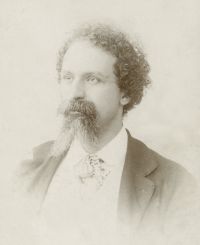
Enrico Ferri

Enrico Ferri

Summary

Portrait of Enrico Ferri Enrico Ferri Criminal Sociology

Every man, however pure and honest he may be, is conscious now and then of a transitory notion of some dishonest or criminal action. But with the honest man, exactly because he is physically and morally normal, this notion of crime, which simultaneously summons up the idea of its grievous consequences, glances off the surface of the normal conscience, and is a mere flash without the thunder. With the man who is less normal and has less forethought, the notion dwells, resists the weak repulsion of a not too vigorous moral sense, and finally prevails
Source: Gutenberg

Portrait of Enrico Ferri Enrico Ferri Criminal Sociology

I cannot see by what moral or legal right the crime ought to exempt the criminal from the daily necessity of providing for his own subsistence, which he experienced before he committed the crime, and which all honest men undergo with so many sacrifices. The irony of these consequences of the classical theories could not, in fact, be more remarkable. So long as a man remains honest, in spite of pathetic misery and sorrow, the State takes no trouble to guarantee for him the means of existence by his labour.
Source: Gutenberg

Portrait of Enrico Ferri Enrico Ferri Criminal Sociology

If we rid ourselves of the assumption that we can measure the moral culpability of the accused, the whole process of a criminal trial consists in the assemblage of facts, the discussion, and the decision upon the evidence. For the classical school, on the other hand, such a trial has been regarded as a succession of guarantees for the individual against society, and, by a sort of reaction against the methods of legal proof, has been made to turn upon the private conviction, not to say the intuition, of the judge and counsel.
Source: Gutenberg

Get perspective with Kwize: daily news enlightened by great literature