“ The main line of railway runs, like an iron vertebra, a kind of backbone, from north to south; the directors of the southern line of railway, realising the necessity of extension, and desirous of giving easy access to all parts of the country, have laid down branch lines in all directions, running out like the arms of an octopus, grasping at distant towns and villages, and halting at the most beautiful secluded spots in the inmost quarters of the land. ”
Railway
Definition and stakes
The railway, a system of tracks and infrastructure facilitating swift land transport, has long represented progress and connectivity. Writers have examined its dual nature as both a technological wonder and a force of transformation. Lady Duffus Hardy compared its expansion to an octopus’s arms, reaching out to distant towns, while Mervin James Curl described its growth as a “sinuous ribbon of steel” overcoming landscapes.
Others, like Mary Wollstonecraft Shelley, recognized its disruptive beauty, contrasting its mounds with the promise of “change and novelty.” From engineering achievements to societal transformations, the railway’s legacy is recorded in literature as a channel of human ambition and innovation, reshaping geography and culture alike.
Quotes about “railway”
Mervin James Curl, Expository Writing
“ One can see the railway growing in the fullest sense of the word—can see the thin, sinuous ribbon of steel crawling over the flat prairie, across spidery bridges, through ravine-like rock-cuts, gloomy tunnels, and along lofty embankments. ”
Railway Adventures and Anecdotes…
“ The genius loci must look with wonder on the gigantic offspring of the little railway, which has swallowed up its own sire. Lean mules no longer crawl leisurely along the little rails with trucks of stone through Croydon, once perchance during the day, but the whistle and the rush of the locomotive are now heard all day long. ”
Arthur Patchett Martin, Australia and the Empire — Chapter 2… (1889)
“ In all directions the deep slopes, where the railway spans some valley, are thickly starred with the pale primrose, and the maidenly cowslips nod to the passengers from the brows of the cutting through the gentle hills. ... The railways do no more than run their fine lines through the rural landscape, making sunny banks for the flowers and shrubs most loved by the English people. ”
Various, Harper's Round Table, July 23, 1895
“ Five railway companies rolled their trains in and out of the thronging, far-spreading metropolis to the eastward—the great city whose hum and murmur were borne to them on the soft breeze sweeping inland from the cool blue bosom of the lake. ”
Mary Wollstonecraft Shelley, Rambles in Germany and Italy in 1840… (1844)
“ About five in the evening we arrived at the railway station, without entering the town of Aix-la-Chapelle, which looked agreeably placed in a valley encircled by hills. The works for the railroad are in full progress, and the mounds are on a vast scale. They spoil rather the beauty of a landscape; yet a railroad gives such promise of change and novelty to the traveller—transporting us at once from the known to the unknown—that, in spite of all that can be said against them, I delight to see or hear of them. ”
Parodies of the works of English & American authors… (1889)
“ Into the very heart and depth of this, and politely bending with the bends of it, your railway introduces its close-clinging attention. The rocks are not big enough to be tunnelled, they are cheerily blasted away; the brook is not wide enough to be bridged, it is comfortably covered in, and is thence-forward no physical obstacle to an enterprising Railway Company. ”
Railway Adventures and Anecdotes…
“ He knew that Europe and America were welcoming the railway, and that it was promising to link together the whole civilized world.“Of the ‘profit’ of his labours to humanity I scarcely venture to speak, since it cannot possibly be told in a few words. The railway system has revolutionised society. It has powerfully affected every class, every interest and department of life. It has given an incredible impulse to commerce, quickened human thought, created a new language, new habits, tastes and pleasures. It has opened up fields of industry and enterprise inaccessible and unknown before. ”
Anton Pavlovich Chekhov, Project Gutenberg Compilation of Short Stories by Chekhov
“ AT HOME I THE Don railway. A quiet, cheerless station, white and solitary in the steppe, with its walls baking in the sun, without a speck of shade, and, it seems, without a human being. The train goes on after leaving one here; the sound of it is scarcely audible and dies away at last. ”
A. K. Astbury, British Railways (1951)
“ And now I want to take you into the very heart of the railway system. You have probably realised that all these trains and stations and workshops and the power which drives them would be useless without the guiding hand of man, the brain behind it all. ”
 Edwin A. Pratt,
A History of Inland Transport and Communication in England…
(1912)
Edwin A. Pratt,
A History of Inland Transport and Communication in England…
(1912)
“ So the tendency of the railway was not only to advance trade, travel and transport, but to open men's minds, to broaden the intellectual outlook of the artisan and the labourer, to place them more on a level with their social superiors, and to make them better fitted for the exercise of greater political powers. ”
Nicholas Wilcox Cundy, Inland Transit — Inland Transit (1834)
“ But the peculiar nature of a railway, the magnitude and weight of the loads which may be transported on it, and the prodigious speed which may be attained, render the transport of cattle, meat or fish of every species, to almost any distance, both easy and cheap. In process of time, when the railway system becomes extended, the metropolis and populous towns will therefore become markets, not, as at present, to districts within limited distances of them, but to the whole country within 200 miles of the metropolis. ”
John R. Raynes, Engines and Men — Chapter II (1921)
“ The coming of railways made a veritable transition in England, but in their coming they involved a mighty scramble for gain, a perfect fever of speculation in railway shares, and such a sprint of astute competition and jockeying for places as can only be imagined after reading much of the evidence. ”
Samuel Thompson, Reminiscences of a Canadian Pioneer for the last Fifty Years…
“ I say, Sir, we have felt the benefit of our railway system in these and a hundred other forms, in which, penetrating far beyond material interests, it intertwines itself with all the concerns and relations of life and society ”
James P. Boyd, Triumphs and Wonders of the 19th Century…
“ The railway as a means of rapid transportation and general intercommunication is one of the most important factors in the development of modern commerce and civilization, and, after reviewing what it has done and become in the nineteenth century, one cannot help wishing for the opportunity to review the railway wonders of the twentieth century. ”
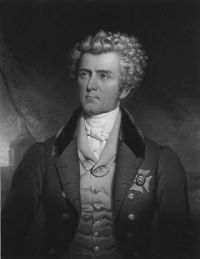 Sir Francis Bond Head,
Stokers and pokers
Sir Francis Bond Head,
Stokers and pokers
“ The out-train having been despatched, we must now beg our readers to be so good as to walk, or rather to scramble, with us from the scene of its departure across five sets of rails, on which are lying, like vessels at anchor in a harbour, crowds of railway-carriages preparing to depart, to the opposite platform, in order to witness the arrival of an incoming train. ”
 Ethel Turner,
The Story of a Baby
Ethel Turner,
The Story of a Baby
“ There will be a double line of railway, no longer picturesque, and big spreading stations instead of primitive sidings where one held up a ‘flag by day and a light at night’ to be picked up of the passing train. ”
Samuel Smiles, The Life of George Stephenson and of his Son Robert Stephenson
“ The remarkable safety with which railway traffic is on the whole conducted, is due to constant watchfulness and highly-applied skill. The men who work the railways are for the most part the picked men of the country, and every railway station may be regarded as a practical school of industry, attention, and punctuality. ”
Joseph Wardle, From the Thames to the Tiber
“ The railway has a central rail which is cogged, and into this endless cog fits a wheel underneath the engine. This is really the driving wheel by which it slowly moves up the steep gradient. We passed farms, orchards and plantations, up and up. It is a curious sensation to find yourself steadily moving up without any effort of your own, but still up we went until we landed on a lovely plateau, with a charming hotel. The view from this mountain height was beyond description. We left the train and wandered into the woods and viewed our surroundings. ”
Charles Shattuck Hill, The New International Encyclopædia (1905)
“ The first task in the building of a railway is the construction of the roadbed or permanent way. In its broadest meaning the permanent way of a railway comprises all structure upon which track is laid, but the term is often given a more limited application which excludes culverts, trestles, viaducts, bridges, etc. ”
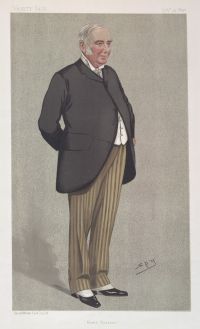 George Findlay,
The Working and Management of an English Railway
(1889)
George Findlay,
The Working and Management of an English Railway
(1889)
“ The first dawn of the idea of a railway was, no doubt, about the beginning of the seventeenth century, when some inventive genius hit upon the plan of laying down parallel blocks of timber to form tram-roads in the vicinity of mines, to enable the mineral products to be drawn more easily by horses to the riverside. ”
 Lady Barker,
Life in South Africa
Lady Barker,
Life in South Africa
“ How the railway is to drag itself up and round all those thousand and one spurs running into each other, with no distinct valley or flat between, is best known to the engineers and surveyors, who have declared it practicable. ”
Little Visits with Great Americans…
“ The length of the proposed line and the nature of the country through which it was to pass, made this the most stupendous railway undertaking the world had seen. It was necessary to procure a man fitted for a Herculean task. ”
Edwin A. Pratt,
A History of Inland Transport and Communication in England…
(1912)
“ To see waggons with flat wheels drawn over cast-iron rails one yard long by a horse, cannot fail to interest those who watch the workings of railways, and it most clearly shows the great improvements made and the perseverance which has been required to develop the present gigantic railway system out of such small beginnings. ”
J. Hamilton Fyfe, Triumphs of Invention and Discovery in Art and Science
“ The extension of the railway system is one of the wonders of our time. The few score miles of railroad planted in 1825 have put forth offshoots and branches, till now a mighty net-work of some ten thousand miles in all, is spread over the three kingdoms, with many fresh shoots in bud. ”
Arthur H. Beavan, Tube, Train, Tram, and Car; or…
“ Also, for the security of the workmen employed in maintaining the track as on an ordinary railway—the system of “packing” the sleepers and inspecting the various parts being common to all railways—a clear space of three feet is left between the passing trains, and strong posts, ten feet apart, are fixed along the centre of the space for the labourers to hold on by when an express rushes by. ”
Howard Elliott, The Truth About The Railroads (1913)
“ The American railway-system of to-day could not be reproduced for a figure anywhere near what it stands for on the books. Monthly, daily, almost hourly, improvements have been made, and the railways are becoming seasoned and better adapted to the great work they have to perform. Go to any of the large cities and growing towns and try to acquire sufficient terminal ground to do even a moderate business. ”
H. R. Wilton Hall, Social Life in England Through the Centuries
“ There are hundreds of miles of railway going through quiet country districts, which were made many years ago, and there are thousands of people living in those districts who have been born since the railways were made. To them the railway is as much an everyday thing as the old parish church, the town pump, or the river. ”
J. Hamilton Fyfe, Triumphs of Invention and Discovery in Art and Science
“ The "railway" had the start of the locomotive by a couple of centuries, and derives its parentage from the clumsy wooden way-leaves or tram-roads which were laid down to lessen the labour of dragging the coal-waggons to and from the place of shipment in the Newcastle colleries. ”
Samuel Smiles, The Life of George Stephenson and of his Son Robert Stephenson
“ Perhaps the most striking of all the illustrations that could be offered of the extent to which railways facilitate the locomotion, the industry, and the subsistence of the population of large towns and cities, is afforded by the working of the railway system in connection with the capital of Great Britain. ”
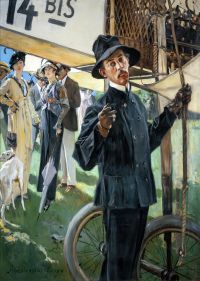 Alberto Santos-Dumont,
The Fortnightly Review/Volume 77…
(1905)
Alberto Santos-Dumont,
The Fortnightly Review/Volume 77…
(1905)
“ They will resemble the termini of railways only in so far as they must have waiting-rooms, restaurants, bars and cab-ranks on one side, and traffic halls, machine shops, gas plants, and a lot of parallel railway tracks on the other. The railway tracks will be for the accommodation of small trucks and locomotives used in the manɶuvring of waiting air-ships—for an air-ship on the ground is as clumsy as an eagle ! ”
Charles Shattuck Hill, The New International Encyclopædia (1905)
“ It is plain upon very little thought that to answer each of these broad general questions a multitude of minor factors have to be carefully integrated, and that altogether the location of a railway is a task which, if it be well performed, calls for skill, experience, and good judgment on the part of the engineer. ”
James Richard Joy, Ten Englishmen of the Nineteenth Century
“ The new railroad, the first public line, was opened in September, 1825. As its construction progressed, its engineer had become increasingly sanguine of success. He said to his son Robert at this time: "I venture to tell you that I think you will live to see the day when railways will supersede almost all other methods of conveyance in this country—when mail coaches will go by railway, and railroads will become the great highway for the King and all his subjects. The time is coming when it will be cheaper for a workingman to travel upon a railway than to walk on foot. ”
George A. Kyle, The Morning Glory Club
“ Her own quick wits, aided by those of a gallant fellow passenger, give the two officers an unlooked-for and exciting "run for their money." One hardly realizes till now the dramatic possibilities of a railway train, and what an opportunity for excitement may be afforded by a joint railway station for two or more roads. ”
 James Thomas Fields,
Yesterdays with Authors
James Thomas Fields,
Yesterdays with Authors
“ The vile railway does us no earthly good, we being above four miles from the nearest station, and you may imagine how much inconvenience the absence of stated communication with a market town causes to our small family, especially now that I can neither spare Sam nor the pony to go twelve miles. You must come to England and come often to see me, just to prove that there is any good whatever in railways,—a fact I am often inclined to doubt. ”
 Joseph Whitworth,
Miscellaneous Papers on Mechanical Subjects
(1858)
Joseph Whitworth,
Miscellaneous Papers on Mechanical Subjects
(1858)
“ Railway Crossings.—Bridges are seldom thought necessary to carry the common highways across the railroads where they intersect, gates are even in many cases dispensed with, and a notice of "Look out for the locomotive when the bell rings," is considered a sufficient warning, and wayfarers are left to take care of themselves. Sharp curves and steep inclines are frequently submitted to for the sake of economy. ”
 Thomas Curtis Clarke,
The American Railway: Its Construction…
Thomas Curtis Clarke,
The American Railway: Its Construction…
“ The railway to-day is one of the matter-of-fact associations of our active life. We use it so constantly that it requires some little effort to think of it as a wonderful thing; a creation of man's inge [48] nuity, which did not exist when our grandfathers were young. Its long bridges, high viaducts, and dark tunnels may be remarked and remembered by the traveller, but the narrow way of steel, the road itself, seems but a simple work. ”
 Ernest Ingersoll,
The Crest of the Continent: A Summer's Ramble in the Rocky Mountains and Beyond
Ernest Ingersoll,
The Crest of the Continent: A Summer's Ramble in the Rocky Mountains and Beyond
“ The railway grows wider and permits a longer and even more varied journey than was ours. Cars can be fitted up as we fitted ours or in a way as much better as you like. Year by year the facilities for wayside comforts and short branch-excursions are multiplied, with the increase of population and culture. ”
Howard Elliott, The Truth About The Railroads (1913)
“ The railways of the country, in their present form, have been built since the close of the Civil War, or in less than fifty years, and are the wonder and admiration of students of the transportation problem who come here from other countries. There are 234,182 miles of railway, and more than 340,000 miles of track in this country, as compared with a trifle less than 300,000 miles of railway in all the other countries of the world combined. There are nearly 58,000 locomotives; more than 45,000 passenger-train cars; nearly 2,200,000 freight- and service-cars. ”
John Henry Patterson, The Man-Eaters of Tsavo — Preface (1907)
“ The railway, which has modernised the aspect of the place and brought civilisation in its train, was then only in process of construction, and the country through which it was being built was still in its primitive savage state, as indeed, away from the railway, it still is. ”
 John Hawkshaw,
Popular Science Monthly
(1875)
John Hawkshaw,
Popular Science Monthly
(1875)
“ Of railways the progress has been enormous; but I do not know that in a scientific point of view a railway is so marvelous in its character as the electric telegraph. The results, however, of the construction and use of railways are more extensive and wide spread, and their utility and convenience brought home to a larger portion of mankind. The British Association is peripatetic, and without railways its meetings, if held at all, would, 1 fear, be greatly reduced in numbers. Moreover, you have all an interest in them; you all demand to be carried safely, and you insist on being carried fast. ”
Sir Cusack P. Roney, Rambles on Railways
“ Penny-a-lining, so called, because it is paid for by the newspapers at the rate of three-half-pence a line! [75] There is only one part or portion of railway practice which, with all our railway experience, we are unable to account for. Yet the practice is universal. We (always in the singular number, we are plural, editorially, only) have travelled in a great many parts of the world, but wherever we have gone we have never found but one undeviating and unalterable rule among the door-opening and the door-closing portion of the railway community. ”
Related terms
Authors who wrote about “railway”
Edwin A. PrattCharles Shattuck HillSamuel SmilesSir Cusack P. RoneyHoward ElliottArthur H. BeavanGeorge FindlayA. K. AstburyJohn HawkshawJohn R. RaynesSir Francis Bond HeadThomas Curtis Clarke Charles G. HarperJames P. BoydJacques W. Redway
 Lady Duffus HardyErnest IngersollEdwin John DingleRobert RoutledgeJoseph Wardle