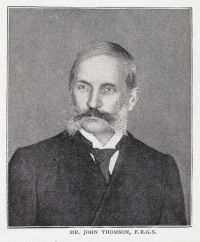
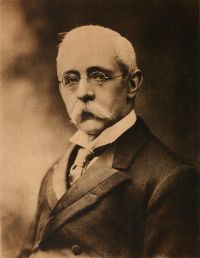
Edwin John Dingle

Biographical details

Edwin John Dingle,  Across China on Foot

“ To have our souls tuned to this silent eloquence of Nature, to catch the sweetness of those wind-swept, heaven-directed mountains, to understand the unspoken messages of those rushing rivers and those gigantic gorges, to feel the heart-beat of Nature and her beauty in perfect harmony with all that is best within us, we must be silent, undisturbed, preferably alone. This is not flowery sentiment—it is what every true lover of old and lovely Nature would feel in Western China, yet still unspoiled by the taint of man's absorbing stream of civilization. ”
Source: Gutenberg

Edwin John Dingle,  China's Revolution, 1911-1912: A Historical and Political Record of the Civil War

“ To go from the scene of action in Central China to Shanghai was to pass at one stroke from the din of war to the tranquillity of peace and undisturbed civilisation. Hard indeed was it for any one who had been through the crisis in Hankow actually to realise the peace of China's great metropolis—the contrast was so enormous as to force it upon one's imagination that the war was over, that peace assuredly had come. One missed the cannonading, the utter devastation and universal suffering, the burnt-out hamlets and the homeless thousands all over the countryside. ”
Source: Gutenberg

Edwin John Dingle,  Across China on Foot

“ But in China woman does nothing of this. Her life is unaesthetic to the last degree. No happy improvisations or touches of the stamp of personality enter her home; one cannot trace the touches of witchery in the tying of a ribbon. Everywhere you find the same class of furniture and garniture, the same shape of table, of stool, of form, of bed, of cooking utensils, of picture, of everything; and all the details of her housekeeping are so apathetically uninteresting. The Chinese woman has no charming art, rather is it a common, horrid, daily grind. ”
Source: Gutenberg

Get perspective with Kwize: daily news enlightened by great literature