“ Only two strokes for such as Casey or Neale! Ten spikes to a rail—four hundred rails to a mile! ... How many million times had brawny arms swung and sledges clanged! Forward every day the work-trains crept westward, closer and closer to that great hour when they would meet the work-trains coming east. The momentum now of the road-laying was tremendous. The spirit that nothing could stop had become embodied in a scientific army of toilers, a mass, a machine, ponderous, irresistible, moving on to the meeting of the rails. ”
Rail
Definition and stakes
The rail, characterized by its cross-sectional profile, functions as the fundamental component of railway systems, directing and supporting vehicles through precise engineering. Historically transitioning from wooden and iron structures to high-strength steel, rails reflect progress in material science, striking a balance between resilience and the requirements of heavy traffic.
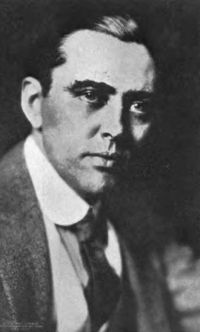
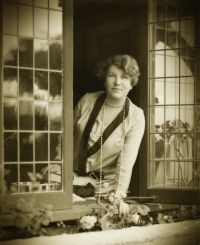
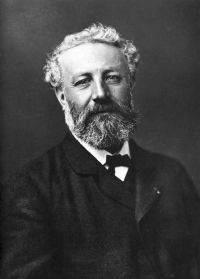
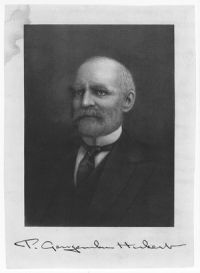
Authors like Zane Grey portrayed their industrial power, emphasizing the unceasing growth of rail networks, while Joseph Wardle examined their mechanical complexities, such as cogged rails facilitating ascents. James W. Buel described multi-rail systems for steep inclines, and Edward Stratemeyer imagined futuristic single-rail high-speed travel. Collectively, these viewpoints illustrate rails as both engineering achievements and emblems of technological advancement, influencing the course of transportation from the 19th century to contemporary infrastructure.
Quotes about “rail”
“ It was in him to travel that way—the way of the glimmering, jewelled lamps, the road of the shining rails.But first he shoved his suitcase, with his foot, over the platform's edge, as though it had fallen there by accident.... And, as though he had followed to recover it, he climbed down among the tracks.There was a third rail running parallel to the twin rails. It was roofed with wood. Lying flat, there in the shimmering dusk, he could look up under the wooden guard rail and see it. ”
Joseph Wardle, From the Thames to the Tiber
“ The railway has a central rail which is cogged, and into this endless cog fits a wheel underneath the engine. This is really the driving wheel by which it slowly moves up the steep gradient. We passed farms, orchards and plantations, up and up. It is a curious sensation to find yourself steadily moving up without any effort of your own, but still up we went until we landed on a lovely plateau, with a charming hotel. The view from this mountain height was beyond description. We left the train and wandered into the woods and viewed our surroundings. ”
James W. Buel, Glimpses of America
“ To secure perfect safety in ascending and descending such a tremendous grade, the track is composed of three rails bolted to a trestle of heavy timbers, the centre rail being an immense wrought-iron ladder, with rounds four inches apart, into which the cogs of the locomotive drive-wheel fit, and thus drag the train up the steep as well as control it, with aid of air-brakes, in making the descent. One and a half hours are consumed in making the round trip, and the fare is six dollars, but the view from the summit is so magnificent that it fully justifies the expense. ”
Edward Stratemeyer,
Dave Porter and his Classmates
(1909)
“ The thirty- and forty-storied buildings in our big cities, the underground railways, the tubes under the rivers, the tremendous suspension bridges, the automobile carriages and business trucks,—not to mention the railroad trains that are to run on one rail at a speed of a hundred miles an hour. ”
Sir Francis Bond Head,
Stokers and pokers
“ The velocity with which all these little parcels are booked, weigh-billed, placed into hand-trucks, wheeled off to their respective vans, packed, locked up, and then despatched down the little branch-rail to the main line, on which is the train ready to convey them, is very surprising. ”
Holland Thompson, The Age of Invention: A Chronicle of Mechanical Conquest
“ To accomplish this, two sets of railways will be laid so nearly level as not in any place to deviate more than two degrees from a horizontal line, made of wood or iron, on smooth paths of broken stone or gravel, with a rail to guide the carriages so that they may pass each other in different directions and travel by night as well as by day ”
William Hemingway Mills, Railway Construction
“ It is evident that the rail which would last for very many years under the small traffic, would have a very short life under the frequent traffic. Hence the reason why it is found expedient to give a large increase of material in the heads of rails carrying the heavy, constant train service of many of our main lines. ”
Various, The Catholic World, Vol. 19, April 1874‐September 1874
“ As yet, no serious accident has happened. Let us hope none ever may! The principle of construction, with a central notched rail, tightly grasped by a cog-wheel, besides [pg 561] the powerful brakes belonging to each carriage, seem to promise fairly. The trains, too, proceed in reality so slowly, and with such caution, that a man is always able to walk in front of the first carriage. ”
“ When almost finished, the rail slides down an incline before a man who grasps the rail with huge pinchers, and standing at one end, runs his eye along it. As he looks along the rail he sees the defects, moves the left or the right hand, and another man at the levers of the straightening machine, straightens the rail as directed. ”
Milton M. Shaw, Nine Thousand Miles on a Pullman Train
“ When we got tired of packing we quit picking, and thanking the good people for the treat, we board the car again and are soon spinning up the line among the apricot and cherry orchards, the trees loaded with fruit.{111}Arriving at our destination, we bid our friend, the conductor, goodbye, and in a few minutes we reach the much-inquired-for “narrow-gauge railroad station,” where we wait half an hour for the train. We find the track composed of three rails; and as though to demonstrate to us the use of the third rail, a freight train comes along made up of both narrow and broad-gauge cars. ”
Earl H. Reed, The Ghost in the Tower: An Episode in Jacobia
“ It enters into the construction of rails, locomotives, box cars, passenger coaches, telegraph wires, block signal devices, and all the countless other things that, in this age of steel and wheels, go into that great expression of the triumph of mind over matter—the modern railroad. ”
Railway Adventures and Anecdotes…
“ The ties are carried on a common freight car behind, and conveyed by an endless chain over the top of the machinery, laid down in their places on the track, and, when enough are laid, a rail is put down on each side in proper position and spiked down. ”
Ambrose Bierce,
The Collected Works of Ambrose Bierce…
“ Is any spectacle really more interesting than a railway train in motion? Why, even the stolidest laborer in the field, or the most blasé switchman off duty, takes a moment off to stare at it. By night, with its dazzling headlight, its engine eating fire and breathing steam and smoke, its flashes of red light upon the trees as its furnace doors are opened and closed, its long line of gleaming windows, the roar and clang of its progress—not in the world is anything more fascinating, more artistic nor, but for its familiarity, more picturesque. ”
George Waldo Browne, Where Duty Called; or, In Honor Bound
“ The railroad which connects the two coils about this rugged ascent like a steel lariat thrown by a dextrous hand, now winding in and out where some bottomless abyss is encircled like a huge letter U upon the landscape, or anon clinging upon the rim of some sharp-pointed rock, where the same train creeps around the angle, showing mortal fear by its snail-like pace. ”
Sidney Coe Howard, "Lexington": A Pageant-Drama of the American Freedom
“ Across the stage they build the transcontinental railroad, forming sculptural and beautiful groups as they bend over the joints of the rails and swing their sledges. When the task is completed, the headlights of engines shine along the lines. ”
William Dean Howells,
Stories Of Ohio
“ The children of this day can hardly imagine what rude and simple affairs the earliest railroads were. Instead of the long smooth steel rails which now carry the great trains, with their luxurious cars, in their never-ceasing flight, day in and day out the whole year round, flat bands of iron, spiked to wooden rails, formed the path of the small carriages drawn by a locomotive of the size and shape of a threshing-machine engine. ”
Willis Fletcher Johnson, "My country, 'tis of thee!"
“ Nothing, perhaps, is so typical of the ingenuity, skill and colossal power of our modern civilization as the railroad train—a solitary man holding the lever which controls this tremendous mass of wood and metal, with its freight of goods and passengers rushing past us at the rate of a mile a minute. ”
John Moody, The Railroad Builders: A Chronicle of the Welding of the States
“ In the United States three new methods of transportation made their appearance at almost the same time—the steamboat, the canal boat, and the rail car. ”
Mervin James Curl, Expository Writing
“ One can see the railway growing in the fullest sense of the word—can see the thin, sinuous ribbon of steel crawling over the flat prairie, across spidery bridges, through ravine-like rock-cuts, gloomy tunnels, and along lofty embankments. ”
Burton Egbert Stevenson,
The Young Train Dispatcher
“ YOUNG TRAIN DISPATCHER CHAPTER I THE NEW POSITIONStretching from the Atlantic seaboard on the east to the Mississippi River on the west, lies the great P. & O. Railroad, comprising, all told, some four thousand miles of track. Look at it on the map and you will see how it twists and turns and sends off numberless little branches; for a railroad is like a river and always seeks the easiest path—the path, that is, where the grades are least and the passes in the mountains lowest. ”
Francis Lovell Coombs, The Young Railroaders
“ North of the train, to a din of clanking, pounding and shoveling, a throng of men were laying ties and rails, driving spikes and tightening bolts, in the construction of further short stretches of track. ”
J. A. Zahm,
Up the Orinoco and down the Magdalena
“ From sea level to the summit of the range, the railroad is conspicuous for its heavy grade—about four per cent.—its sharp curves, its cuts and tunnels, but above all for the magnificent scenery everywhere visible. From the car window one may look over precipitous cliffs into yawning abysses far below the track on which the train slowly and carefully winds its way. On the beetling rocks above, in the dark and wild gorge below—what a wealth of vegetation, what luxuriance of growth, what a gorgeous display of vari-colored fruit and flower, of delicate fern and majestic palm! ”
Railway Adventures and Anecdotes…
“ The ingenuity with which two narrow rods of iron are made to bear whole trains of wagons, laden with many hundred tons of commerce, and bounding across a wide, semi-fluid morass, previously impassable by man or beast, is beyond all praise and deserving of eternal record. p. 63Only conceive a slender bridge of two minute iron rails, several miles in length, level as Waterloo, elastic as whalebone, yet firm as adamant! Along this splendid triumph of human genius—this veritable via triumphalis—the train of carriages bounds with the velocity of the stricken deer ”
Various, Harper's Young People, December 14…
“ The tiniest, prettiest little railroad you could imagine.""A toy railroad?" queried Bert."Not at all; a veritable railroad running all around the store, filled with freight, passengers, and—money.""Oh, aunty, 'upon your word and honor,' honest, now, was it a real true railroad with cars on it?" cried Harry. ”
“ If you look back at the picture on page 19, you will see how one railroad solved the problem. The rails are laid so that they spiral upward, making a loop. When a very long train travels along the loop, it’s like a huge snake coiled around over its own tail!Unless it’s absolutely necessary, the builders try not to make curves. Trains run faster along rails that are straight as well as flat. Every bend means that the engineer has to slow down a little. ”
William Hadfield, Brazil, the River Plate, and the Falkland Islands
“ Swifter than an arrow, than the flight of a swallow, the locomotive threaded the rails, swung about, ran, flew, devoured space, and, passing through fields, barren wastes, and affrighted animals, it stopped at last breathless, at the point where the road does not yet afford a safe passage. ”
Theodore Dreiser,
A Hoosier holiday
(1916)
“ Think what you have to endure on the ordinary railroad—and what other kind is there—smoke, dust, cinders, noise, the hurrying of masses of people, the ringing of bells, the tooting of whistles, the brashness and discourtesy of employes, cattle trains, coal trains, fruit trains, milk trains in endless procession—and then they tell you that these are necessary in order to give you the service you get. ”
Henry James, The American scene (1907)
“ It has taken our ugly era to thrust in the railroad at the foot of the slope, among the masking trees; the railroad that is part, exactly, of the pomp and circumstance, the quickened pace, the heightened fever, the narrowed margin expressed within the very frame of the present picture, as I say, and all in the perfect good faith of collateral piety. ”
H. R. Wilton Hall, Social Life in England Through the Centuries
“ When we speak of a railway in these days we picture to our minds a trackway, laid with parallel steel rails, along which long trains of carriages and trucks are drawn by a locomotive engine. The engine, indeed, is the first thing that a boy thinks of in connection with a railway ”
Victor Verasius Branford, Science and Citizenship : A Lecture delivered before the Manchester Sociological Society November 13th… (1906)
“ With literal and historical accuracy, the typical railway engineer sees the modern locomotive as just an elaborated pit pump-engine placed on wheels, and engaged all day in hauling coal-laden trollies from the pit mouth to the cities, and all night in hauling them back empty. ”
Edward Hungerford, Our Railroads To-Morrow
“ A railroad’s employees may be outstretched a thousand miles or more. Remember again that the railroad itself is in truth a narrow ribbon, ofttimes no wider than the right-of-way of a single track, far-reaching and tremendously attenuated. ”
“ A train had just come into the yards and there were switch engines puffing here and there—I was apprehensive that one of their headlights would pick me up. And there were some railroad men walking around the yards with lanterns in their hands. ”
Walter White, A July Holiday in Saxony, Bohemia…
“ And along the road which skirts the shore there go men and women, horses and vehicles, and there is always something strange to note in costume and appearance. And close by runs the railway, its course marked by the painted wicker balloons hanging aloft on the signal posts, and the bright colour of the jutting rocks through which the way is hewn, or by a train dashing past with echoing snort and tail of cloud. ”
Various, Chambers's Edinburgh Journal, No…
“ Like the steamship, the railway is cosmopolitan in its character. The range of its operations may be as extensive as the globe itself; and throughout that sphere of activity, be it what it may, the locomotive engine is scattering thickly the seeds of civilisation, as well as of wealth. ”
William Alexander Taylor,
Intermere
“ They glide over the broad, smooth and perfectly kept roadways, through the depths of the ether, or along the waters, with the same imperceptible motion, and can be put to a rate of speed that makes our limited railway trains seem like lumbering farm wagons. ”
Lewis Carroll,
Sylvie and Bruno Concluded
(1893)
“ Each railway is in a long tunnel, perfectly straight: so of course the middle of it is nearer the centre of the globe than the two ends: so every train runs half-way down-hill, and that gives it force enough to run the other half up-hill. ”
Julian Street,
Abroad at Home: American Ramblings…
“ Outside are factories, and railroad yards, and everywhere tall black chimneys, vomiting their heavy, muddy smoke. But always the train glides on like some swift, smooth river. Now the track is elevated, now depressed. You run over bridges or under them, crossing streets and other railroads. At last you dive into a tunnel and presently emerging, coast slowly along be [ 515] side an endless concrete platform raised to the level of the car floor. ”
Edward Hungerford, Our Railroads To-Morrow
“ A railroad in its physical aspect consists of the track that things run upon and the things that run upon the track. The track, in the broad sense in which we are now considering it, consists of far more than two steel rails set upon wooden ties or sleepers which, in turn, are set in a graded roadway. It means bridges, tunnels, switches, signals, terminal and intermediate stations, buildings, passenger and freight-houses, engine-houses, shops, and all the rest of it. ”
Railway Adventures and Anecdotes…
“ The genius loci must look with wonder on the gigantic offspring of the little railway, which has swallowed up its own sire. Lean mules no longer crawl leisurely along the little rails with trucks of stone through Croydon, once perchance during the day, but the whistle and the rush of the locomotive are now heard all day long. ”
Ethel Turner,
The Story of a Baby
“ There will be a double line of railway, no longer picturesque, and big spreading stations instead of primitive sidings where one held up a ‘flag by day and a light at night’ to be picked up of the passing train. ”
Jules Verne,
Mathias Sandorf — Chapters XXI-XXII
(1885)
“ How many railway trains there are that are not as fast! That long steel tube, offering no resistance to the wind, could slip through the waves without hinderance, and reach its destination in fifty hours. ”