“ And the wild-pigeons feed, few and shy, in the scoke-berry bushes;When the weary land lies hushed, like a seer in a vision,And your life seems but the dream of a dream which you cannot remember,––Broken, bewildering, vague, an echo that answers to nothing!That time of year, you know. They stood by the gate in the meadow,Fronting the sinking sun, and the level stream of its splendorCrimsoned the meadow-slope and woodland with tenderest sunset,Made her beautiful face like the luminous face of an angel,Smote through the painéd gloom of his heart like a hurt to the sense, there. ”
William Dean Howells
Biographical details
.jpg)
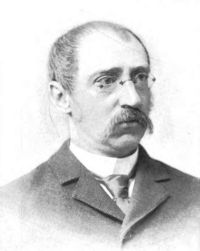
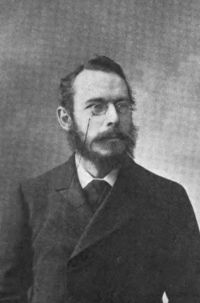
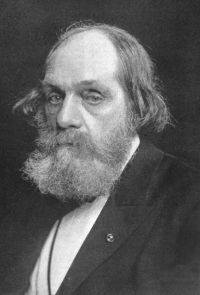
William Dean Howells (1837–1920), known as "The Dean of American Letters," was a pivotal American realist novelist, literary critic, and editor whose work embodied the truthful portrayal of material life, a principle central to his promotion of literary realism. His novels, such as The Rise of Silas Lapham and A Modern Instance, explored the moral and social intricacies of 19th-century America, while his leadership at The Atlantic Monthly influenced literary discussion.
Howells’s body of work, encompassing novels, essays, and poetry, tackled themes of industrial capitalism, class relations, and human vulnerability, leaving a lasting impact on American literature through his dedication to authenticity and social commentary. His influence persists as a link between European realism and the developing American literary tradition.
Quotes by William Dean Howells
 William Dean Howells,
Modern Italian Poets; Essays and Versions
William Dean Howells,
Modern Italian Poets; Essays and Versions
“ Weep, weep, for well thou may'st, my Italy! Born, as thou wert, to conquest, Alike in evil and in prosperous sort! If thy sweet eyes were each a living stream, Thou could'st not weep enough For all thy sorrow and for all thy shame. For thou wast queen, and now thou art a slave. Who speaks of thee or writes, That thinking on thy glory in the past But says, “She was great once, but is no more.” Wherefore, oh, wherefore? Where is the ancient strength, The valor and the arms, and constancy? Who rent the sword from thee? Who hath betrayed thee? ”
William Dean Howells,
The Entire March Family Trilogy
“ It was rather a girlish thing for Isabel, and she added, with a conscious blush, “We are past our first youth, you know; and we shall not strike the public as bridal, shall we? My one horror in life is an evident bride.” Basil looked at her fondly, as if he did not think her at all too old to be taken for a bride; and for my part I do not object to a woman's being of Isabel's age, if she is of a good heart and temper. Life must have been very unkind to her if at that age she have not won more than she has lost. ”
William Dean Howells,
The Story of a Play
“ Dogs ran barking vaguely about, and children with wooden shovels screamed at their play. Far off shimmered the sea, of one pale blue with the sky. The rooks were black at either end of the beach; a line of sail-boats and dories swung across its crescent beyond the bathers, who bobbed up and down in the surf, or showed a head here and there outside of it."What a singular spectacle," said Maxwell. "The casting off of the conventional in sea-bathing always seems to me like the effect of those dreams where we appear in society insufficiently dressed, and wonder whether we can make it go." ”
William Dean Howells,
A Modern Instance
“ Whether Bartley perfectly divined or not all the feeling at which her words hinted, it was delicious to be clung about by such a pretty girl as Marcia Gaylord, to have her now darting her face into his neck-scarf with intolerable consciousness, and now boldly confronting him with all-defying fondness while she lightly pushed him and pulled him here and there in the vehemence of her appeal. Perhaps such a man, in those fastnesses of his nature which psychology has not yet explored, never loses, even in the tenderest transports, the sense of prey as to the girl whose love he has won ”
William Dean Howells,
Literature and Life (Complete)
“ I am long past the age when I could wish to form myself upon another writer, and I do not think I could now insensibly take on the likeness of another; but his work has been a revelation and a delight to me, such as I am sure I can never know again. I do not believe that in the whole course of my reading, and not even in the early moment of my literary enthusiasms, I have known such utter satisfaction in any writer, and this supreme joy has come to me at a time of life when new friendships, not to say new passions, are rare and reluctant. ”
William Dean Howells,
Complete Project Gutenberg William Dean Howells Literature Essays
“ But the farmsteads and village houses are safe in the shade of their sheltering trees amid the fluctuation of the grass that grows so tall about them that the June roses have to strain upward to get themselves free of it. Behind each dwelling is a billowy mass of orchard, and before it the Gothic archway of the elms stretches above the quiet street. There is no tree in the world so full of sentiment as the American elm, and it is nowhere so graceful as in these New England villages, which are themselves, I think, the prettiest and wholesomest of mortal sojourns. ”
William Dean Howells,
A Boy's Town
“ His closest friend was a boy who was probably never willingly at school in his life, and who had no more relish of literature or learning in him than the open fields, or the warm air of an early spring day. I dare say it was a sense of his kinship with nature that took my boy with him, and rested his soul from all its wild dreams and vain imaginings. He was like a piece of the genial earth, with no more hint of toiling or spinning in him; willing for anything, but passive, and without force or aim. ”
William Dean Howells,
Roman Holidays, and Others
“ But with the constant line of mountains enclosing the landscape on the right, in all its variety of tillage, pasture-land, vineyard, and orchard, and the unchanging level which had once been the bed of the sea, we were gainers in sort beyond the gift of those cities. We had the company, great part of the way, of more stone-pines than we had seen even between Naples and Rome, here gathering into thick woods, with the light beautiful beneath the spread of their horizontal boughs, there grouped in classic groves, and yonder straying off in twos and threes. ”
William Dean Howells,
The Landlord at Lion's Head — Complete
“ At one point in the road where the sun fell upon some young pines in a sheltered spot a balsamic odor exhaled from them. These gentle sights and sounds and odors blended in the influence which Jeff's spirit felt more and more. He realized that he was a blot on the loveliness of the morning. He had a longing to make atonement and to win forgiveness. His heart was humbled toward Cynthia, and he went wondering how his mother would make it out with her, and how, if she won him any advantage, he should avail himself of it and regain the girl's trust; he had no doubt of her love. ”
“ On the face of the giant mild and calm,And the glittering frolic of the vine.He smiles on either with equal grace,––On the simple ivy’s unconscious life,And the soul in the giant’s lifted face,Strong from the peril of the strife:For both are his own,––the innocenceThat climbs from the heart of earth to heaven,And the virtue that gently rises thenceThrough trial sent and victory given.Grow, ivy, up to his countenance,But it cannot smile on my life as on thine;Look, Saint, with thy trustful, fearless glance,Where I dare not lift these eyes of mine. Venice, 1863. ”
William Dean Howells,
London Films
“ At the right moment of the ripening London season the foliage of the trees is densely yet freshly green and flatteringly soft to the eye; the grass below has that closeness of texture which only English grass has the secret of. At fit distances the wide beds of rhododendrons and azaleas are glowing; the sky is tenderly blue, and the drifted clouds in it are washed clean of their London grime. If it is in the afternoon, these beautiful women begin to appear about the time when you may have bidden yourself abandon the hope of them for that day. ”
William Dean Howells,
The Landlord at Lion's Head — Volume 1
“ Jeff went home with her; he was impatient of her duties, but he was in no hurry when they stole out of the side door together under the stars, and began to stray sidelong down the hill over the dewless grass.He lingered more and more as they drew near her father's house, in the abandon of a man's love. He wished to give himself solely up to it, to think and to talk of nothing else, after a man's fashion. But a woman's love is no such mere delight. It is serious, practical. For her it is all future, and she cannot give herself wholly up to any present moment of it, as a man does. ”
William Dean Howells,
The Quality of Mercy
“ Bird introduced his guest, and Northwick shook hands with the priest, who had a smooth, regular face, with beautiful, innocent eyes, like a girl's. He might have been twenty-eight or twenty-nine; he had the spare figure of a man under thirty who leads an active life; his features were refined by study and the thought of others. When he smiled the innocence of his face was more than girlish, it was childlike. Points of light danced in his large, soft, dark eyes; an effect of trusting, alluring kindness came from his whole radiant visage. ”
William Dean Howells,
Their Silver Wedding Journey — Complete
“ The handsome, well-arranged rooms are full of souvenirs of his travel, and of that passion for Italy which he did so much to impart to all German hearts, and whose modern waning leaves its records here of an interest pathetically, almost amusingly, faded. They intimate the classic temper to which his mind tended more and more, and amidst the multitude of sculptures, pictures, prints, drawings, gems, medals, autographs, there is the sense of the many-mindedness, the universal taste, for which he found room in little Weimar, but not in his contemporaneous Germany. ”
William Dean Howells,
Stories Of Ohio
“ Amidst all this tomahawking and scalping, this shooting and stabbing, this shedding of blood and of tears, this heartbreak of captivity, this torture, this peril by day and by night, the flower of home was springing up wherever the ax let the sun into the woods. It would be a great pity if the stories of cruelty and suffering which seem, while we read them, to form the whole history of the Ohio country, should be left without the relief of facts quite as true as these sad tales. Life was hard in those days, but it was sweet too, and it was often gay and glad. ”
William Dean Howells,
Their Wedding Journey
“ There are farms that had once, or still have, the romance to them of being Dutch farms,—if there is any romance in that,—and one conjectures a Dutch thrift in their waving grass and grain. Spaces of woodland here and there dapple the slopes, and the cozy red farm-houses repose by the side of their capacious red barns. Truly, there is no ground on which to defend the idleness, and yet as the train strives furiously onward amid these scenes of fertility and abundance, I like in fancy to loiter behind it, and to saunter at will up and down the landscape. ”
William Dean Howells,
Modern Italian Poets; Essays and Versions
“ No, no, nevermore on so great woe, Bright sun of Italy, nevermore glow! But o'er Venetian hopes shattered so soon, Moan in thy sorrow forever, lagoon! Venice, to thee comes at last the last hour; Martyr illustrious, in thy foe's power; Bread lacks, the cholera deadlier grows; From the lagoon bridge the white banner blows. Not all the battle-flames over thee streaming; Not all the numberless bolts o'er thee screaming; Not for these terrors thy free days are dead: Long live Venice! She's dying for bread! On thy immortal page, sculpture, O Story, Others'iniquity, Venice's glory ”
William Dean Howells,
Annie Kilburn : a Novel
“ Annie found herself sadder when he was gone, and she threw herself upon the old feather-cushioned lounge to enjoy a reverie in keeping with the dreary storm outside. Was it for this that she had left Rome? She had felt, as every American of conscience feels abroad, the drawings of a duty, obscure and indefinable, toward her country, the duty to come home and do something for it, be something in it. This is the impulse of no common patriotism; it is perhaps a sense of the opportunity which America supremely affords for the race to help itself, and for each member of it to help all the rest. ”
William Dean Howells,
Venetian Life
“ A bedroomy smell pervades the whole suite, and through the open window comes a curious stench explained as the odor of Madama la Baronessa’s guinea-pigs, of which she is so fond that she has had their sty placed immediately under her window in the garden. It is this garden which has first taken your heart, with a glimpse caught through the great open door of the palace. It is disordered and wild, but so much the better; its firs are very thick and dark, and there are certain statues, fauns and nymphs, which weather stains and mosses have made much decenter than the sculptor intended. ”
William Dean Howells,
A Chance Acquaintance
“ Few hours of the day passed in which they did not meet in that easy relation which establishes itself among people sojourning in summer idleness under the same roof. In the morning he saw the young girl fresh and glad as any flower of the garden beneath her window, while the sweet abstraction of her maiden dreams yet hovered in her eyes. At night he sat with her beside the lamp whose light, illuming a little world within, shut out the great world outside, and seemed to be the soft effulgence of her presence, as she sewed, or knit, or read,—a heavenly spirit of home. ”
William Dean Howells,
A Pair of Patient Lovers
“ Miss Bentley, on her part, was no longer the young girl she was when we met on the Corinthian. She must then have been about twenty, and she was now twenty-six, but she looked thirty. Dark people show their age early, and she showed hers in cheeks that grew thinner if not paler, and in a purple shadow under her fine eyes. The parting of her black hair was wider than it once was, and she wore it smooth in apparent disdain of those arts of fluffing and fringing which give an air of vivacity, if not of youth. ”
William Dean Howells,
The Entire March Family Trilogy
“ The public carriages of Germany are the shabbiest in the world; at Berlin the horses look like old hair trunks and the drivers like their moth-eaten contents. The Marches got no splendor for the two prices they paid, and their approach to their hotel on Unter den Linden was as unimpressive as the ignoble avenue itself. It was a moist, cold evening, and the mean, tiresome street, slopped and splashed under its two rows of small trees, to which the thinning leaves clung like wet rags, between long lines of shops and hotels which had neither the grace of Paris nor the grandiosity of New York. ”
William Dean Howells,
Literature and Life (Complete)
“ You may read the greatest part of Dickens, as you may read the greatest part of Hawthorne or Tolstoy, and not once be reminded of literature as a business or a cult, but you can hardly read a paragraph, hardly a sentence, of Thackeray’s without being reminded of it either by suggestion or downright allusion. I do not blame him for this; he was himself, and he could not have been any other manner of man without loss; but I say that the greatest talent is not that which breathes of the library, but that which breathes of the street, the field, the open sky, the simple earth. ”
William Dean Howells,
The Quality of Mercy
“ Elbridge took himself away.Northwick watched him across the icy stable-yard, going to the coachman's quarters in that cosy corner of the spreading barn; the windows were still as cheerily bright with lamplight as when they struck a pang of dumb envy to Northwick's heart. The child's sickness must have been very sudden for his daughters not to have known of it. He thought he ought to call Adeline, and send her in there to those poor people; but he reflected that she could do no good, and he spared her the useless pain; she would soon need all her strength for herself. ”
William Dean Howells,
Roman Holidays, and Others
“ By that time the craze for the eucalyptus which now possesses all Italy will be over, and every palm-tree will be cut down, while the ilex will darken in its place and help the eternal youth of the marbles to a greener old age of moss and mould in the gloom of its spreading shade. All these things beautifully abound in Rome now, as they always have abounded, and there is no reason to fear that they will cease to abound. Rome grows, and as Italy prospers it will grow more and more, for there must forever be a great and famous capital where there has always been one. ”
William Dean Howells,
Their Wedding Journey
“ They looked back with him at the city, whose thousands of tinned roofs, rising one above the other from the water's edge to the citadel, were all a splendor of argent light in the afternoon sun. It was indeed as if some magic had clothed that huge rock, base and steepy flank and crest, with a silver city. They gazed upon the marvel with cries of joy that satisfied the driver's utmost pride in it, and Isabel said, "To live there, there in that Silver City, in perpetual sojourn! To be always going to go on a morrow that never came! ”
William Dean Howells,
A Modern Instance
“ The weather had softened and was threatening rain or snow; the dark was closing in spiritlessly; the colt, shortening from a trot into a short, springy jolt, dropped into a walk at last as if he were tired, and gave Bartley time enough on his way back to the Junction for reflection upon the disaster into which his life had fallen. These passages of utter despair are commoner to the young than they are to those whom years have experienced in the impermanence of any fate, good, bad, or indifferent, unless, perhaps, the last may seem rather constant. ”
William Dean Howells,
London Films
“ Few indeed, if any of the royal dwellers at Hampton Court breathed their last in air supposed so life-giving by Wolsey when he made it his seat. They loved it and enjoyed it, and in Queen Anne's time, when under a dull sovereign the civility of England brightened to Augustan splendor, the deep-rooted stem of English poetry burst there into the most exquisite artificial flower which it ever bore; for it was at Hampton Court that the fact occurred, which the fancy of the poet fanned to a bloom, as lasting as if it were rouge, in the matchless numbers of The Rape of the Lock. ”
“ If I knock, no one will come:The feet are at rest forever,And the lips are cold and dumb.The summer moon is shiningSo wan and large and still,And the weary dead are sleepingIn the graveyard under the hill.22IV.We looked at the wide, white circleAround the Autumn moon,And talked of the change of weather:It would rain, to-morrow, or soon.And the rain came on the morrow,And beat the dying leavesFrom the shuddering boughs of the maplesInto the flooded eaves.The clouds wept out their sorrow;But in my heart the tearsAre bitter for want of weeping,In all these Autumn years. ”
William Dean Howells,
Modern Italian Poets; Essays and Versions
“ Like this sand Is life itself, and evermore each path Is traced in suffering, and one footprint still Obliterates another; and we are all Vain shadows here that seem a little while, And suffer, and pass. Let me not fight in vain, O Son of God, with thine immortal word, Yon tyrant of eternity and time, Who doth usurp thy place on earth, whose feet Are in the depths, whose head is in the clouds, Who thunders all abroad, The world is mine! Laws, virtues, liberty I have attempted To give thee, Rome. Ah! only where death is Abides thy glory. ”
William Dean Howells,
Venetian Life
“ The cunning city beguiles you street by street, and step by step, into some old court, where a flight of marble stairs leads high up to the pillared gallery of an empty palace, with a climbing vine green and purple on its old decay, and one or two gaunt trees stretching their heads to look into the lofty windows,—blind long ago to their leafy tenderness,—while at their feet is some sumptuously carven well, with the beauty of the sculptor’s soul wrought forever into the stone. ”
William Dean Howells,
The Entire March Family Trilogy
“ The two hundred miles it is to travel stretch before it, traced by those slender clews, to lose which is ruin, and about which hang so many dangers. The draw bridges that gape upon the way, the trains that stand smoking and steaming on the track, the rail that has borne the wear so long that it must soon snap under it, the deep cut where the overhanging mass of rock trembles to its fall, the obstruction that a pitiless malice may have placed in your path,—you think of these after the journey is done, but they seldom haunt your fancy while it lasts. ”
William Dean Howells,
Roman Holidays, and Others
“ At Rome the weather can be of as many minds in March as in April at New York. But through all one's remembrance of the Roman winter a sentiment of spring plays enchantingly, like that grace of Botticelli's Primavera in his Sistine frescos. It is not a sentiment of summer, though it is sometimes a summer warmth which you feel, and except in the steam-heated hotels it does not penetrate to the interiors. In the galleries and the churches you must blow your nails if you wish to thaw your fingers, but, if you go out-of-doors, there is a radiant imitation of May awaiting you. ”
Common terms
Works by William Dean Howells
Imaginary InterviewsThe Entire March Family TrilogyCriticism and FictionImpressions and experiencesLondon FilmsThe World of ChanceVenetian LifeA Modern InstanceThe Rise of Silas LaphamIndian SummerSeven English CitiesApril HopesThe Coast of BohemiaMy Literary PassionsThe Man of Letters as a Man of BusinessThe Lady of the AroostookThe Quality of MercySuburban SketchesTheir Wedding JourneyRoman Holidays, and OthersA Boy's TownItalian JourneysA Foregone ConclusionA Pair of Patient LoversCertain delightful English towns…Years of My YouthThe Daughter of the StorageA Fearful Responsibility and Other StoriesQuestionable ShapesFamiliar Spanish TravelsPoemsThe Leatherwood GodThe Story of a PlayBetween the Dark and the DaylightA Psychological Counter-Current in Recent FictionA Chance AcquaintanceThe KentonsStories Of OhioFennel and RueBoy LifeThree Villages — LexingtonEmile ZolaThree Villages — ShirleyA Little Swiss SojournCarl Schurz 1829-1906The ElevatorA Likely StoryHenry James, JrBuying a HorseThree Villages — GnadenhüttenThe Flight of Pony BakerStops of Various QuillsThe Parlor CarThe RegisterMy Year in a Log CabinChristmas Every Day and Other StoriesThe GarottersA Hazard of New FortunesThe Riverside song book — Pleasure-PainThe Book of the HomelessEvening DressBride RosesA Traveler from Altruria: RomanceThrough the Eye of the Needle: A RomanceModern Italian Poets; Essays and VersionsMrs. FarrellTheir Silver Wedding Journey — CompleteThe Minister's Charge; Or, The Apprenticeship of Lemuel BarkerAnnie Kilburn : a NovelDr. Breen's PracticeThe Landlord at Lion's Head — CompleteA Traveler from Altruria — Chapter XIILiterary Friends and Acquaintance…An Open-Eyed Conspiracy; An Idyl of SaratogaThe Landlord at Lion's Head — Volume 2Their Silver Wedding Journey — Volume 3Ragged Lady — CompleteThe Landlord at Lion's Head — Volume 1Ragged Lady — Volume 2A Traveler from Altruria — Chapter VIIITheir Silver Wedding Journey — Volume 1Their Silver Wedding Journey — Volume 2A Counterfeit Presentment; and…A Traveler from Altruria — Chapter IIIA Traveler from Altruria — Chapter IXA Traveler from Altruria — Chapter IVThe Albany Depot : a FarceRagged Lady — Volume 1The Sleeping-Car: A FarceA Confession of St. AugustineFive O'Clock Tea: FarceComplete Project Gutenberg William Dean Howells Literature EssaysShort Stories and Essays (from Literature and Life…The Editor's Relations with the Young Contributor…Quotes and Images From The Works of William Dean HowellsOliver Wendell Holmes (from Literary Friends and Acquaintance…My Mark Twain (from Literary Friends and Acquaintance…My First Visit to New England, and Others…Confessions of a Summer Colonist…The Standard Household-Effect Company…